










































COVID-19 Vaccination Confidence, Access and Roll-out: Global Lessons from the Field Using Behavioural Science
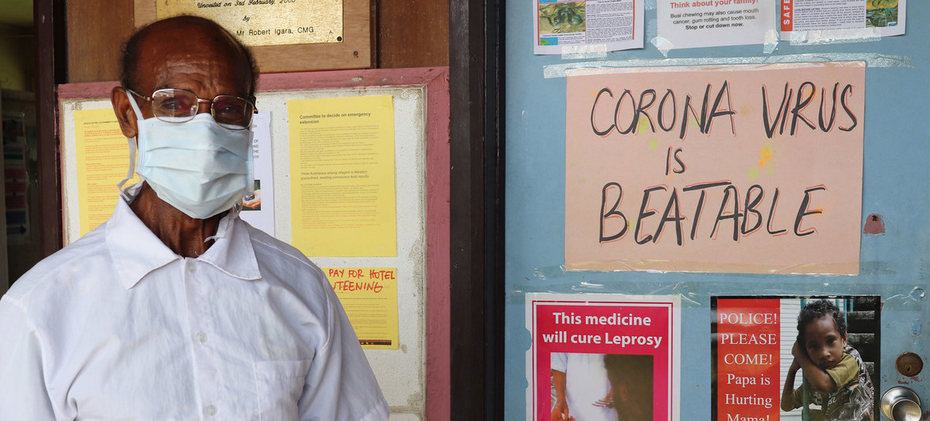
"Behavioural science has significant potential to address key challenges associated with the demand and supply of COVID-19 vaccines as well as post-vaccination behaviours."
In the context of the COVID-19 pandemic, this report aims to understand the potential of behavioural science in advancing the various stages of vaccination (before, during, and after) in practice. It is meant to guide countries tackling the task of increasing vaccine confidence, access, and rollout. The report offers a set of reflections that emerged from a series of discussions (December 2020 to March 2021) of the International Behavioural Insights and Policy Group and builds on these insights with other relevant studies and information on experiences and lessons learned to date. Produced in collaboration with the World Bank, the report represents only a starting point for some countries, particularly in the Global South, whereby the reflections offered here will need to be contextualised to ensure appropriate vaccination interventions.
The behavioural scientists who contributed to the report hold that, by focusing on the social, psychological, environmental, and economic factors that affect what people think and do, behavioural science can assist policymakers with the rollout of vaccines. For example, behavioural science can help overcome challenges such as an intention-action gap, whereby one fails to follow through on an intended behaviour due to logistical and behavioural barriers.
Section 2 of the report offers brief case studies of work that has applied behavioural science to increase vaccination uptake more broadly. Key takeaways include:
- Integrate behavioural science early and often into vaccination efforts: Communication should involve local role players, begin early, and be sustained. Behavioural science should be a consideration in the identification of the problem, the development of vaccine efforts and in encouraging the public to get vaccines when available.
- Improve vaccine confidence by investigating the behavioural barriers and facilitators of vaccine demand and acceptance, which can inform policies.
- Increase vaccine uptake by identifying the sources of information and misinformation influencing decisions to delay or skip vaccination.
- Build and tailor relationships with healthcare providers, who have been found to be the most trusted and can encourage vaccine uptake.
- Promote vaccination uptake through behaviourally-informed direct communications and trusted messengers. Provide simple and clear information about the efficacy and safety of vaccines, convenience of receiving a vaccine, and the benefits of getting vaccinated.
- Make use of text message reminders to boost vaccine uptake. The messages should be well thought through in terms of wording, scheduling, and the messenger who should respond to the needs of the end-user.
Section 3 outlines recent initiatives using behavioural science to address COVID-19 vaccine hesitancy. For example, Amref Health Africa responded to widespread COVID-19 vaccine hesitancy in Kenya through behaviourally-informed adaptations to existing approaches, such as placing greater emphasis on communication to ensure accurate information sharing around vaccination. Campaigns began to rely on: social influence by identifying micro-influencers for behaviour change adoption, mass mobilisation through trusted community voices (e.g., religious leaders), community engagement through community health workers, and the development and communication of "edutainment" puppetry materials. Key insights that can be drawn from this and other examples include:
- Use surveys, online randomised controlled trials, and online discrete choice experiments to understand perceptions and intentions around vaccinations and inform the design and iterative testing of communication messages. (Survey questions must be carefully framed, as they influence self-reported barriers, facilitators, and intention to vaccinate.)
- Leverage differentiated messages and messengers, because drivers of hesitancy differ, though generally trust is an important determinant of intention to vaccinate.
- Tailor messaging and interventions to the needs and perspectives of diverse communities, particularly when addressing the "moveable middle".
- Craft messages incorporating personal narratives and consider the messenger and reciprocity effects to increase vaccine intent for message recipients.
- Undertake community engagement (particularly through trusted and established engagement networks) to address any misconceptions during vaccine rollout.
- Draw on government sources of information, which tend to be highly influential and have the potential to strengthen vaccination attitudes and intentions.
- Build on hygiene as a key preventative behaviour as COVID-19 vaccines are rolled out.
- Inform pandemic responses by rapidly translating evidence into action.
The case studies in Section 4 explore how behavioural science can address the intention-action gap through effective and efficient vaccination access and rollout. Key points for consideration regarding ongoing vaccination rollout efforts include:
- Ensure easy, efficient, and reliable vaccine rollout to encourage individuals to attend necessary appointments and follow through with the vaccination processes.
- Reduce the physical effort involved in attaining a vaccine. Trusted and familiar locations, proximity, and working hours/weekends may be preferable to people and important for efficiency.
- Ensure vaccination sites enable accessibility (proximity, affordability) and choice among diverse populations.
- Provide a platform for clear and credible information, particularly about side effects and their frequency, to build trust through transparency and reinforce informed consent.
- Equip immunisers, system leaders/managers/coordinators, and community leaders with training and resources to explain and coordinate the rollout strategy.
- Incorporate behavioural science into frontline workers' training material, as their views play an important role in directly affecting motivation and performance of vaccine delivery.
- Change the vaccine perception/intention of health workers through communication that leverages experts and scientists (role models) in their field.
- Encourage vaccine recipients to share their vaccine experience (which should be fast, cheap, and easy) within their social networks.
- Tackle the issue of perceived vs. actual difficulty among registered vaccine recipients.
- Achieve vaccine follow-through with simple and tailored messages to encourage vaccine recipients to attend their appointment.
The examples in section 5 illustrate the potential role of behavioural science in post-vaccination behaviour. Key takeaways include:
- Prepare to mitigate against possible risk compensation following vaccine rollout - e.g., by boosting vaccine education to embed an understanding that some risk remains post vaccination.
- Consider how levels of adherence differ across society sectors and culturally-tailor campaign strategies to promote preventive behaviours post-vaccination.
As vaccination efforts continue globally, the International Behavioural Insights and Policy Group will continue to take stock of lessons learned across contexts. A key reflection of this report is that every country has a unique population and resource base and will therefore require a unique response.
UN Behavioural Science Group website, November 9 2021. Image credit: © UN Papua New Guinea/Rachel Donovan
- Log in to post comments