










































Taming the Lizard: Transforming Conversations-Gone-Bad at Work
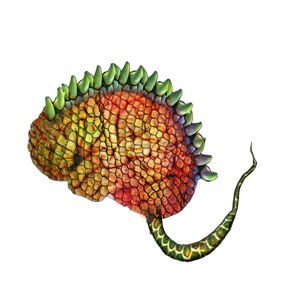
This book chapter is about how to turn conversation into productive dialogue with positive communication patterns and away from fearful or angry responses. The author, Paige Marrs, discusses several presentations of defensive behaviour and then how to address them with the Communication Management of Meaning tools (CMM) of Dr. Barnett Pearce. She uses case-study type examples of conversations that have taken problematic turns to describe the application of CMM tools to change fear-in-action to a more productive practice that can stabilise positive communication patterns. The first stage is to recognise when a conversation is turning from the empathetic "social engagement system" and losing the wisdom of the "executive brain" to one of perceiving threats, being defensive, and engaging primarily from the "lizard brain."
Diagramming of behaviour outcomes is a tool Marrs uses. She illustrates an array of responses available in conversation in order to identify those responses made out of fear. An analysis from a communication perspective is designed to add insight on several levels, particularly to separate the aggressive options and apply the hierarchy model. The hierarchy model clarifies how to understand the most influential priority in a situation and act upon it successfully. The six steps or actionable guidelines are:
- Awareness reaction in self/others;
- Label reaction "fear";
- Pause, shift;
- Reality checks;
- Consider options:
- Wise, "choiceful" action.
The book, The Reflective, Facilitative, and Interpretive Practice of the Coordinated Management of Meaning: Making Lives and Making Meaning is by editors Beth Fisher-Yoshida, Catherine Creede, and Placida Gallegos. It is available for purchase through the link below.
Email from Asiya Odugleh-Kolev to The Communication Initiative on October 2 and 4 2012. Image credit: Entertaining & Educating Our Kids Blog site
- Log in to post comments