










































Understanding Knowledge, Attitudes and Practices of Children about COVID-19
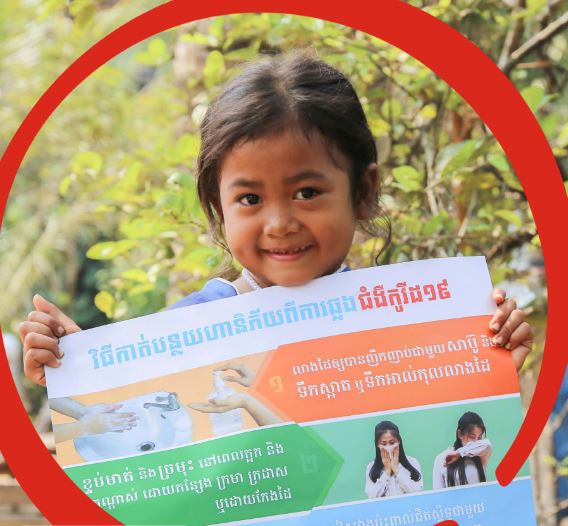
"Given the fast-paced evolution of the virus, there is a great need to keep the public well informed and protect those that are most vulnerable with reliable and trusted information, adapted to their needs."
A key strategy to mitigate the spread of COVID-19 and protect lives is risk communication and community engagement (RCCE), which is only effective when grounded in an understanding of the information needs of the people being reached, including vulnerable groups such as children, the elderly, people with previous health conditions, and people with disabilities. The overall objective of this rapid need assessment was to gain insights on the knowledge, attitudes, and practices of Cambodian children around COVID-19.
Save the Children Cambodia's COVID-19 response strategy has 4 goals:
- Saving lives - e.g., producing and disseminating child-friendly, gender-sensitive, information for children and caregivers across the country on how to protect themselves against COVID-19.
- Helping children learn - e.g., supporting the Ministry of Education, Youth and Sports (MoEYS) in developing and testing approaches to promote continuous learning in remote and hard-to-reach areas, with a focus on the accessibility of the most vulnerable children.
- Increasing financial resilience - e.g., working with the Royal Government of Cambodia and partners to ensure vulnerable households sustain and recover livelihood options and household income.
- Keeping children safe - e.g., adapting critical child protection and child rights programming to ensure the safe continuation of essential services in the context of COVID-19.
To support these efforts, from April 23 to May 2 2020, Save the Children Cambodia conducted a cross-sectional survey using respondent-driven sampling with 241 children aged 10-17 years in 10 provinces, across rural and urban areas. In the context of limited face-to-face interaction due to COVID-19, the needs assessment used remote data collection techniques through telephone interviews. As a result, children living in households without phones, potentially the most vulnerable, did not have a chance to participate in the assessment.
Selected findings:
- All children know about the new coronavirus, but only 57% know that it can cause severe illness. It is surprising that more children know about the virus in rural than urban areas (61% vs 53%).
- 42% of the children interviewed still consider the risk of contracting COVID-19 to be low, with those in rural areas showing a higher risk perception than those in urban settings (44% vs 39%). The older the child, the higher their perception of risk - suggesting that additional efforts are needed to strengthen RCCE for younger children.
- 90% of children had received prevention information about COVID-19, but the study revealed significant gaps between children's knowledge and their practice of preventive measures. For instance, while 80% knew that wearing a face mask could help prevent COVID-19, only 65% reported using one. Likewise for social distancing, while 38% noted that they knew about this preventive measure, only 9% practice it.
- A majority of children heard about COVID-19 through Facebook (94%), followed by TV (60%), and community announcements (56%). A smaller proportion of children heard about COVID-19 through radio (20%), teachers (24.1%), and village authorities (14.5%). Posters and leaflets accounted for very small proportions (7.9% and 1.7%, respectively), with no differences between rural and urban children. (These results might be biased due to the fact that all children participating in this study were interviewed through mobile phones.)
- Children seemed to trust COVID-19 information received from TV and Facebook equally (39%), while other sources of information accounted for very small proportions of trust (less than 10%), such as radio at 3%.
- More than half of children reported that Facebook is the most convenient source of information for COVID-19 (65%), followed far behind by TV (15%). "Given the increasing role of social media in informing and engaging children and the wider public, it is key that we all ensure social media campaigns are thoroughly fact checked and in line with trusted sources like MoH [Ministry of Health], WHO [World Health Organization] or CDC [Centers for Disease Control and Prevention]."
- Despite the fact that all children in the sample had access to mobile phones and the internet, there are many children who do not have access to remote learning (44%) and learning materials (46%) during the school closures as a result of COVID-19. There were significant differences between rural and urban children (45% vs 63%), as well as between females and males (57% vs 45%). More than half of children from high school (63%) reported access to learning materials at home, as opposed to primary school children (17%).
- The top 3 concerns regarding the impact of COVID-19 raised by children were education (81%), health (61%), and relationship with friends (40%). Nearly all children from secondary school (96%) and all children from high school (100%) expressed concerns about their learning during the pandemic, as opposed to only 67% of children from primary school.
Among the programmatic and policy recommendations that emerge from the findings:
- Provide children with key messages about the benefits of social distancing, while recognising that the culture of extended families and limited living facilities means that social distancing and self-quarantine could be challenging.
- Apply different communication channels during the COVID-19 response to reach different segments of children with varying levels of communication access within the country. These channels should also feature two-way communication platforms and mechanisms, so that children and communities can fully engage and participate in the conversation.
- Build the capacity of teachers, increase the availability of paper-based learning materials for home learning, and develop resources for parents and for peer-to-peer learning to support continuous learning of vulnerable children who are struggling to access online learning, including those with disabilities, out-of-school and street children, and/or those living in rural and hard-to-reach areas.
- Undertake further studies and discussions to understand the context for action to address gender discrepancies, as more females report having access to remote learning and materials than males. In general, more rigorous design, methods, and sampling strategies are necessary to provide further robust evidence for programming and policy options.
Results from the assessment have informed Save the Children in Cambodia's COVID-19 Response Strategy and have contributed to the national RCCE working group, led by the MoH and WHO.
Save the Children website, June 16 2020. Image credit: Prak Chamnan, Cambodia Children's Trust
- Log in to post comments