










































Knowledge, Attitudes and Practices (KAPs) Polls in Pakistan and Nigeria
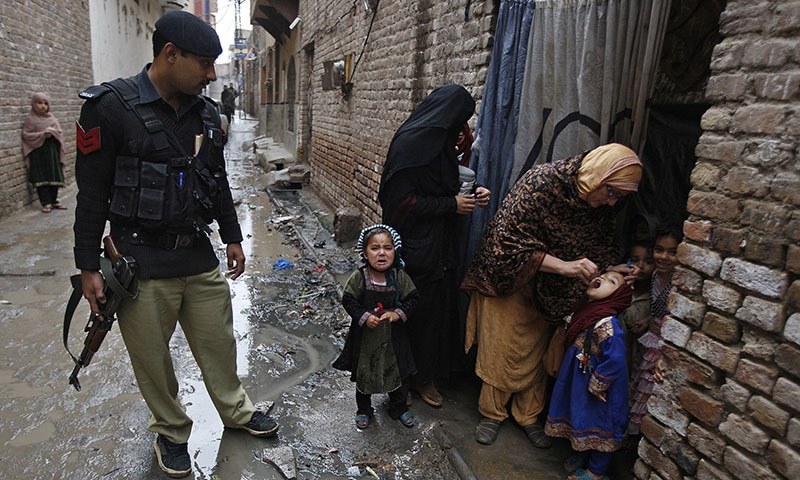
This document reports on preliminary findings from polls conducted as part of a global research initiative to understand and respond to parents' views and experiences receiving polio vaccine. As the researchers - who hail from the Harvard School of Public Health (HSPH) as part of a collaboration between the Harvard Opinion Research Program (HORP) at HSPH and the United Nations Children's Fund (UNICEF) - explain, Pakistan and Nigeria are two of the three remaining polio-endemic countries and so are critical to stopping global transmission of the disease.
In Pakistan, the poll of caregivers of children under the age of 5 years who are at greatest risk for polio included high-risk agencies or districts within 4 provinces: the Federally Administered Tribal Areas (FATA) - "higher conflict" area - as well as in the "lower conflict" provinces of Sindh, Balochistan, and Khyber Pakhtunkhwa (KP). In Nigeria, the poll included 6 high-risk states: Borno ("higher conflict"), as well as Kano, Katsina, Sokoto, Bauchi, and Zamfara ("lower conflict"). The methodology is detailed on pages 5-6 of the document but, in short, involved in-person interviews with 3,396 caregivers in Pakistan (November 8 - December 23 2013) and 2,629 caregivers in Nigeria (February 3 - March 27 2014).
An excerpt from the document sharing some findings follows:
"Demand for OPV [oral polio vaccine] is High in Pakistan and Nigeria, Even in Some Higher-Conflict Areas
...In Pakistan, among parents who said polio workers came [during] the last round of vaccinations, 99% of parents in the lower conflict areas said their children received the vaccine; in FATA, this figure is 95%. Among parents in Nigeria who said polio workers came to their home in the last round, 96% in the lower conflict areas accepted the vaccine. In Borno, this figure is not quite as high, at 85%....[M]ost parents in Pakistan and Nigeria affirmed that they support vaccination efforts in their own neighborhoods, saying they think these efforts are a good idea....This was true for 86% of parents in FATA and 98% of parents in the lower-conflict areas of Pakistan. Similarly, 88% and 96% of parents in Borno and the lower-conflict areas in Nigeria respectively said OPV vaccination for their children is a good idea.
In Pakistan and Nigeria, Parents' Misperceptions Could Erode Demand in Future
...[P]oll results suggest there are some misperceptions about polio and OPV that could erode demand in the future, if not addressed. For example, a sizable share of parents in Borno (37%) as well as parents in lower-conflict areas of Nigeria (24%) and Pakistan (30%) believe that the paralysis from polio would be curable if their child got sick. Further, across both countries, between a fifth and a third of parents were not aware that OPV must be taken every time it is offered...
Parental Trust Faces Limits in Pakistan and Nigeria, Especially in Higher-Conflict Areas
...[I]n lower-conflict areas of Pakistan, six in ten parents (61%) said they trust vaccinators who came to their home during the last [polio immunisation] campaign "a great deal," and far fewer (26%) said the same in [the higher-conflict] FATA. Similarly, two-thirds of parents in the lower-conflict areas of Nigeria (70%) say they trust the vaccinators "a great deal" while less than half of parents in Borno (48%) said the same. Part of the difference may be explained by the fact that fewer parents in these higher-conflict areas were able to evaluate vaccinators because vaccinators did not come to their home, they did not see the vaccinators personally or they were unaware of polio all together....Limits in trust also extend to the vaccine itself....Polling results show that nearly half of parents in FATA (48%) and Borno (46%) said they had heard rumors about the vaccine, including for example, the false rumor that the vaccine causes sterility in boys or girls. In Borno, far fewer (11%) believed there was at least some truth in rumors they heard...
Lower OPV Coverage in Higher Conflict Areas of Pakistan and Nigeria Due to Attitudinal, Security and Operational Challenges
In lower-conflict parts of Pakistan and Nigeria, 99% and 92% of parents respectively confirmed their children received OPV in the most recent vaccination campaign. The polls show coverage to be significantly lower than this in FATA (70% of parents) and Borno (67% of parents). Inaccessibility and security play a critical role for lower coverage....The poll also provides important data about additional reasons children could be missed, even when access is possible....Notably very few parents suggested that the reason that their child did not get the vaccine was because of concerns about vaccination (1% in FATA and 2% in Borno)...
Poll Suggests New Directions for Supporting Programs in Areas Where OPV Coverage is Lower
In all places where coverage is lower, vaccination efforts may build trust with communities by offering additional services requested by the community in addition to OPV. When asked about the most critical concerns they would like their local governments to address, 'clean water' was among the top requests for parents in Borno (49%) and FATA (59%). Polio programs may consider this as a platform for more broadly supporting children's health and opening doors to delivering broader health services in these challenging environments."
Docz.IO, accessed February 18 2015. Image caption/credit - In this Monday, Feb. 16, 2015 photo, a Pakistani health worker gives a polio vaccine to a child in Peshawar, Pakistan. - Associated Press
- Log in to post comments