











































Rights-Based Approaches: Exploring Issues and Opportunities for Conservation
The International Union for Conservation of Nature (IUCN) (Campese, Greiber, and Oviedo), Center for International Forestry Research (Sunderland)
This document examines the links between the realisation of human rights and the conservation of natural resources and biodiversity. From the Foreword: "[E]xperience has demonstrated that exclusionary approaches to conservation can undermine ...[economic, social and cultural rights, such as the rights to health, an adequate standard of living, freedom from hunger and cultural freedom, and civil and political rights] of affected communities... and can undermine conservation objectives." This document presents rights-based approaches (RBAs) to conservation as positive ways forward, while examining the range of new challenges and questions raised.
Questions include how to define RBAs in practical terms and how to determine what they mean for conservation policy and implementation. The experiences described in this volume intend to demonstrate that there is no one recipe for RBAs. Each case study presents legal, policy, programming, or advocacy strategies with the intention that local people, government, and non-governmental organisations (NGOs) and others can use to better understand and act on their rights and responsibilities.
The papers in this volume also illustrate that engaging with rights means engaging with the social dimensions of conservation. RBAs challenge the conservation community to move beyond its traditional boundaries and engage in new partnerships.
Case studies and issues reviews include:
- "an overview of issues and questions for RBA to conservation (Campese)
- a review of international law and policy relevant to RBA to conservation (Siegele et al)
- fulfilling rights and responsibilities in coastal resource management in Colombia (Springer and Studd)
- enhancing rights realization and local-level accountability in water management in the Middle East (Laban et al)
- conservation and human rights in the context of Native Title Law in Australia (Strelein and Weir)
- a human rights approach to conservation and development in the Cape Floristic Region, South Africa (Crane et al)
- RBA in an alliance of a Bolivian indigenous organisation and the Wildlife Conservation Society in the Bolivian Chaco (Painter)
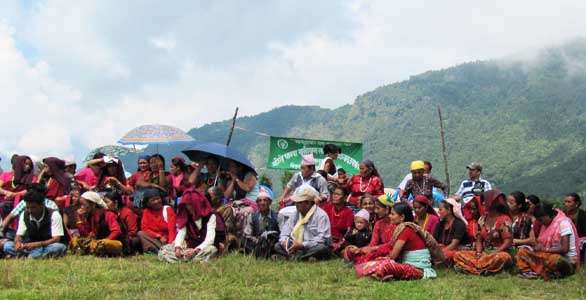
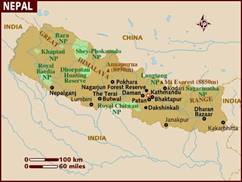
- RBA to buffer zone community forests in Nepal (Jana)
- Seeking respect for a Sherpa community conserved area in Nepal (Stevens)
- Equity in Indonesia’s protected areas (Moeliono and Yuliani)
- integrating gender equality and equity in access and benefit-sharing governance through RBA (Mata and Sasvari)
- RBA to Reduced Emissions through Deforestation and Forest Degradation (REDD) (Lawlor and Huberman)"
The final chapters review themes and lessons emerging from the publication as a whole.
"The cases address a mix of procedural rights, including participation, information and access to justice, and substantive rights including:
- access to and use of water, forest, coastal and other resources;
- access to services and an adequate standard of living, including food and housing;
- equity, including gender equity and freedom from discrimination;
- property and land tenure;
- culture, including the continuation of customary institutions;
- self-determination; and
- a healthy and safe environment."
The editors suggest that using RBAs can, among other things:
- "create a stronger foundation for addressing human wellbeing considerations by recognising that doing so is a matter of duty or responsibility;
- establish a stronger foundation for acceptance, consensus and collaboration from all stakeholders by leveraging the human rights framework, which draws on widely recognised standards;
- be more comprehensive than ‘participatory’ approaches, more generally, by including all rights applicable in a certain context;
- provide greater clarity about the nature and scope of all actors’ rights and responsibilities, and thus establish clearer criteria against which to assess the effects and interactions between conservation and human wellbeing;
- increase the capacity and opportunities of both rights holders and duty bearers, including the most vulnerable, to fulfil their entitlements and obligations;
- enhance accountability by linking rights with specific corresponding obligations;
- strengthen understanding of the profound linkages between human and ecosystem wellbeing; and
- engender consideration of conservation and rights interactions at both the broad community level, and the individual and group levels, which can provide a powerful addition to approaches that fail to adequately address inequities and vulnerability within and across communities."
The document concludes with discussion of RBAs in terms of their enabling and mitigating factors, scalability and momentum, ability to resolve tough conflicts, required resources and inputs, and sustainability, as well as the importance of improved governance.
Pambazuka News 443: Links & Resources, Issue 24, July 2009; and email from Jessica Campese to The Communication Initiative on March 17 2010.
- Log in to post comments