










































Engaging Arts and Culture for Vaccine Confidence
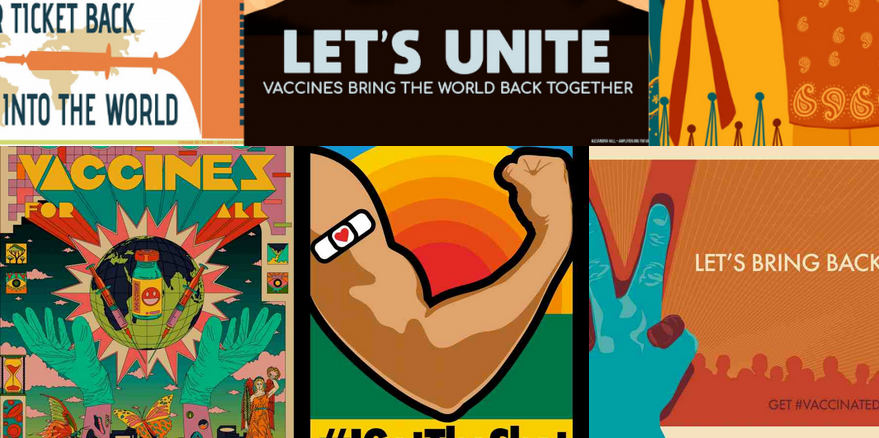
"Arts and cultural engagement can generate community demand for COVID-19 vaccines by making vaccination an accessible and socially supported choice." - CDC
The Centers for Disease Control and Prevention (CDC) contends that local artists can communicate vaccine information in a way that can make it more understandable, memorable, culturally relevant, and actionable. Rooted in culture and place, arts and cultural activities have the potential connect with people in trusted places and in ways that can resonate more deeply than traditional public health communication. Because these concepts are not as familiar in the United States (US) as they are in other parts of the world, the CDC published two field guides that are designed to provide guidance on how to engage cross-sector collaborations with arts and culture to promote COVID-19 vaccine confidence and uptake.
Namely:
- "Engaging Arts and Culture for Vaccine Confidence: Quick Start Guide for Building Sustainable Partnerships [15 pages, PDF]" is designed to help public health and health communication professionals develop partnerships local artists, culture-bearers, and arts and culture organisations for advancing vaccine confidence through more engaging, tailored, and culturally responsive and sustainable programming. It features promising practices from across the US.
- "Engaging Arts and Culture for Vaccine Confidence: A Guide for Building Programs and Creative Campaigns [17 pages, PDF]" includes practical, step-by-step information on how to design, implement, and evaluate programmes with arts and culture organisations. It describes various challenges that might be encountered in partnerships of this nature, along with programme ideas, strategies, and examples illustrating how the challenge(s) could be overcome.
- For example, addressing distrust in health systems and government programme might be approached through a multi-modal storytelling, art, and design campaign featuring art forms and visual communication mechanisms specific to local communities. Such an initiative could blend visual art and event-based participatory modalities that centre on individual and collective stories, art, music, and the voices of community members and local health and government workers. Among the strategies that could be used: Consider using arts-based methods, such as PhotoVoice, in working with partners to understand what aspects of the vaccines, the vaccinators, and the health system the communities of focus most distrust. Listening will be important, as will be committing to working with community members across all aspects of vaccine delivery, from communications to access. Partnering with those already engaged in social mobilisation efforts for vaccine confidence could be useful in this regard.
A related resource is the Vaccine Confidence Arts Response Repository, which is an open-access collection of projects, organisations, and professionals using arts and culture-based approaches to promote COVID-19 vaccine confidence and uptake. It was developed by the University of Florida Center for Arts in Medicine in partnership with the CDC.
To help people put the guides and repository to practice in their communities, the Center for Arts in Medicine, the CDC, and the National Endowment for the Arts are hosting a webinar on August 24 2021. Click here for more information on, and to register for, the free "Trusted Messengers Trusted Spaces" webinar.
CDC website and "CDC Partners with UF Center for Arts in Medicine to Increase Vaccine Confidence through Arts and Culture", by Brandon McKinley & Natalie Rella, August 12 2021 - both accessed on August 13 2021. Image(s) credit(s): 'Get Your Ticket Back Into the World' by Fernanda Diaz Pizarro; 'Let's Unite' by Alexandria Hall; 'Vaccines For All' by Sarah Imran; 'Vaccines for All' by Giri Dwinanto; 'Strength In Numbers' by Randy Stolinas; and 'Let's Bring Back Hugs' by Jen Vickers
- Log in to post comments