










































Community-based Monitoring: Evidence on Pro-equity Interventions to Improve Immunization Coverage for Zero-dose Children and Missed Communities
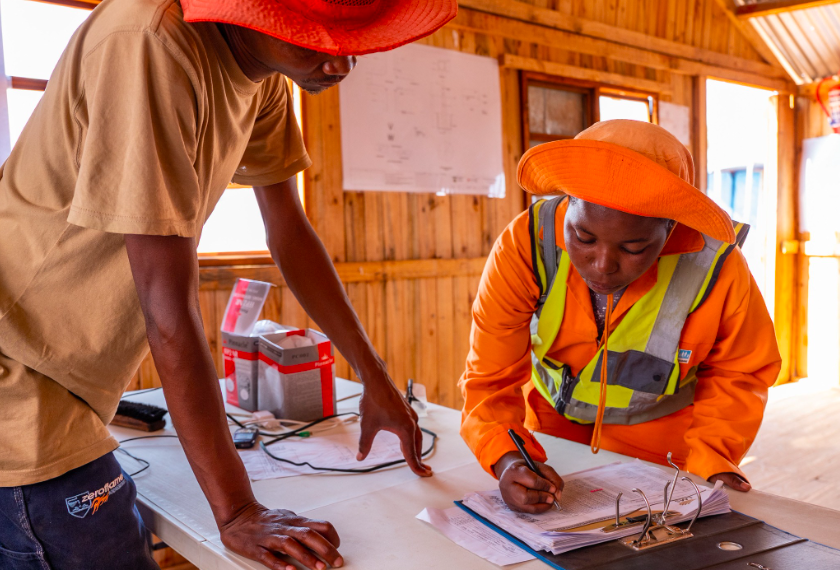
"Community-based monitoring (CBM) is one way that citizens and communities can make their voices heard in the health sector."
This evidence brief, published by FHI 360, presents results from a rapid literature review to understand the effectiveness and implementation of community-based monitoring (CBM) to monitor and improve the implementation of essential health services, including immunisation services, within communities in vulnerable contexts.
The brief forms part of a series of rapid literature reviews (involving peer-reviewed and grey literature published between January 2010 through November 2022), conducted by FHI 360, and supported by the Vaccine Alliance (Gavi). The purpose of the reviews is to synthesise existing evidence on the effectiveness and implementation considerations for selected interventions that could help achieve more equitable immunisation coverage, specifically helping to reach zero-dose children (those who have not received a single vaccine to prevent disease) and missed communities (population groups that face multiple deprivations, such as socio-economic inequities and gender-related barriers). Results of syntheses are presented through evidence briefs (see Related Summaries below for others in this series with implications for social change communication) and an online Evidence Map. The objectives of the evidence briefs are to understand which strategies are effective, identify implementation considerations, and assess gaps in knowledge and understanding. Overall, they are meant to help programme planners assess whether an intervention, such as CBM, should be considered for reaching zero-dose children and missed communities. For this reason, the mapping and the briefs use a categorisation scheme to rate interventions as: potentially ineffective, inconclusive, promising, or proven.
As explained in the brief, CBM involves "the collection of data by service users on different aspects of health service provision. Data can be used to monitor program implementation and can identify gaps and issues. CBM typically involves collaborative processes where community members and providers come together to jointly develop and implement solutions."
To assess whether CBM can contribute to more equitable immunisation coverage, specifically helping to reach zero-dose children and missed communities, the review sought to answer the following questions:
- Are CBM interventions among communities facing vulnerabilities, such as being marginalised or underserved, effective at monitoring health-based outcomes?
- What types of CBM activities are occurring among communities facing vulnerabilities regarding health, and which models and/or key components work better than others to monitor health-related outcomes, including immunisation outcomes?
- What are the implementation considerations for CBM activities among communities facing vulnerabilities?
The following is a summary of the findings as highlighted in the brief:
Effectiveness of CBM in monitoring interventions to reach zero-dose children and missed communities: Studies generally found CBM interventions to be effective in improving some aspects of health service delivery (e.g., improved quality, expanded hours of delivery, reduced stock-outs). One study used CBM to monitor immunisation provision, and programme results suggest CBM may have increased coverage. In addition to effecting change in the delivery of health care services, qualitative data from many studies suggest CBM interventions help promote patient and community engagement in health care, facilitate dialogue between patients/communities and providers, and provide a path for accountability, which are important outcomes in their own right and encompass aspects of "reach" and "advocate" of the IRMMA (Identify - Reach - Monitor - Measure - Advocate) framework [PDF], which seeks to guide the implementation of interventions seeking to reach zero-dose children and missed communities. Results from the review also identified many examples of CBM occurring across diverse settings and populations. There was a paucity of robust evaluations of CBM programmes, although a rigorously evaluated community score-card intervention was conducted in Malawi that demonstrated positive results. Based on the results, the intervention was classified as "promising".
In addition, types of CBM interventions included community treatment observatories, community score-cards, facility report cards, and other tools. CBM interventions most frequently occurred in remote rural settings and among certain stigmatised populations, such as people living with HIV. CBM was also implemented within fragile/conflict-affected and urban settings. Several studies found that CBM initiatives were both impacted by and worked to address gender barriers.
Main facilitators and barriers to implementation:
- Facilitators include being community-led and responsive to community needs, having supportive policies, enabling health systems, developing mechanisms for sharing feedback, working collaboratively, and securing provider buy-in.
- Barriers include challenges defining communities and determining representativeness, lack of responsiveness from health systems, and barriers to community participation, including geographic inaccessibility, existing norms, and social hierarchies that constrain CBM implementation.
Key gaps: Key gaps include a lack of understanding about which CBM models are more effective and for whom, lack of examples of specific CBM tools, lack of rigorous evaluations, and lack of operational understanding of how CBM can be used to measure and monitor health programmes.
Overall, the review found that CBM interventions are promising for use in monitoring and measuring programme delivery and could be effective at improving outcomes among zero-dose children and missed communities. Based on the findings, the brief highlights several steps programmes can take to tailor CBM interventions to help achieve equity in immunisation programming:
- Ensure CBM activities are led by affected communities, including communities with a high prevalence of zero-dose children and missed communities, and address indicators prioritised by both programmes and communities.
- Provide CBM tools that are user-friendly and generate data that are easy to share and analyse, such as digital tools like SMS (short messaging service, or text) surveys.
- Present and analyse data generated from CBM in ways that maximise its utility to inform decision-making and advocate for change.
- Understand current gaps in monitoring data and how CBM could be used to fill those gaps.
- Garner buy-in from providers, facilities, and health systems for CBM, and ensure pathways exist for sharing feedback and effecting change.
- Assess whether existing policies at the national or sub-national level are supportive of CBM, including policies geared toward increasing community participation in health and achieving universal health care coverage.
- Develop conceptual models for understanding how CBM can work to improve immunisation services for zero-dose children and missed communities, which might involve multiple components of the IRMMA framework, including increasing demand for health services ("reach"), monitoring and measuring programme delivery ("monitor and measure"), and advocating for change ("advocate").
Zero-Dose Learning Hub website on November 27 2024. Image credit: FHI 360
- Log in to post comments