










































National Infant Immunization Week (NIIW)/Vaccination Week in the Americas (VWA)
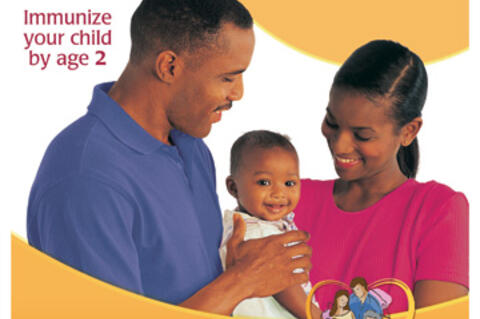
The NIIW-VWA programme draws on the partnership of government organisations and other immunisation partners in both the United States and Mexico to help stimulate local, bi-national awareness and education events in sister city sites along the US-Mexico border. Special kickoff events will be held in Las Cruces, New Mexico and Ciudad Juarez, Mexico. These border communities will join over 500 communities from across the United States to participate in NIIW and VWA by planning community awareness and media events to promote infant immunisations to parents, caregivers, healthcare providers, and their communities. Social communication campaigns in each of the countries will include radio and television spots, posters, and information - in both English and Spanish languages - to promote the effort.
State-specific events and activities often draw on the dissemination of factual information about vaccines (and the provision of immunisations) in combination with entertaining activities to motivate and involve children and their parents to pursue immunisation. To cite two examples, the Mexican radio programme "A Los Niños: Quierelos, Protegelos...Vacunalos" is featuring information about immunisations for children and youth. At a kickoff event scheduled to take place in Shreveport, Louisiana, the local media will be on hand to report on activities for families including face painting, clowns, and games. Willis Knighton Health System Shots for Tots will advertise for NIIW with billboards throughout the metropolitan area, and the Shots for Tots van will offer extended hours. The private food-service company Dominos Pizza plans to advertise the event on pizza boxes and offer coupons for a free food item for all children receiving immunisations.
In order to facilitate broad participation in the planning and celebration of these local events, organisers have set up a NIIW website that provides a variety of resources (some will be offered in Spanish) such as listings of scheduled activities and events; toolkits for creating a NIIW kickoff event; sample public relations materials (e.g., media tips, talking points, and a sample opinion editorial); bi-lingual colour posters and stickers; web banners and icons; and additional resources (e.g., a parents' guide to childhood vaccines and an immunisation schedule). The slogans "Vaccination: An Act of Love" and "Love them, Protect them, Immunize them" are key themes that appear throughout these materials and resources.
There is also a NIIW social media kit.
Immunisation and Vaccines, Children.
Among the campaign's key messages, as provided to NIIW participants by the CDC, are the following:
- "Each day, 11,000 babies are born in the United States who will need to be immunized against twelve diseases before age two.
- We can now protect children from more vaccine preventable diseases than ever before. Because we can prevent more diseases, parents are often not aware what it takes to fully immunize a child.
- Infants and young children are particularly vulnerable to infectious diseases; that is why it is critical that they are protected through immunization.
- Children who are not immunized increase the chance that others will get a vaccine preventable disease.
- Immunizations are extremely safe thanks to advancements in medical research and ongoing review by doctors, researchers, and public health officials.
- Children are far more likely to be harmed by serious infectious diseases than by immunization.
- Parents and caregivers need to take responsibility for their child's vaccinations. They are encouraged to become informed consumers and keep a record of each immunization visit.
- Immunization protects families and communities. Children who are not immunized increase the chance that others will get the disease."
USMBHC is bi-national health commission established in July 2000 with the goal of creating a collaboration for the free exchange of ideas and resources to address common health issues along the US-Mexico border. USMBHC has described the 2,000-mile border area as a "dynamic region that is medically underserved with a population that has pressing health and social conditions, higher uninsured rates, high rates of migration, inequitable health conditions and a high rate of poverty". In addition to indigenous people and vulnerable groups such as women of childbearing age and the elderly, children living in rural border regions are among those often left behind when it comes to vaccination.
USMBHC, PAHO, CDC, and the Mexico Secretary of Health.
IAC EXPRESS: Immunization news from the Immunization Action Coalition, #514 (March 7 2005); IAC EXPRESS, Issue 1360: April 18, 2018; and USMBHC website (no longer in operation), March 15 2005; and the NIIW website (CDC), March 15 2005 and April 18 2018; and PAHO press release, February 11 2005.
Comments


- Log in to post comments