










































Universidad de la Tierra
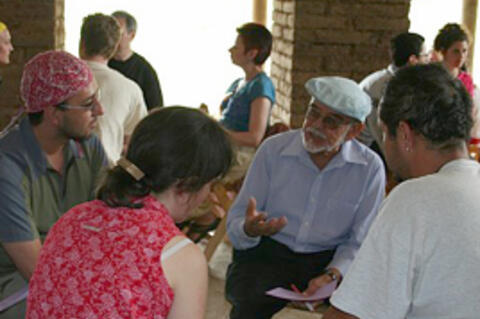
Unitierra's work draws on interpersonal communication as well as various information and communication technologies (ICTs) to connect people in learning experiences that are designed to create pathways for social change across various divides (geographical, technological, etc.). For instance (as detailed within a multi-part blog), one Unitierra student engaged in a learning exchange with the applied research institute Shikshantar (Rajasthan, India). The process has revolved around appropriate technologies and global energy issues, with a focus on reflecting on the political, ethical, environmental, and cultural implications of technology. He explains, "The emphasis on interculturality has to do with the ways that particular techniques can be appropriated by communities of different cultural traditions, and in some cases can even strengthen processes of cultural regeneration." The student explains that the experience of building bikemachines (e.g., a bicycle-powered washing machine) involved workshops that "became more than mere 'technology transfer': it was a creative process of people locally adopting/adapting a tool in such a way that it made sense to them in a way that is playful....We would also hope to generate conversations on some of the deeper and broader issues concerning technology, like, for instance, the way we approach work, where energy comes from and how we use it, the environmental and political implications of using different kinds of energy sources, the ways in which techniques affect how we behave and how we relate to each other, the power relations that are embedded in particular technologies, how technology can degrade or enrich our ways of being in the world, and the impact that different kinds of technology have on our natural environment." This student planned to "create a reflexive piece – written, photographic or otherwise...[whose] purpose would be to socialize this learning exchange through our translocal communities network, and thus hopefully contribute to the broader process of social transformation of which we are all a part." Upon his return to Oaxaca, he planned to replicate a strategy he pursued with colleagues in India - that of "occupying public spaces to showcase Unitierra's work in appropriate technologies and city farming in neighborhood, mela-type fairs [Editor's note: "Mela" is a Sanskrit word meaning "gathering" or "'to meet". It is used in the Indian subcontinent for all sizes of gathering and can be religious, commercial, cultural, or sports-oriented. In rural traditions, melas or village fairs were (and in some cases still are) of great importance.] This way we can continue to render more visible those activities that we consider having the greatest political impact in the long term, while attracting 'to our side' more and more people who need to see in order to believe that there are indeed other ways of doing things."
ICTs are used to keep such collaborations going: the NewWorkSpaces online community tool, where learners can access "collaborative technology that will help [them]...convene conversations, co-create and publish documents, invite others into...learning experiences, and exchange...knowledge and resources." Other means of sharing learning experiences include libraries, documentation centres, community radio, media campaigns, and publishing. These modes also provide dialogue opportunities around Unitierra activities such as those with indigenous communities engaged in cultural regeneration, technological and socio-political innovation, and social struggle (e.g. through workshops, videos, the creation of ecological dry toilets and solar arrays, organic agriculture, and alternative media). Permanent centres for learning and innovation – e.g., in organic farming, forestry, technological innovation, convivial ways of living in the city, waste disposal, alternative media, and free software - are also being developed. Here, "[n]etworks of younger leaders are learning about utilizing local resources, building intergenerational relationships and regenerating cultural life to help make our communities vibrant with hope and energy...Some programs focus on the idea that youth are the ones best equipped to lead other youth. Others encourage teenagers to embrace their cultural heritage and share their own stories."
Environment, Intercultural Cooperation, Education, Youth.
Comments

Quesetion..........
Is this the same Universidad de la Tierra as the one in San Cristobal de las Casas, Chiapas, Mexico?
- Log in to post comments