










































Voluntary Medical Male Circumcision among Adolescents: A Missed Opportunity for HIV Behavioral Interventions
Johns Hopkins Bloomberg School of Public Health (Kaufman); Johns Hopkins Center for Communication Programs (Dam, Van Lith, Figueroa); Population Services International (Hatzold); Centre for Sexual Health & HIV/AIDS Research (Mavhu); CSK Research Solutions Ltd. (Kahabuka); Centre for Communication Impact (Mahlasela); Johns Hopkins School of Medicine (Marcell, Patel, Tobian); United States Agency for International Development Washington/Global Health Bureau/Office of HIV/AIDS (Njeuhmeli, Seifert-Ahanda); Ministry of Health and Child Care, Harare, Zimbabwe (Ncube); Ministry of Health, Community Development, Gender, Elderly and Children, Dar es Salaam, Tanzania (Ncube, Lija); National Department of Health, Pretoria, South Africa (Bonnecwe)
"VMMC may be one of the first occasions for adolescent males in many African countries to interact with the health system and offers a unique opportunity for providers to engage them in broader SRH and HIV messaging."
This study explored the messages and approaches used during adolescent voluntary medical male circumcision (VMMC) counseling in South Africa, Tanzania, and Zimbabwe to determine whether such strategies maximise opportunities for broader HIV prevention, male adolescent sexual and reproductive health (SRH), and linkages to HIV care. The researchers explain that the United Nations Children's Fund (UNICEF), the World Health Organization (WHO), and the United Nations Population Fund (UNFPA) recommend age-appropriate methods to introduce SRH services to male adolescents during VMMC. However, little is known as to what type of messages male adolescents are receiving and retaining during their VMMC experience. And "to reach the goals of VMMC coverage and reduction in HIV incidence, the engagement of adolescents during VMMC and the sustainability of their link to healthcare are critical for high HIV prevention impact."
In order to gather narratives on the VMMC counseling experience, qualitative interviews were conducted with 92 VMMC clients ages 10-19 years in South Africa (n=36), Tanzania (n=36), and Zimbabwe (n=20) and 33 VMMC providers across the three countries. Of the 12 total sites, four were in rural locations, three were periurban, and five were urban. Adolescents were interviewed within 6-10 weeks of the procedure. Data were collected from June to September 2015 in Tanzania, August to December 2015 in Zimbabwe, and February to June 2016 in South Africa.
Male adolescents in all three countries reported that limited information was provided about HIV prevention and care, and adolescents were rarely provided condoms. Although VMMC protocols require opt-out HIV testing, adolescents recounted having blood taken without knowing the purpose, not receiving results, and not completely understanding the link between VMMC and HIV. How HIV test results were disclosed to adolescent clients varied. Most reported receiving results in a private setting either orally or written. In Zimbabwe, one man reported that his negative status was disclosed to him in front of others (nonfamily members). Younger adolescents in Tanzania and Zimbabwe often reported parents receiving the results on their behalf, or the males did not receive their results at all and presumed they were negative because providers proceeded with VMMC.
Although providers admitted that the guidelines for HIV testing as part of the VMMC package are the same regardless of age - to define HIV, how it is transmitted, how VMMC and other behaviours can prevent it - they allowed the discussion to be shaped more by provider perceptions of adolescent readiness when counseling younger adolescents (under age 15). This was consistent with what was reported by the clients themselves, in that younger adolescents tended to receive less information. For instance, providers tended to discuss nonsexually transmitted routes of HIV, often emphasising abstinence rather than explaining how VMMC can provide some protection once sexually active. Providers in Tanzania and Zimbabwe expressed feeling uncomfortable counseling adolescents who tested positive for HIV, because they felt that they had inadequate training to do so. Possessing the skills to reveal a positive status to a young male and then connect him to the appropriate services seemed to be a challenge.
In short, in the sites of the three countries studied, HIV prevention and care messages were inconsistent and sometimes totally absent from VMMC counseling sessions. VMMC appears to be "a missed opportunity to fully inform a generation of young men about engaging in HIV risk reduction and build their behavioral intentions for the future. The data also suggest that providers need better training on how to relay this information in a way that is well understood by all age groups and that is memorable for young clients undergoing what may be a frightening medical procedure. Furthermore, there should be adherence to recommendations that all VMMC clients receive the complete package of services, regardless of age. This may have to be considered in tandem with national policies that sometimes restrict sexual education for young adolescents (ages 10-12) in primary schools."
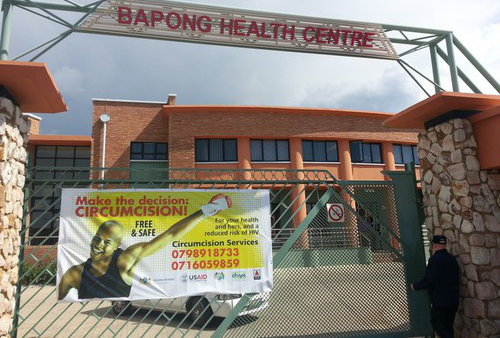
AIDS. 2017 Jul 1; 31 Suppl 3:S233-S241. doi: 10.1097/QAD.0000000000001484. Image credit: Gaph Phatedi, CHAPS
- Log in to post comments