










































Public Access ICT across Cultures: Diversifying Participation in the Network Society
"The reports in this book take a fresh look at shared public access to computers and the Internet and provide evidence that the benefits of shared public access go far beyond simply providing affordable access to the infrastructure. Public access venues are also places for learning, sharing, working, finding opportunities, empowering, and solidarity."
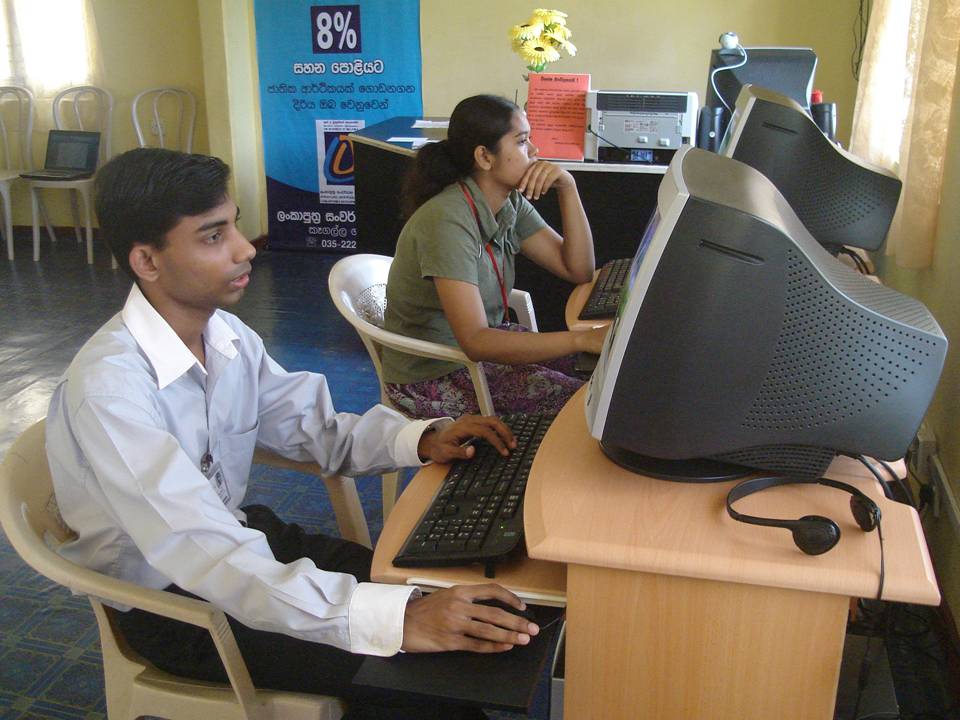
This book from the International Development Research Centre (IDRC) includes contributions exploring public access venues - most often, internet cafés in cities and state-run rural telecentres - which are places where people can use computers and the internet. The volume offers a systematic assessment of the impact of shared public access in the developing world, presenting the findings of 10 research teams that worked between 2009 and 2012 in 10 countries in South America (Argentina, Chile, Peru), Asia (China, India, Malaysia, Thailand), and Africa (Cameroon, Jordan, Rwanda) under the auspices of the Amy Mahan Research Fellowship Program to Assess the Impact of Public Access to ICT. The book documents the impacts of public access, both positive and negative, on individuals, society and networks, and women, and examines the policy implications of the findings.
Specifically, cybercafés located in urban areas and mid-size towns are examined in the China, India, and Jordan chapters; rural telecentres in the Cameroon and Malaysia chapters; and comparisons across venue types in the Argentina, Chile, Peru, Rwanda, and Thailand chapters. Mixed approaches to data gathering were used in most studies, but qualitative approaches were dominant in Argentina, Chile, Thailand, and Peru, and quantitative approaches were dominant in China, India, Jordan, Malaysia, and Rwanda. Research teams were multidisciplinary: in Thailand, the team had expertise in anthropology, sociology, gender studies, and human rights; in China, in economics, systems engineering, marketing and psychology; in Chile, in communications, culture, and gender analysis; in Argentina, in sociology, anthropology, and social communications; and in Malaysia, in education and instructional technology.
Following a foreword by Bruce Girard and an introduction by Francisco J. Proenza, the contents include:
I IMPACT ON PERSONAL ACHIEVEMENT AND WELL-BEING
- User Perceptions of Impact of Internet Cafés in Amman, Jordan - Ghaleb Rabab’ah, Ali Farhan AbuSeileek, Francisco J. Proenza, Omar Fraihat, and Saif Addeen Alrababah
- Impact of Public Access to ICT Skills on Job Prospects in Rwanda - Jean Damascène Mazimpaka, Théodomir Mugiraneza, and Ramata Molo Thioune
- Personal Objectives and the Impact of Internet Cafés in China - Francisco J. Proenza, Wei Shang, Guoxin Li, Jianbin Hao, Oluwasefunmi ‘Tale Arogundade, and Martin S. Hagger
- Problematic Internet Use among Internet Café Users in China - Wei Shang, Xuemei Jiang, Jianbin Hao, and Xiaoguang Yang
- The Contribution of Five Télécentres Communautaires Polyvalents to Cameroon’s Rural Secondary Education - Sylvie Siyam Siwe, Laurent Aristide Eyinga Eyinga, Avis Momeni, Olga Balbine Tsafack Nguekeng, Abiodun Jagun, Ramata Molo Thioune, and Francisco J. Proenza
II FACILITATING INCLUSION AND ENABLING THE BUILDUP OF SOCIAL CAPITAL
- The Appropriation of Computer and Internet Access by Low-Income Urban Youth in Argentina - Sebastián Benítez Larghi, Carolina Aguerre, Marina Laura Calamari, Ariel Fontecoba, Marina Moguillansky, Jimena Orchuela, and Jimena Ponce de León
- Impact of Public Access to Computers and the Internet on the Connectedness of Rural Malaysians - Nor Aziah Alias, Marhaini Mohd Noor, Francisco J. Proenza, Haziah Jamaludin, Izaham Shah Ismail, and Sulaiman Hashim
- The Capacity-Enhancing Power of ICT: The Case of Rural Community-Based Organizations in the Peruvian Andes - Jorge Bossio, Juan Fernando Bossio, and Laura León, with the collaboration of María Alejandra Campos and Gabriela Perona
III IMPACT ON WOMEN
- Women and Cybercafés in Uttar Pradesh - Nidhi Mehta and Balwant Singh Mehta
- The Impact of Public Access to Telecenters: Social Appropriation of ICT by Chilean Women - Alejandra Phillippi and Patricia Peña
- Cybercafés and Community ICT Training Centers: Empowering Women Migrant Workers in Thailand - Nikos Dacanay, Mary Luz Feranil, Ryan V. Silverio, and Mai M. Taqueban
IV A PLACE TO LEARN, A PLACE TO PLAY, A PLACE TO DREAM, A PLACE TO FALL FROM GRACE
- Public Access Impact and Policy Implications - Francisco J. Proenza, with the collaboration of Erwin A. Alampay, Roxana Barrantes, Hernán Galperín, Abiodun Jagun, George Sciadas, Ramata Molo Thioune, and Kentaro Toyama
Selected findings from Part I:
- A survey covering 336 users of 24 randomly selected cybercafés in Amman, Jordan, finds overwhelming positive perceptions of impact in users' lives in 2 areas: communications and social networking, and improving education and learning; it found less widespread but positive impacts in a third area, income and employment.
- A purposive survey of 418 white-collar and office workers who occupy positions likely to involve the use of basic computer skills in Rwanda found that the ICT training model used by government-sponsored telecentres appears to be most effective, and its expansion should be considered.
- Surveys of 975 cybercafé users and 964 nonusers in China found (among other things) that, for the most part, people use the internet and internet cafés not because of external pressures or rewards, but as part of their overall search to satisfy basic psychological needs. Another finding is that internet addiction is not as widespread as is often reported in the media.
- A quasi-experiment in 5 rural communities of Cameroon, where télécentres communautaires polyvalents (TCPs) are the only places from which students can connect to the internet, found that, beyond study effort, having access to the internet gives mid- and upper secondary students a performance edge. There is however some evidence suggesting that spending too much time at the TCP may thwart academic achievement.
Selected findings from Part II:
- A study of the ways in which Argentina's low-income urban youth use new technologies in their daily lives found that a cybercafé and two community ICT training centres (CITCs) contribute to the social inclusion of youth in economically poor urban environments. They also satisfy training needs that are not met by market-oriented institutes or formal schooling and are also valuable as social spaces.
- An examination of 300 responses to an online survey on social connectedness among users of Malaysia's 42 rural internet centres found that most RIC users feel a moderate degree of connection, and 27% report a relatively high degree of connection with their social network. Nearly 20% of respondents feel significantly connected with community leaders.
- An analysis of the impact of public access on the organisational capacity of 9 grassroots organisations in a rural district of Peru's Andean region found that telecentres and cabinas públicas help make communication processes more effective and facilitate meetings and coordination.
Selected findings from Part III: Limitations on access by women surfaced in several chapters where cybercafés were the subject of study. In China, women account for only 27% of survey respondents; in Jordan, for only 24%. A supplementary survey of 200 women (100 users and 100 nonusers) in 2 mid-sized towns of Uttar Pradesh, India, found that the environment at the cybercafés is generally considered hostile to women, because these venues tend to be crowded with young men. "There is an urgent need to increase literacy and enhance awareness of the benefits of the technology among women and their male family members, and to implement programs offering cybercafé operators incentives to make their venues more welcoming and accommodating to women." Similarly, one chapter in this section observes that "Use of Internet cafés by migrant women in Mae Sot [Thailand] is in practice limited by direct discrimination of some Thai operators and by the women's own fears of being detected as illegal migrants by Thai police, which could lead to their being detained, harassed, or even deported." Another chapter in this part on Chile's urban Quiero mi Barrio telecentre network found that impact appears to be highest for women because their options to access the internet from other venues (e.g., cybercafés) are more limited than for men. The analysis suggests that the State should strengthen urban neighbourhood telecentres to better serve women's needs, encourage greater participation of women, and help women develop digital skills, realise their aspirations, and meet their everyday needs.
The book's final chapter highlights findings and draws on prior studies in search for patterns of use and impact across countries to inform critical issues of public access policy.
Publishers
492
IDRC website, June 8 2016. Image credit: Chanuka Wattegama
- Log in to post comments