










































Families Matter Program - Tanzania
The Government of Tanzania (GoT) has highlighted youth HIV prevention as a top strategic priority, which is reflected in the National Multi-Sectoral Framework on HIV/AIDS 2008-2012. To support this goal, T-MARC Tanzania launched the Families Matter Program (FMP) in Ruvuma and Mtwara regions of the country.
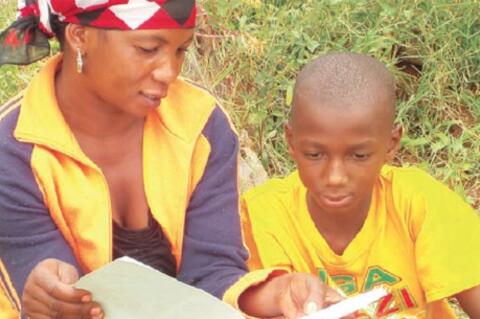
FMP is a community-based intervention designed to provide necessary tools to parents to have effective communication about sexuality and sexual risk reduction with their children; build strong parenting practices; and increase the knowledge and skills of pre-adolescents. FMP recognises that many parents and guardians may need support to effectively convey values and expectations about sexual behaviour and communicate important HIV, STI, and pregnancy prevention messages to their children. T-MARC Tanzania worked with local partners, Human Development Trust, Children and Youth Development Organization (CYODO), and Wanawake Na Maendeleo (WAMA) Foundation, to undertake the following activities:
Information workshop/meetings
As a first step, workshops and meetings are held with leaders/ opinion makers of different key groups of people, such as teachers, religious leaders, youth, Ward Multi-Sectoral AIDS Committees, parents of 9-12 year old children, prominent elders, and ward administrative officers. The community leaders are given an overview of the programme and are allowed to ask questions for further clarification. Once the community leaders are informed and aware of the programme, the process of community mobilisation begins.
Community mobilisation for parents’ recruitment and screening
The FMP team worked with and trained sub-grantees to conduct community mobilisation with parents. The sub-grantees received training on how to conduct community mobilisation, and they worked under supervision and assistance of the regional coordinators. Methods used to mobilise parents were: public address systems (PA), door to door visits, word of mouth, and distribution of invitation fliers through primary school students aged 9 – 12.
Parent training sessions
Two FMP facilitators (one male, one female) worked with parents in groups of 12-18 over a series of five consecutive weekly sessions. This was followed by a booster session offered six months after the completion of the five-week intervention. Each session lasted 2.5 - 3 hours and built upon the foundation laid in the previous session. The 9-12 year-old children attend the fifth session along with their participating parent. By the end of the programme, parents should feel more competent and comfortable in addressing sex issues with their children. The booster session helps to reinforce lessons learned and provides a forum for discussing challenges that they have faced putting their new skills into effect.
Institutional Capacity/Partnership
Working in collaboration with its local partner Human Development Trust (HDT) in Mtwara and Ruvuma regions, the project is also strengthening organisational and institutional capacity of local organisations working in HIV prevention to significantly contribute towards reaching the objectives of the programme.
HIV/AIDS, Children, Family Planning
T-MARC Tanzania, Centres for Disease Control and Prevention (CDC), the Tanzania Ministry of Health and Social Welfare, and Human Development Trust, Children and Youth Development Organization (CYODO), and Wanawake Na Maendeleo (WAMA) Foundation.
T-Marc Tanzania report [PDF]; T-Marc Tanzania Newsletter, May 2012 [PDF] and T-MARC website on November 12 2013.
- Log in to post comments