










































A Multi-tiered Approach to Meeting Family Planning Needs of the Poor in Peru
This 4-page case study details a communication initiative to design and test strategies to meet the family planning and reproductive health (FP/RH) needs of economically poor women in Peru's Junín Region. Statistics cited in the opening segments of the document indicate that, from 2000-2004, modern contraceptive method use among economically poor women in Peru declined 6 percent, while traditional method use increased 9 percent. In 1995, the Ministry of Health (MOH) had instituted a policy mandating free contraceptives for all Peruvians through government facilities. However, "[w]hile universal service coverage through the government is conceived as a strategy to help the poor, programs that are not well-targeted may fail to reach the intended beneficiaries. Working toward equity and effectiveness of resource use thus requires a clear understanding of the barriers to access among the poor, a well-defined strategy to remove barriers, and direction of government resources to the poor."
In this context, beginning in 2006, the United States Agency for International Development (USAID) | Health Policy Initiative, Task Order 1 worked to: identify and understand barriers that affect economically poor women's access to and use of FP services; and then incorporate appropriate interventions into existing programmes to ensure a sustainable and replicable response. First, the Health Policy Initiative analysed market segments for FP, diagnosed the health system, and conducted key stakeholder interviews and focus group discussions with economically poor women and men. This research identified several barriers to access:
- Lack of accurate, culturally appropriate information about modern FP methods.
- Limited financing for FP-related training, supervision, monitoring, and information dissemination.
- Operational barriers and resource restriction resulting from the integrated health model and its effects on FP product and service provision.
Then, the project worked with in-country counterparts to raise awareness of the needs of the economically poor and to weigh existing opportunities, challenges, and requirements for the implementation of appropriate responses. This process resulted in a package of strategies, which addressed different levels (national, regional, and local) in recognition of Peru's decentralised government and mobilised various types of financing to create a system that reaches the economically poor via multiple approaches:
- Strengthen the FP/RH educational component of Peru's JUNTOS ("Together") conditional cash transfer programme for economically poor families and draft culturally appropriate FP counseling guidelines and training [local] - Through policy dialogue and advocacy, the Health Policy Initiative secured commitment from national and regional authorities to strengthen the FP/RH-related components of JUNTOS. The project integrated cultural beliefs of indigenous populations into existing MOH FP/RH counseling guidelines and designed guides and a training-of-trainers (TOT) programme for healthcare providers. The project trained 19 healthcare personnel as trainers who, in turn, trained 83 medical doctors, nurses, midwives, and paramedical personnel. The TOT and the 3-day training programme included sessions on skills building and culturally appropriate counseling, as well as field visits to rural health facilities for practical skills development. As part of the training, health personnel also prepared action plans and monitoring indicators for their facilities.
As a result of these efforts, from Nov./Dec. 2006 to Aug./Sept. 2007, the average number of weekly FP/RH information sessions held each month tripled (from 1 to 3), and the weekly attendance at sessions nearly doubled (from 568 to 1,000 women). Through JUNTOS, the MOH allocated 82,500 soles (US$27,000) to produce culturally appropriate FP/RH informational materials. Moreover, in April 2008, the MOH approved the guidelines on culturally appropriate counseling (Documento Téchnico de Adecuación Cultural de la Consejería en SR) for use in health facilities in all areas with substantial indigenous populations. - Mobilise regional resources for information, education, and communication (IEC) and quality improvement strategies for FP/RH through public investment funding [regional] - The Health Policy Initiative assisted the Junín Regional Directorate for Health by: gathering information on barriers to accessing funds for health programmes; generating governmental interest in accessing public investment funds; and fostering collaboration with non-governmental actors, including academic institutions. One outcome was that the National Central University provided credit and diplomas to participants in a proposal writing course (in conjunction with the Regional Directorate for Health) and waived the 10% fee usually charged for an external course credit. A total of 29 participants completed the course and prepared 6 funding proposals, which are under review. The university now offers the proposal writing course for policymakers and implementers from different regions.
- Include FP in the package of services offered to economically poor women through Integrated Health Insurance (Seguro Integral de Salud or SIS), a social insurance programme [national] - To promote inclusion of FP into SIS, the Health Policy Initiative: conducted a feasibility analysis; carried out evidence-based advocacy and policy dialogue with key government officials, highlighting the cost savings and added value of including FP in the package of services; fostered consensus and mobilised political support; provided technical assistance to the MOH to revise the package of services, including determining and revising itemised costs for FP counseling, methods, and services; and drafted operational guidelines and norms to guide implementation of the proposed policy change. On March 17 2007, the President of Peru and Minister of Health published Supreme Decree N°004-2007-SA. The decree lists RH (counseling and FP) as one of 8 preventive priorities, with 100% coverage.
Lessons Learned:
- In recognition of the fact that even well-intentioned policies can have adverse outcomes, policymakers and planners should think through both the short- and long-term consequences of alternative policies prior to implementation.
- Support an evidence-based, country driven process through which national and regional stakeholders evaluate strategies for feasibility, challenges, opportunities, and key steps in the implementation process, as well as consider the country context and specific needs and issues.
- Involve multiple stakeholders and use multiple strategies and financing interventions to help to reach different segments of the economically poor population and ensure sustainability.
- Involve the economically poor in identifying problems and designing solutions.
- Integrate FP/RH components into existing financing and social assistance mechanisms for the economically poor.
- Develop FP/RH indicators by wealth quintiles and rural/urban differences in order to measure progress and help identify needed corrections to reduce inequalities in use of FP services.
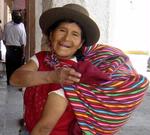
Email from Rebecca Mbuya-Brown to the Implementing Best Practices (IBP) Initiative Knowledge Gateway on November 21 2009. Photo credit: Richar Mendoza, Development Human Office - Gobierno Regional de Ayacucho - Perú.
- Log in to post comments