










































The Community-Driven Eden Area Livability Initiative: Principles, Priorities, and Projects
Prevention Institute
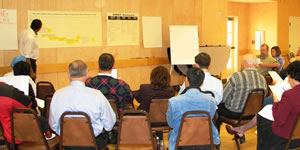
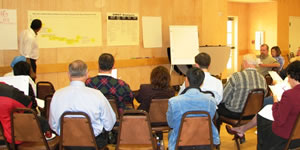
This report evaluates the Eden Area Livability Initiative (EALI), a community-driven effort to improve well-being on a local level in 6 diverse communities of Alameda County, California, United States (US). As part of the process, more than 800 people participated through community forums, town hall meetings, task force meetings, leadership committee meetings, survey completion, and a community charrette (a collaborative and open community meeting designed to solve problems and advance change). The national nonprofit centre Prevention Institute here details the process, lessons learned, and outcomes from engaging community leaders and public agencies' staff in establishing common principles, articulating community priorities, and identifying responsive catalyst projects. Prevention Institute engaged in the project with Alameda County Supervisors Nate Miley and Alice Lai-Bitker, with funding from the California Department of Transportation Environmental Justice Grant Program.
In short, the 18-month period of the EALI evaluated here "represents a transparent and structured, yet flexible, process of community engagement and decision making that included open community forums, a Joint Leadership Committee, a Technical Advisory Committee, six topic-driven task forces, and a community-wide charrette. The process began with identifying commonly held livability principles, key issues, indicators of success, and a vision for more livable communities and then moved to translate that information into specific projects and strategies. A set of priority catalyst projects emerged through community advocacy, and ultimately, voting."
The specifics of the EALI process are detailed in the report. In brief, the EALI process involves individuals, organisations, and communities moving toward a shared set of objectives and a common vision. Based on all of the dialogues, information gathering, and prioritisation what emerges is that: The people in the western unincorporated area of Alameda County want livable communities that are safe; have distinctive character and look and feel inviting and attractive; offer educational opportunities for all; include ample well-designed spaces for commercial, civic, cultural, and recreational life; provide necessary health and other services; and have responsive, transparent, and inclusive government.
Organisers explain that raising awareness about EALI and inspiring involvement represented enduring challenges. It was important that the Livability Initiative represent the true breadth of the community's diverse population and needs. In order to inform those affected by the quality of life in the Eden Area, a number of different strategies were employed:
- flyers were posted in local businesses and other institutions such as churches;
- over 40,000 mailers were sent out with utility bills;
- a community engagement task force met regularly to strategise and coordinate outreach;
- presentations were made at numerous organisations and institutions; and
- an EALI website was developed and updated regularly.
In some cases, it was essential to meet community members in church groups, English as a Second Language (ESL) classes, or at parent-teacher meetings due to a variety of factors such as limited time, lack of child care, or a distrust of government bodies. Specific outreach was designed to reach the majority monolingual Spanish-speaking Cherryland community. A meeting in February 2008, led by Congregations Organizing for Renewal, was conducted entirely in Spanish; more than 150 community members participated in a process similar to the task force meetings, out of which came a few additional projects and strategies that were either integrated with or added to the list of projects to be voted on at the April 5th community charrette.
"At the outset, EALI faced substantial challenges including fatigue from participants in previous strategic planning efforts, uncoordinated services and decision making, a prevalent sentiment that the communities were moving in the wrong direction, and a group of unincorporated communities with distinct character and history that did not necessarily share a vision or sense of common destiny." Reflecting on these challenges, the Prevention Institute offers the following points of wisdom:
- Make community engagement a constant priority: In order for this process to move forward smoothly and have the credibility of truly reflecting the communities' intentions and priorities, it was necessary to encourage and facilitate participation by a broad cross-section of the population. The Joint Leadership Committee presented an opportunity for community members to play a leadership role in the Initiative and develop a sense of ownership of the process. Additionally, at the community forums and other venues, an emphasis was placed on creating opportunities for expression and dialogue. Meetings were structured to ensure opportunities for all to participate (e.g., small group discussions), and the youth perspective was invaluable to establishing long-term priorities (members of the Youth Leadership Council attended the meetings). The Spanish-speaking community was engaged through two community outreach workers who made presentations to groups, talked to hundreds of individuals, translated materials, provided translations at meetings, and supported the Spanish language task force staffed by Congregations Organizing for Renewal.
- Maintain transparency, accountability, and credibility: Great care was taken to make all materials available publicly (in many cases, through multiple outlets: web, hardcopies at meetings, etc.), to get community input on all decisions, and to settle disagreements through discussion and consensus-building, and then publicise those decisions broadly.
- Design a structured, sequential process: A clear process was laid out and repeated at every community meeting. The process was broken up into stages with clear goals and sign posts at the beginning and end of the stages. In addition, issues were separated into short-, medium-, and long-term, and the short-term issues were removed and dealt with by Supervisor Nate Miley's office through an alternate process. The result was an ability to concentrate on the "bigger picture".
- Balance realism with vision: The strategies and projects should respond substantially to the 20 Livability Factors, and should be possible to accomplish in 2-5 years. Outcomes needed to be feasible, but the initiative also needed to remain committed to its goal of creating meaningful area-wide change, rather than targeting minor problems. During the process, the balance was maintained through steps including checking decisions against criteria, encouraging county staff and staff from other public agencies and special districts to provide input on feasibility, and repeatedly discussing time estimates.
- Ensure flexibility and responsiveness: Be willing to hold meetings in the evening and on weekends to accommodate the largest number of participants. Identify the under-representation of the Latino community and take steps to increase participation (e.g., through outreach to get THRIVE surveys disseminated in Spanish). Add a safety task force based on a request from community forum participants. Include a community-produced pro/con comment section to the charrette voter's guide.
- Establish coordination and communication: Hold regular meetings and arrange conversations among lead staff and extensive discussion and problem solving within each organisation.
In conclusion, the Prevention Institute reflects that: "The diverse cross-section of participation from Eden Area residents and the accountability demonstrated by county staff and staff from other public agencies and special districts throughout this process has laid the groundwork for ongoing trust and established the infrastructure for continued action in the Eden Area."
Email from Samuel Davidson to The Communication Initiative on March 13 2009; and the EALI website, July 20 2009.
- Log in to post comments