










































"Anees Has Measles": Storytelling and Singing to Enhance MMR Vaccination in Child Care Centers Amid Religious Hesitancy
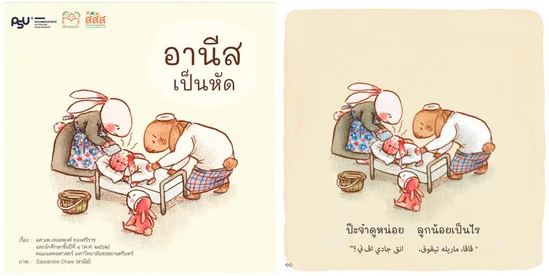
"Overall, the 'Anees has Measles' intervention illustrates that culturally tailored educational strategies that employ engaging and familiar communication formats can effectively enhance vaccination uptake in communities with significant vaccine hesitancy due to religious beliefs."
Since 2000, measles cases in Thailand have generally trended downwards, but the deep southern provinces have experienced recurring epidemics every 3-5 years. These provinces, where Muslims are the majority, reported the highest incidence rates in the country and notably low measles, mumps, and rubella (MMR) vaccine coverage of around 70% from 2014 to 2018. This study explores the enhancement of MMR vaccination rates in the deep south of Thailand through a culturally tailored intervention that incorporates storytelling and singing, aligning with local cultural and religious values.
The intervention, developed with input from community stakeholders including health workers, religious leaders, and parents, comprised two main components: storytelling sessions and singing activities, both utilising culturally resonant content and formats to effectively engage the community. For example, the intervention featured traditional melodies in its singing activities.
- Storybook development: Titled "Anees has Measles", the storybook was crafted using a design thinking approach to deeply understand and empathise with the community's concerns about MMR vaccination. This creative process involved various stakeholders from the community who shared their insights on cultural nuances and common hesitancies surrounding vaccines. Their contributions ensured the content was culturally relevant and sensitive to the audience's beliefs and practices. The storybook aims to make the topic of vaccination approachable and understandable. It consists of the following components:
- The Story of Anees: A narrative about a girl named Anees who contracts measles, illustrating the severity of the disease. It underscores the message that vaccines can be deemed halal (permissible under Islam) when necessary to save lives, aligning with religious considerations.
- Insights from the Muslim Organization of Thailand: A section highlighting the importance of vaccinations and reassuring parents that they can be considered halal, addressing a significant cultural concern within the community.
- Educational Q&A on MMR Vaccine: Eight carefully crafted questions and answers designed to educate the community about the MMR vaccine, addressing common doubts and misinformation.
- Vaccine Schedule of Thailand: An informative table presenting the official vaccination schedule, helping parents understand when their children should receive their shots.
- Vaccine Song Lyrics: Lyrics of a song related to the MMR vaccine, designed to be catchy and memorable, which helps reinforce the information about vaccination in a fun and engaging way.
- Singing activity: This activity utilised traditional Muslim melodies to reinforce the messages in the storybook. The singing sessions were designed to be interactive, involving both children and their parents, and thereby fostering a community-based learning environment that supports behavioural change towards the uptake of healthy practices.
Conducted from December 2019 to March 2020 across 8 districts in 5 provinces, the study involved children aged 18 months to 5 years in government child care centres. Compared to broader geographical vaccination trends, the local health centre's pre-intervention coverage was considerably lower than the regional and national averages. The focus was on a catch-up vaccination approach:
- C1 (Catch-up Vaccination): Consisted of children aged 18 months to 5 years who had not previously received any MMR doses. These children were offered their first dose of MMR, with the recommendation to receive a second dose at least one month later.
- C2 (Catch-up Vaccination): Consisted of children who had already received one dose of MMR. These children were provided a second dose to complete their immunisation against measles.
Results indicated a substantial increase in MMR vaccination coverage, from 44.3% to 72.0% twelve months post-intervention, and further to 77.0% at 48 months post-intervention, representing a significant and sustained improvement (p < 0.001). Per the researchers: "This marked and continuous increase demonstrates the effectiveness of culturally adapted health education in areas with significant vaccine hesitancy."
An additional aspect of the study involved quantitatively assessing the satisfaction levels of staff from the Subdistrict Administrative Organization and child care centres regarding the storybook intervention. The findings are shared. For example, the overall satisfaction with the project was 83.22%, indicating strong approval of the initiative's impact and execution.
Qualitative feedback collected from participants highlighted, for example, the importance of collaborative efforts among healthcare providers, parents, and community leaders as crucial for the success of the programme. Feedback also indicated a need for the storybook to have larger print and more colourful pictures to attract the children's attention and help deliver the message more effectively.
The researchers note that this study underscores the importance of exploring different types of educational interventions that could cater to diverse cultural groups, thereby enhancing the overall effectiveness of public health campaigns aimed at increasing vaccine coverage. Further studies could also investigate the impact of combining multiple communication strategies on vaccine hesitancy to identify the most effective approaches for various populations.
In conclusion: "The findings highlight the importance of integrating culturally and religiously sensitive methods into public health strategies, significantly enhancing vaccine acceptance and coverage in diverse and conservative settings. This approach suggests a broader applicability for similar interventions in comparable contexts globally."
Vaccines 2024, 12, 819. https://doi.org/10.3390/vaccines12070819.
- Log in to post comments