










































Youth in Iran: A Story Half Told
InterMedia
"If we are to chart a global future that is fair, equitable and responsive to the needs and expectations of citizens across the world, it is imperative that policy-makers and decision-makers listen to the opinions of young people in emerging economies with large youth populations."
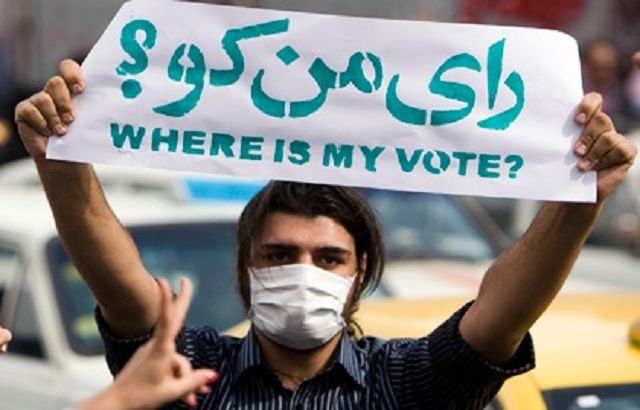
What role do traditional media play in Iranian youths' information-gathering processes, and how important are the internet, social media, and mobile phones in their lives? These are some of the questions explored by this study, conducted by InterMedia and Small Media with Iranians between 16-25 years of age. The study, co-funded by the BBC Media Action, euronews, and Deutsche Welle, was designed to obtain a deeper understanding of personal values, life priorities, media and communication habits, and political perspectives of Iranian youth. The Young Publics Iran study is the first in the series of studies under InterMedia's Young Publics Research Initiative, which focuses on youth in under-researched societies. The goal is to help inform the strategies of the development community and policymakers seeking to engage with young people in Iran, as well as to create a more complete picture of Iranian youth (who, according to the author of this report, have been covered in Western media in a way that is "largely unchanged from 2009", when the Green Movement emerged).
The study involved a national telephone survey with 1,002 young people. It was designed to capture the views of young men and women of different ages, with different levels of education, from all religious and socio-economic backgrounds, as well as those living in urban and rural Iran and those with different social and political convictions. Amongst the findings:
- Young Iranians express a very broad spectrum of social and political perspectives and do not constitute one homogeneous group.
- Family constitutes a significant influence on the attitudes and behaviours of young Iranians - for example, they cite their family as those whose views and guidance have the strongest impact on their political participation. Parental influence (of both the mother and the father) on political participation tends to be stronger among young women than among young men, and falls with age.
- Religion plays a central role in the lives of young Iranians, reflected in the high proportion of youth who believe that following religious customs is important and who identify religious figures as strong influences on different aspects of their lives.
- Concerns for one's job, career prospects, and general livelihood issues are key priorities for Iranian youth.
- Young men's and young women's life priorities diverge after high school: Men become more focused on their career, whereas women maintain their interest in education and focus more on family.
- One-third of Iranian youth report that, if given an opportunity, they would leave the country. While for most young people the primary reasons may be economic in nature, the survey data indicate that the desire to leave is also associated with mistrust of state institutions and perceptions that human rights and freedom of expression are threatened.
- That said, the majority of Iranian youth express confidence in the protection of human rights; only the most liberal youth are concerned that human rights are not adequately protected in Iran.
- On the other hand, almost a third of Iranian youth believe that their freedom of expression is constrained and feel unable to express their views openly in public. Many of them have "taken refuge in the online world. Despite growing online monitoring and censorship by the Iranian government, blogs and social media for now still afford their users greater anonymity and provide an outlet for youth to express themselves more freely than they may be able to in the 'offline' world."
- State institutions enjoy a high level of trust among most young Iranians, except among the most liberal youth. The latter also feel the least represented by the current government and have little confidence in their own political efficacy.
- Young people show strong support for a change of thinking in Iran, but few believe that the government would act upon a call from the people for change.
- Traditional media remain the main source of news and information for Iranian youth, but the internet, blogs, and social media play an important role, particularly for more liberal youth. "[I]t is also important to note that, despite the overall growing media use, word of mouth continues to play an important complementary role in youth's information-gathering. About three-quarters of all Iranian youth still say they turn to friends and family for news and information on a weekly basis."
- Conservative and moderate youth put most trust in the national media, while liberal youth express more confidence in the internet.
The final portion of the report offers suggestions that go beyond this specific population:
- Communication efforts to engage Iranian youth will be most effective when they are customised to the specific interests and needs of different segments.
- Adopt engagement strategies that revolve around the issues and subjects that are of greatest importance to young people - in this case, jobs, career prospects, and economic challenges.
- Understand the roles played by institutional drivers, such as family, faith, and education, in young people's lives.
- Ensure that engagement strategies take into account the impact of cultural context on the understanding of certain social and political concepts, such as "human rights" and "freedom of expression".
- Optimise the use of online sources to help support freedom of expression.
- Recognise that a strong appetite for change may not necessarily be driven primarily by political challenges but, rather by economic challenges.
Email from Klara Debeljak to The Communication Initiative on May 24 2013. Image credit: The Iran Primer
- Log in to post comments