










































Women: Victims, Agents or Perpetrators?
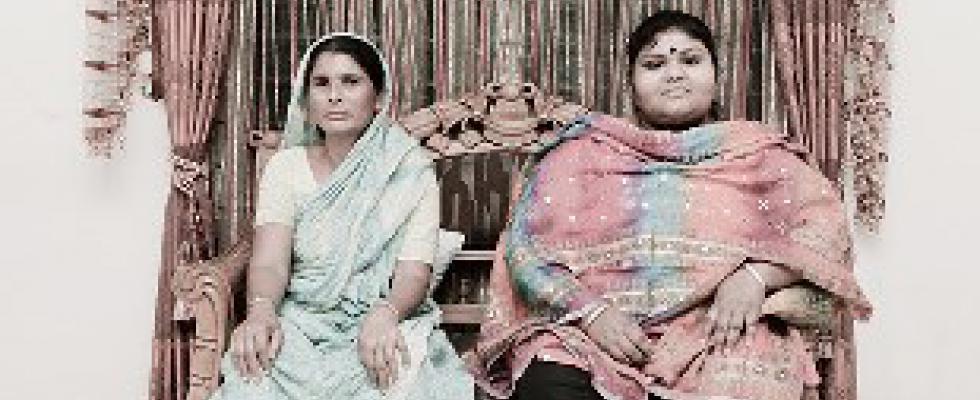
Author: Ranjani.K.Murthy, May 29 2014 - In 1975, when the first International Women’s Year was declared, women were seen as victims of patriarchy. Patriarchy was seen as an ideology of male privilege perpetuated through social institutions like family, community, market, state and supra-state organisations. Men were seen as oppressors. Welfare, anti-poverty and (formal) equality oriented projects and programmes were initiated (Moser, 1989). Maternal and child health programme, subsidised micro credit programs and legislation on women’s inheritance rights emerged. Ironically, there were no initiatives with men to foster women’s empowerment.
By the 1990s, it was apparent that welfare, anti-poverty and equality approaches were not working by themselves, and there was a shift to fostering women’s empowerment, with a focus on the most marginalised amongst them. In India, the Women’s Development Programme emerged in Rajasthan with a thrust on forming women’s collectives and enhancing their ability to make strategic life choices where this ability was previously denied them (Kabeer, 2001). Women as 'agents' is a transformative conceptualisation - more than women as 'Victims'. Women vacillate between being a victim and an agent in different relationships and different contexts. For example, a vocal Tamil speaking women's leader of a single women’s group in Sri Lanka was subordinate to her elderly father in-law in Batticola.
Yet, the recognition that women are both victims/survivors and agents of transformation has not led to as much progress in women’s empowerment or equality as could be expected. The Global Gender Gap Report notes a persistent gender gap in the 133 countries, especially in political and economic spheres (Bekhouche et al 2013).
There is a third dimension to conceptualising women beyond 'Victims' and 'Agents' in their multiple identities and relationships. That is, that at times women are also perpetuators. To give examples from different spheres, a woman leader from Tamil Nadu, India, protesting against the appropriation of commons and forests which she used for her livelihood by the State and MNCs in Tamil Nadu in India, told me "Help me find a bride for my 27 year old son. I am getting old. I need somebody to do the cooking". A middle aged woman from Dinajpur district Bangladesh stated, "I go to the market, but cannot let my daughter in law go. What will others say? She can work in the field under my supervision". A woman leader from Kathmandu’s low income area stated "I cannot let my husband undergo vasectomy, as he will become weak". A young educated (upper caste) women in Chennai, Tamil Nadu, stated "I gave up my promotion in the bank so that I can stay look after my husband. My husband did not mind either way". Women, as much as men, hold prejudices against Dalits, religious, sexual and ethnic minorities, differently-abled and single women.
Reference:
Bekhouche, Y., R. Hausmann and L. D’Andrea Tyson (2013). Global Gender Gap Report 2013, World Economic Forum
Kabeer, N., 2001, 'Resources, Agency, Achievements: Reflections on the Measurement of Women's Empowerment', in Discussing Women's Empowerment - Theory and Practice, ed. A. Sisask, Sida Studies No. 3, Swedish International Development Agency, Stockholm, pp. 17-59
Moser, C,. 1989, ‘Gender planning in the third world: meeting practical and strategic needs’, World Development, Vol.17, No.11, pp. 1799-1825
Image credit: Close Distance by Jannatul Mawa
- Log in to post comments