










































Why Women Count
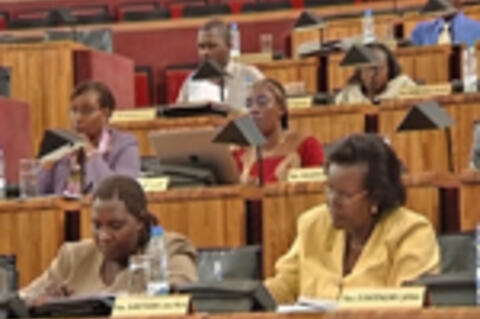
This initiative draws on the media of film and television to educate people about, and inspire action around, the issue of women's rights. A key strategy is the sharing of personal stories to make a potentially abstract issue concrete. This approach is designed to give audiences insight into the lives of other women around the world who may be experiencing the same kinds of discrimination and oppression, as well as to share stories of women who have found their own solutions to overcome these difficulties.
Specifically, members of the Broadcasting for Change Network researched and produced their own story on women's empowerment - or lack of empowerment - in their own country or region. Details about each of the resulting films are available on the Why Women Count website. For example, "The Power of Her Voice" profiles Minister of Parliament (MP) Njoki Ndung'u, who in 2006 shepherded a Sexual Offences Law outlawing violence against women through Kenya's male-dominated parliament. "Esma's Secret" explores entrenched attitudes toward rape victims in Bosnia Herzegovina, and one woman's efforts to speak out on the issue in traditional Bosnian society. "In the Eye of the Storm" shares the story of journalist Fadia Bazzeh, whose report on the bombing of Lebanon in July 2006 garnered her an honourary mention in International Association of Women in Radio and Television (IAWRT) awards.
Screenings at in-person events - many of which feature panel-style debates and dialogue - are designed to carry discussion about the films and the issues they raise beyond the screen. For example, in October 2007, an audience of 200 invited guests (from government, the media, academia, and the development community) in London, the United Kingdom (UK), viewed 8 of the films and then listened to a panel debate with 4 speakers who discussed the documentaries and touched on the obstacles that still stand in the way of equality for women. The involvement of prominent personnel in launch/screening events like this one (which was hosted by the British Foreign & Commonwealth Office, and featured a keynote address by the Deputy Executive Director of the UN Population Fund, or UNFPA) is part of a strategy for drawing attention to the centrality of women's empowerment to international development.
In addition to educating and inspiring audiences, this initiative aims to empower the producers and broadcasters who are taking part through a collaborative exchange model - hopefully thereby stimulating additional communication about human rights through the television medium. Each participant receives from TVE in London all 41 of the Why Women Count films in English, Spanish, or an "international version", for translating and dubbing into local languages. They may then broadcast these materials on their own national, regional, or local TV channels, copyright-free.
Women, Rights.
The Why Women Count series is available on Beta, VHS, and DVD compilation tapes from TVE for non-broadcast use in English and Spanish. To order DVDs or other tapes, please contact Dina Junkermann, Distribution Manager dina.junkermann@tve.org.uk or email distribution@tve.org.uk
Email from Sophie Williamson to The Communication Initiative on October 4 2007; "UK Foreign Office Launch of 'Why Women Count'" (TVE Press Release, October 19 2007); and Why Women Count website.
- Log in to post comments