










































Who Makes the Cambodian News: An Assessment of Women's Presence and Portrayal in Cambodian News
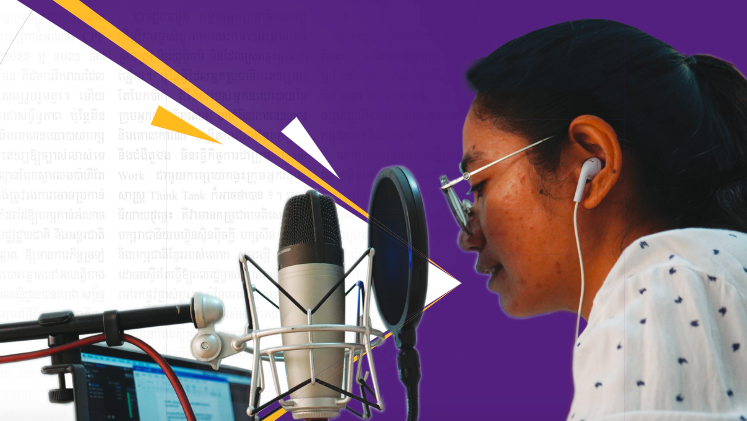
"This is a call to action for media owners and managers, senior editors, journalists, journalist associations to be intentional about women's presence and portrayal in the news, to report the news from women's perspectives and to regard women in news as an everyday topic rather than a marginalised topic."
This report, published by the United Nations Educational, Scientific and Cultural Organization (UNESCO), shares the findings of a study that investigated the presence and portrayal of women in the news in Cambodia. It is based on a mixed-methods approach involving an analysis of literature and quantitative and qualitative data research and analysis. A total of 4,094 news stories were collected and analysed across 12 selected media outlets for a period of one month, from January 2 2023 to January 31 2023. The study forms part of the "Strengthening Media Development and Freedom of Expression in Cambodia" project funded by the Swedish International Development Cooperation Agency (SIDA).
The findings outlined in the report cover:
- Overall presence of women in the news;
- Women's representation as spokespeople, experts, and ordinary citizen vox pops;
- Space allotment (reflecting the degree of importance editors intentionally place on news stories); and
- Gender equality and gender inequality (news stories highlighting issues of gender equality or inequality, including coverage of gender-based violence (GBV), sexual violence, and domestic violence).
The following are some of the findings shared in the report:
- Women were vastly underrepresented in news stories, with an exclusively female presence found in a mere 5% of all stories, in comparison to almost half of news stories containing an exclusively male presence.
- Only 2% of all spokespeople were women, 7% were experts, and 12% of all vox pops were with women.
- News stories with an exclusively male presence were 10 times more likely to be placed on the front page, in feature stories, and in columns than stories with an exclusive female presence.
- The media coverage is very limited when it comes to issues related to women. Only 7% of news stories covered gender equality, while news stories on gender inequality covered just 14%. In addition, stories on GBV, sexual violence, and domestic violence were found to be rare. Of the 4,094 stories monitored, only 1% were on GBV, while sexual violence and domestic violence were 0.5% and 1.6%, respectively.
The report makes the point that the responsibility for enhancing women's presence and portrayal in Cambodian news requires collaboration and partnerships that optimise effort, buy-in, and reach. It outlines recommended actions for a number of stakeholders, which include, but are not limited to, the following:
Media outlets, publishers, and journalist associations:
- Develop, publish, and implement a gender parity policy, a code of ethics, an editorial policy, gender-sensitive reporting guidelines, and effective responses to online abuse of women journalists.
- Build gender equality capacity including with senior editors and management.
- Explore and develop innovative uses of traditional and new media to effect change in public knowledge of and attitudes towards women in the news and in the media.
Civil society organisations: Develop a network of dedicated women spokespeople to drive women-related conversation across a breadth of topics and provide media outlets with lists of women spokespeople/experts.
Business associations, universities, political parties, and trade unions:
- Develop a group of spokespeople to drive women-related conversation across a breadth of topics.
- Disseminate lists of women spokespeople and experts for media to provide expert commentary.
The Royal Government of Cambodia: Strengthen the Technical Working Group (TWG) overseeing the implementation of the Joint Prakas on Media Code of Conduct for Reporting on Violence Against Women by enhancing membership, introducing a sound methodology to monitor compliance as well as a transparent public complaints mechanism. In addition, reports on monitoring outcomes should be published and an annual national forum on women in the media established.
Journalism and education institutions and academia:
- Revise curricula to embed gender mainstreaming across all subjects and all short courses.
- Foster further research on women's representation and gender equality in media genres, expanding the scope beyond news to advertising, comedy/entertainment, etc.
UNESCO:
- Lead facilitation of a joint action plan to improve the representation of women in news and in the media.
- Support media outletsm including senior managers and editorsm to understand gender, gender-sensitive reporting, story selection, and angles. Assist them in introducing education and training strategies for journalists, including interview techniques and on-the-job training with women experts, leaders, and survivors who are most likely to speak to the media.
The public: Participate in gender-sensitive media literacy initiatives to better examine women's presence and portrayal in the news and to create an understanding that sensationalising GBV and victim-blaming reinforces a culture of violence.
Development partners:
- Fund research into women in the news media every five years to highlight performance, evaluate current strategies, and identify further opportunities.
- Support the introduction in journalism courses of a subject on independent media policies and frameworks.
UNESCO website on February 28 2024. Image credit: ©UNESCO Cambodia
- Log in to post comments