










































Violent Conflict and the Demand for Healthcare: How Armed Conflict Reduces Trust, Instills Fear, and Increases Child Mortality
"This paper contributes to the literature on the health effects of violence by highlighting the largely overlooked demand-side effects of violent conflict on health."
Exposure to violent conflict shapes the attitudes and behaviour towards healthcare use among civilians. People may become reluctant to seek out medical services for themselves or their children - and to have their children vaccinated. In this paper, Max Schaub argues that exposure to violence suppresses civilian demand for health care through two mediating channels - mistrust of government institutions and fear of future violence - with adverse consequences for health outcomes, particularly child health.
In reviewing the literature, Schaub notes that most scholarship indicates that trauma undermines the belief that other people will not harm you if vulnerable. Alongside interpersonal trust, trust in state institutions is undermined. Research consistently shows that individuals who have been victimised have less trust in the state - an effect that can sometime endure over several generations. Mistrust in state institutions can also extend to health services, such as government hospitals.
If people mistrust government institutions and officials, they may shy away from contacting health professionals to have their children vaccinated and/or stop listening to official government messages about the importance of vaccination. And vaccination is particularly important in resource-poor settings where other forms of health care are not always readily available.
In Nigeria, qualitative work has singled out trust in state institutions as an important factor for explaining vaccination-seeking behaviour. In the early 2000s, a polio vaccination campaign came to an abrupt halt because rumours spread that the Nigerian health service and its international partners were trying to sterilise women by means of the injection. The rumours only stopped after religious authorities intervened.
In addition to mistrust, a second channel potentially linking exposure to violence to healthcare-seeking behaviour is trauma and fear. As numerous studies have demonstrated, victims of violence are regularly left traumatised by their experience. Individuals exposed to violence face an elevated risk of becoming victims of future violence, and this objective shift is likely reflected in their subjective threat perception. In this calculus, people attach lower importance to preventive measures such as having their children vaccinated.
To demonstrate this argument empirically, Schaub uses information from over 80,000 interviews from 22 countries in Africa over a period of 12 years, which he analyses by a variety of analytical approaches, including structural equation modeling, fixed effect models, and mediation analysis. To establish that the relationship is plausibly causal, he estimates two-stage differences in differences models. Individual-level data on experiences of violence, trust, fear, and healthcare-seeking behaviour come from Afrobarometer (2018) surveys; context-level data on violence, vaccine uptake, and infant mortality from the Uppsala Conflict Data Program and the Institute for Health Metrics and Evaluation, respectively.
The results show that exposure to violence - both at the individual and context-level - is associated with significantly reduced levels of trust and increased fear of violence, which then predicts lower rates of DPT (diphtheria-pertussis-tetanus) vaccination. Lower vaccine uptake, in turn, directly translates into higher rates of infant mortality. Put another way, the multilevel models presented in the paper show that the relationships between trust and vaccination rates, between the use of medical services and infant mortality, and between vaccination rates and infant mortality all hold.
The findings suggest that mid- and post-conflict interventions should include individual-level components that explicitly aim to restore trust and address trauma and fear. Adjusting existing programmes could be part of this effort. For example, trust-building measures are already a well-established component of post-conflict reconstruction and peace-building programmes. These programmes could be modified so to consider health as an explicit area of activity.
Schaub concludes: "To fully address the health consequences of armed conflict, it is essential that we better understand the attitudinal and behavioral correlates of exposure to violence."
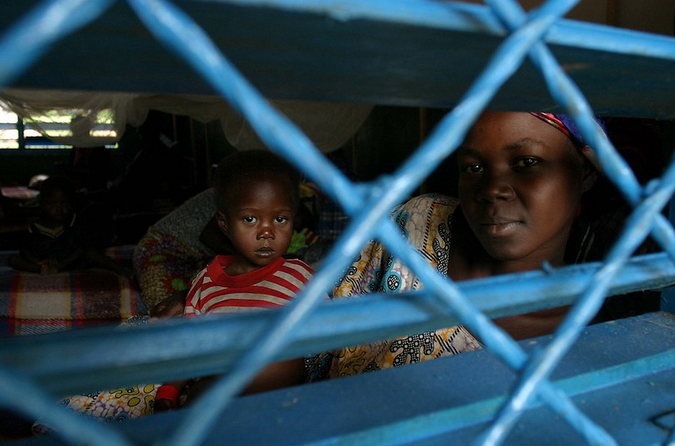
Social Science & Medicine, Volume 359, October 2024, 117252. Image credit: Pierre Holtz for UNICEF via hdptcar on Flickr (CC BY 2.0)
- Log in to post comments