










































Striving and Surviving: Exploring the Lives of Women at the Base of the Pyramid
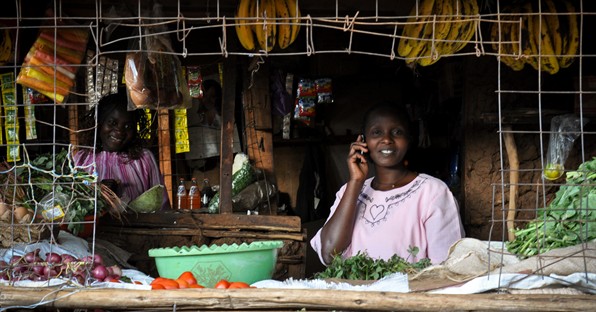
"...any mobile product or service aiming to serve women in a commercially successful manner must meet the actual lived needs of women as reported by them."
To mark International Women's Day 2012, GSMA mWomen released this research report exploring the wants and needs - especially the mobile-phone-related needs - of women living at the base of the pyramid (BoP), which are those living on under US$2 a day. It features data collected during a 9-month study conducted in partnership with the Australian Agency for International Development (AusAID) and the United States Agency for International Development (USAID), with primary research undertaken by TNS. More than 2,500 women took part in this research, from four countries chosen to represent a range of social, cultural, and market contexts: Egypt, India, Papua New Guinea, and Uganda. Because of the great contextual variations within India, the findings have been further broken down by region: North, East, South, and West. The survey sample size was also doubled from 500 to 1,000 in India to reflect this. Participants ranged from ages 16-64 and lived in both urban and rural areas.
Striving and Surviving reveals that for most BoP women, the main priority in life is simple survival. Better housing, family healthcare, and a more stable income were also among the greatest priorities. Those who are mothers all regard their children as one of the biggest priorities in their life, with three-quarters naming a good education for their children as one of their top five life priorities. GMSA mWomen believes that, if the mobile industry provides practical and affordable solutions to address these priorities, they are likely to find a receptive audience who stand to gain from mobile ownership.
Ten of the key findings include:
- There is an SMS (text message) "utility gap": 77% of BoP women have made a mobile phone call, but only 37% have sent an SMS, regardless of literacy levels. BoP women reported that they did not find the SMS service useful, thus products designed to reach BoP women that use SMS should be of demonstrable practical value to them.
- There is an mHealth (mobile health) gap: 84% of women wanted better healthcare information, but only 39% expressed a specific interest in receiving general healthcare information through their mobile phones. MHealth offerings will need to be closely geared toward women's needs and communicated clearly if they are to live up to their potential.
- There is a technical literacy barrier: Of those who did not want to own a mobile phone, 22% said the main reason was that they "wouldn't know how to use it". The mobile industry and development organisations should address this through educational activities and user-centric designs.
- There is a need to address family dynamics: 74% of married women who did not want a mobile phone said it was because their husbands would not allow it. Efforts to communicate the benefits of mobile should focus on the benefits for the whole family.
- There is a need to address suspicions: 82% of married BoP women who own mobile phones say "it makes my husband suspicious", a reported disadvantage of ownership, particularly for women in Uganda and Papua New Guinea. Such suspicions can lead to unintended consequences of mobile phone ownership, such as domestic violence; thus community, and family educational efforts are recommended on the life-enhancing uses of mobile technology.
- BoP women are eager entrepreneurs: 73% of participants expressed interest in entrepreneurship to help support their families. Mobile solutions that help entrepreneurs manage their business or set up mobile retail enterprises could have a powerful impact.
- There is a mobile internet gap: Only 2% of BoP women have ever used the mobile internet, although 23% are interested in this capability. Creating relevant, affordable, and accessible online services may convert many mobile users to owners in the future, but most such services are currently premature.
- Television is a crucial source of entertainment and information for BoP women: 53% of participants watch it; 36% watch it daily. TV can play a role in communicating the benefits of mobile, through direct advertising or positive images of mobile users in soap operas, for example.
- Women's groups play a role: 28% of participants visit women's groups regularly, and 39% said that female friends were a trusted information source. Engaging with these groups could help mobile operators and non-governmental organisations (NGOs) reach BoP women at scale.
- There is a power gap: 38% of BoP women live "off grid", without easy access to an electricity source. Although access to electricity varies by market, low-cost, alternative mobile charging solutions will be key for many BoP women to fully realise the potential benefits of mobile phone ownership.
In an effort to bring these and other findings to life, the research team created eight "Portraits": composite portrayals of women living in very different circumstances within the BoP group. These Portraits appear throughout the report to offer readers a glimpse into the lives of BoP women. Although the Portraits are fictionalised, each one of them is based on quantitative research, as well as detailed one-on-one interviews with and ethnographies of BoP women. These stories reveal, for example, that "strategies that concentrate only on the most obvious practical applications of mobile technologies may overlook the emotional value that mobile phones can have for BoP women. One of the top five reasons mobile owners surveyed gave for their purchase was the sense of pride they felt in owning a phone. Owners also found a great deal of emotional value in being able to contact their family more easily, a significant factor in markets where women are often uprooted when married and where mobility may be restricted for financial and cultural reasons."
The report also identifies social, cultural, and economic factors within each country that shape women's needs and their attitude towards mobile ownership; GMSA mWomen argues that the mobile industry will need to understand these factors if they are to develop services that will reach most BoP women. For example, in Uganda, four out of five non-mobile users would be interested in owning a mobile, but, in Southern India, this figure is less than 6%, due to factors such as cost or the disapproval of husbands. Only by understanding specific social attitudes and market factors will the mobile industry successfully realise the market potential of BoP women.
MobileActive.org, February 28 2013. Image credit: IntoMobile
- Log in to post comments