










































Strategies to Improve Maternal Vaccination Acceptance
London School of Hygiene & Tropical Medicine (LSHTM)
Despite assurances of the efficacy and safety of the maternal diphtheria, tetanus, acellular pertussis, and inactivated polio (dTaP/IPV) and influenza vaccines, there are many challenges to obtaining optimum vaccination rates during pregnancy. In Hackney, London, United Kingdom (UK), for example, data show that the maternal influenza vaccination coverage rate is 32%, and the maternal dTaP/IPV coverage rate is 41%. The aim of this study was to gain a contextualised understanding of access to and attitudes towards maternal vaccination among pregnant and recently pregnant women and healthcare professionals (HCPs) in Hackney. By drawing on an analysis of the socio-political context of vaccination and individuals, the researchers propose strategies to increase long-term maternal vaccination acceptance.
The term vaccine hesitancy is used in this paper to explain one's decision not to vaccinate, to partially vaccinate, or to delay vaccination. As part of their discussion within the introductory section on vaccine hesitancy, the researchers explain that, "As perceived risks (such as vaccine side effects) often require expert identification and calculation (meaning that people must rely on expert advice about what risks are prevalent), people are aware that experts disagree with each other, that science and technology often generate risks, and that there are conflicting business, political and financial motives in the development and delivery of healthcare technologies. As a result, people are challenged by continued uncertainties about what information and advice to trust....Vaccination decisions are thus also based on critical engagements (or disengagement) with local and national political histories, and the legacy of particular interactions between populations and institutions of the state, science, and the media....Through this study, the idea that vaccine questioning or refusal is not simply a resistance to science and medical technology, but is social, political, extremely varied, complex, and context-specific is thus highlighted."
The London borough of Hackney was chosen as the study site as it has one of the lowest vaccination coverage rates in England, including for maternal vaccination. Historically, Hackney has also been very ethnically and socially diverse; there are significant "other White", Black, and Turkish/Kurdish communities, as well as significantly more people of the Jewish and Muslim faiths than London and England in general.
A maximum variation sampling method was used to recruit 47 pregnant and recently pregnant women from a wide range of backgrounds, as well as 10 HCPs. In-depth interviews (IDIs) and a video-recording of a pregnant patient's consultation explored experiences of care within the National Health Service (NHS) during pregnancy, as well as women's views about maternal vaccination. IDIs with HCPs explored their views towards, and how they discuss and provide, maternal vaccination. Study data were analysed both deductively, through drawing on insights from anthropological works that address diverse conceptualisations and practices around vaccination, and inductively, with a thematic analysis approach.
The findings of this study and the recommendations based on them were divided into 5 broad themes:
- Access to maternal vaccination - Sample findings: Middle-class women who were citizens of the UK tended to believe that they had all the vaccination information they needed; indeed, some even felt overwhelmed by such information from leaflets and online research. However, some women who were more marginalised, especially those whose first language was not English, found it difficult to understand verbal vaccination information.
- Healthcare institution rhetoric and its effect on maternal vaccination acceptance - Sample findings: Five Black British Caribbean participants were hesitant to vaccinate. These women had fears, for example, that the vaccines were "something that the government are putting in people". The threat that the state would get involved if a woman did not vaccinate her child demonstrates one of the ways in which women are punished for failing to conform to ideologies of "being a good mother". This is the case particularly for women marginalised or discriminated against due to their ethnicity and socio-economic position.
- Community and family influences on maternal vaccination decisions - Sample findings: Participants with male partners tended not to seek advice from them as much as from their female friends and family members, and some women actively excluded male partners from the decision-making process. Ten participants had family members who were HCPs, whose vaccine advice was trusted more than advice given by non-related HCPs. Such advice often carried warnings not to vaccinate.
- HCPs' views towards maternal vaccination - Sample findings: HCPs were generally pro-vaccine; however, some held concerns or misconceptions about the vaccines. Most HCPs asserted that they recommended the maternal influenza and DTaP/IPV vaccines. However, later in the interview when they were asked about their recommendation specifically, it often became apparent that they did not actively recommend the vaccines, but merely mentioned them. In addition, only one general practitioner (GP) mentioned that vaccination prompts (through information technology (IT) systems) were available at her practice.
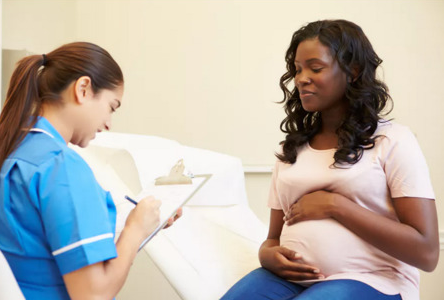
- The influence of patient-HCP relationships on maternal vaccination acceptance - Sample findings: A number of pregnant/recently pregnant participants reported grievances that related to pressures and time constraints facing HCPs. Most HCPs stated that they reassured vaccine hesitant women of the safety of the vaccines and offered to discuss vaccination with them further if they had any concerns. This was evident in the consultation that was video-recorded: Dr. Shaw employed a participatory approach to the vaccination discussion, which invited her patient into the conversation, while also asking her about wider aspects of her wellbeing. However, according to the women interviewed, this rarely happened, especially if they did not initiate the conversation themselves. Instead, women stated that they were often handed leaflets or advised to conduct online research. Almost all women interviewed stated that they would have liked to have a more in-depth, verbal conversation with their HCP about their concerns.
In the discussion section of the paper, the researchers offer recommendations in each of the 5 thematic areas:
- Access - Example recommendations:
- Translation services should be enhanced, and maternal vaccination leaflets should be translated into a variety of languages.
- Technical terms used in medical settings and in vaccination promotion materials should be translated into lay language that is culturally appropriate.
- A "vaccine champion" could be created - a member of staff who oversees and creates enthusiasm for vaccination campaigns and encourages improved communication about vaccination between HCPs.
- Healthcare rhetoric - Example recommendation: "Instead of being presented with abstract statistics with which they are expected to make probability calculations in order to make decisions, most pregnant women want verbal discussions, which include reassurance and empathy. As decisions occur socially and often do not account for clear certitudes and scientific explanations..., a narrative approach from someone, which generates emotions, can be more effective in encouraging vaccination acceptance than presenting 'facts' verbally or through something, such as leaflets. Vaccination promotion materials should therefore be used as a supplement to more in-depth and personalised vaccination discussions."
- Involving community and family members - Example recommendation: "Family members and friends could...be encouraged to be involved in vaccine discussions and decisions as much as possible, for example if they attend consultations with the pregnant patient, if of course, this is what the patient wants. Particular efforts should be made to include male partners in such discussions. Partners and other influential family members should also be better represented in vaccination promotion material."
- HCPs' views towards maternal vaccination - Example recommendations:
- HCPs should receive training so that they: understand the importance of vaccination; have the chance to discuss any concerns they may have; and ensure they can manage the high expectations of the system and the demands and questions of patients.
- As midwives usually have close relationships with pregnant women, they should be more involved with vaccine programmes and promotion.
- Patient-HCP relationships - Example recommendation: An example of a relational, participatory approach to structuring the vaccination conversation with vaccine-hesitant women in consultations is as follows. HCPs should:
- Introduce themselves to their patient and explain what they can expect from the consultation;
- Explain what the vaccines are and why they are important;
- Check the patient's decision-making role preference (i.e., involving her to the extent that she desires);
- Explore expectations and any fears surrounding vaccination;
- Provide personalised information and reassurance based on the patient's concerns (acknowledge or be honest if an answer to a patient's question is not known);
- Discuss potential options for moving forward (such as having time to think about the decision, coming back to discuss it further if necessary, and not pressuring the patient to vaccinate);
- Check the patient's understanding of information and her expectations of options; and
- Support the patient to make a decision.
A relational approach would also require more midwife continuity, so that the same one or two HCPs spend more time with women over the course of their pregnancy in order to build trusting relationships and enable any concerns to be discussed fully.
In conclusion, the researchers suggest that a "relational approach to healthcare, which requires support and close relationships between healthcare professionals and patients, would engender an understanding of women's experiences and perceptions in context, and enable them to be more involved in healthcare decisions. It would help to address the assumptions and normative frameworks underlying healthcare provision, which, whether due to resistance to such frameworks, alienation, or discrimination within the healthcare system, can exclude women from vaccination. Following this, a move should be made away from moralising individual behaviour and encouraging individual women to change, to addressing the deeper, structural conditions that affect women's and their broader collectives', choices and actions."
Continuing, they suggest that "ethnographic engagement in various healthcare settings, allowing the space for dialogue with pregnant women and the telling of their stories and experiences would allow for wider conceptualisations of healthcare and vaccination across various communities. This would mean that vaccine hesitancy can be more deeply understood by healthcare institutions, professionals, and academics."
BMC Public Health (2019) 19:342 https://doi.org/10.1186/s12889-019-6655-y. Image credit: Shutterstock
- Log in to post comments