










































Story-Driven Participatory Video with Mobile Technology Project
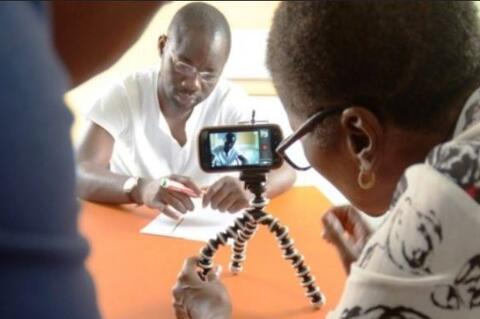
To develop the facilitation process for the story-driven PV approach, researchers first met with Sonke staff to discuss using PV in their context in Cape Town. Through a series of visioning meetings, they explored how to incorporate mobile phone technology into the process, as mobile phones are commonly owned and used by both staff and partners. According to the researchers, this Story-driven Participatory Video process is "a facilitated community engagement and mobilisation process that uses filmmaking as a catalyst for awareness-raising, personal and group development, confidence-building and strengthening voice."
During the PV workshop, each participant was asked to share a story explaining their connection to the One Man Can wellness clinic, which provides information, education, advice, and clinical services to men who may otherwise not seek support regarding health issues. In a story circle, each person shared while the others actively listened, then the group engaged in a discussion. In the ensuing discussion, they identified themes they heard in the individual stories, and together decided on the top two themes that would guide their films. They then split into groups to make the two films.
The researchers/PV storytellers outline the phases of PV on the Transformative Storytelling for Social Change website. This process begins with an introduction to storytelling and mobile filmmaking, as well as creating a safe space where participants feel comfortable. It then allows for personal and collective stories to emerge, which can then be brought to life by equipping participants with technical skills. Participants go through the process of story planning and development, and then collaboratively build the production. When the film is complete, plans are made for using the productions to spark listening and dialogue.
In one of the two films, Change is Possible, the lead character Thulani asks himself: I want to change. But, will I still be a man? "The scene is a key moment in the film as he decides if he will ignore social pressures and be a more supportive and positive parent; a choice that can be difficult when living in a context of gender inequality and violence. In storytelling, the ‘key moment’ is a critical shift or momentous juncture that propels a story into a new course of action. For example, Thulani’s answer of ‘yes’ to the question ‘Will I still be a man?’ leads him to join a peer support group for positive parenting and strengthen his relationship with his wife."
To support the workshopping process, the project published the Story-driven Participatory Video for Mobile Technologies ‘Work-in-progress’ Facilitation Guide.
The following films were produced: Change is Possible and A Journey of Hope.
Gender, Health, Technology
Sonke’s vision is "a world in which men, women and children can enjoy equitable, healthy and happy relationships that contribute to the development of just and democratic societies." The PV initiative was part of Sonke’s ongoing work to "strengthen government, civil society and citizen capacity to promote gender equality, prevent domestic and sexual violence, and reduce the spread and impact of HIV and AIDS. "
Sonke Gender Justice, Transformative Storytelling for Social Change
Email from Tamara Plush on July 19, 2015, Transformative storytelling for social change website and Story-driven Participatory Video for Mobile Technologies [PDF} on October 22 2015.
- Log in to post comments