










































Standard Operating Procedures: Responding to a Poliovirus Event and Outbreak - Parts 1 and 2 - Effective 01 May 2017 till 31 October 2017
This 2-part Global Polio Eradication Initiative (GPEI) strategy document provides detailed guidance for polio outbreak response and preparedness, including communication-related guidance. Version 1 was published in February 2015, followed by this version (2.1 published April 20 2016 and 2.2 published August 15 2016). This version, 2.3, reflects: revised wild poliovirus (WPV) type 2 response recommendations to align with updated technical advice for responding to events and outbreaks; minor updates to outbreak response assessment (OBRA) and declaring end of outbreak figures and process; and updates and links to Sabin 2 investigation tools. The Part 1 standard operating procedures (SOPs) was endorsed by the World Health Assembly in 2015. The Part 2 SOPs was endorsed by the World Health Organization (WHO) Strategic Advisory Group of Experts (SAGE) on Immunization and is dedicated to respond to type 2 poliovirus events and outbreaks specifically during the 12-month period following the global withdrawal of type-2 containing oral polio vaccine, as explained below. The ultimate objective is to help countries and the GPEI to achieve polio eradication by 2019.
Part 1: General (SOPs) describes the general principles, steps, and activities to facilitate timely and effective responses to poliovirus events and outbreaks, incorporating lessons learned from previous outbreak response efforts. This document summarises roles and responsibilities of national governments and GPEI partners. The main objectives of the SOPs are to: (i) establish standards and timelines for various response activities; and (ii) guide national governments and GPEI partners in key support functions. This new version of the SOPs (see Related Summaries, below) presents overall response requirements for dealing with type 1, 2 and 3 poliovirus for the first 12 months following monovalent type 2 oral polio vaccine (mOPV2) cessation (May 1 2016 to April 30 2017).
The Polio Eradication and Endgame Strategic Plan 2013-2018 calls for any poliovirus outbreak in a polio-free country to be stopped within 120 days of detection. In order to achieve this, there is a need to have common understanding of intensified eradication strategies and joint effort by national governments and GPEI partners. It is noted that 5 strategic pillars are needed to effectively interrupt transmission in an outbreak setting: (i) a fully engaged national government, (ii) a rapid risk assessment and identification of transmission risk zones, (iii) a robust immunisation response, (iv) an effective communication and social mobilisation, and (v) enhanced surveillance. Implementation of high-quality eradication strategies is the responsibility of the national government, while GPEI partners are to provide necessary guidance and support to develop effective response strategies and select appropriate vaccine options. GPEI partners support the countries in 6 key functions: (i) outbreak response and assessment, (ii) coordination and advocacy, (iii) technical and human resources, (iv) information management, (v) communication, social mobilisation, and behaviour change, and (vi) finances and logistics.
To cite an example of some guidelines offered in the document: Strategies for building polio vaccine demand and mitigating the risk of population fatigue during repeated vaccination campaigns include:
- Rapid analysis of the knowledge, attitudes, and community practices around vaccination and barriers to reaching every member of the intended population;
- Design of strategic messages and key strategies based on social profiling of polio-confirmed and zero-dose non-polio acute flaccid paralysis (AFP) cases or contact cases, as well as any other available social research;
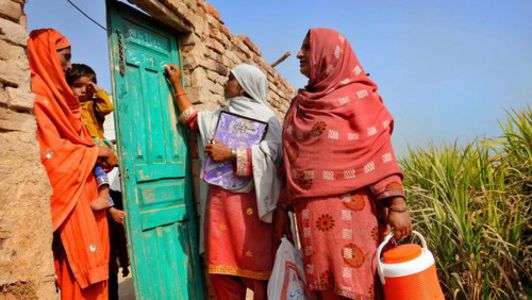
- Mass communication messages informing the population of the outbreak, the risks and implications of contracting polio, and the need to take multiple doses of the polio vaccine for individual protection and to stop the outbreak;
- Engagement with existing humanitarian or development organisations, United Nations (UN) country teams, and/or government community social networks to ensure the coordinated and coherent dissemination of messages;
- Systematic reporting of identified social indicators, especially for missed children, refusals, and absences, as part of the overall national outbreak reporting mechanism; and
- Adjustment of communication interventions based on outcomes of monitoring data to scale and refine communication for development (C4D) intervention targeting.
As the introduction to Part 2: Protocol for Poliovirus Type 2 clarifies, as of April 2016, all 156 countries and territories using trivalent oral polio vaccine (tOPV) had either already introduced or made formal commitments to introduce at least one dose of inactivated polio vaccine (IPV) into their routine immunisation programmes. Consequently, step 2, the globally coordinated switch from tOPV to bivalent OPV (bOPV) (e.g., OPV2 cessation), ensued between April 17 and May 1 2016. Following the switch, the detection of any poliovirus type 2 (wild, vaccine-derived, or Sabin) in any sample from any source will be considered a global public health emergency. Three main outbreak threats following OPV type 2 component (OPV2) cessation are: a higher, but primarily short-term risk of the emergence of a vaccine-derived poliovirus type 2 (VDPV2); a lower, long term risk of poliovirus re-introduction from a manufacturing site or laboratory; and a small, but potentially larger threat in the future posed by prolonged or chronic poliovirus infection in individuals with B-cell related primary immunodeficiencies (e.g., immunodeficiency-associated VDPV (iVDPV)). Key objectives of the protocol are to: (i) outline the main elements of the strategy to detect and respond appropriately to any type 2 polioviruses; and (ii) provide guidance to global, regional, and national public health officials and policymakers for the necessary steps required. The strategic actions following the detection of a type 2 poliovirus isolate after OPV2 cessation have the same basic approaches and principles to those currently required for investigating and responding to any polio outbreak as outlined in Part 1: General (SOPs).
Editor's note, March 21 2019: These documents are no longer available online. Please see Related Summaries, below, for more updated versions.
75 (Part 1); 55 (Part 2)
GPEI website, February 15 2017 and June 9 2017. Image credit: UNICEF/Waseem Niaz
- Log in to post comments