











































Software Tools to Facilitate Community-Based Surveillance: A Scoping Review
"In the future, emphasis should be put on contextualizing these tools to meet a country's public health needs and promoting institutionalization and ownership by the national health system."
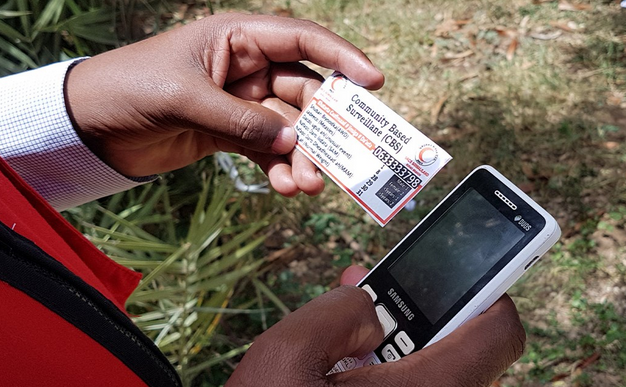
Community-based surveillance (CBS) leverages community members to identify and report significant public health events. Community volunteers or community health workers identify sick people in their community and check to see if the community case definition matches. In doing so, they can help identify diseases (e.g., poliomyelitis) and alert health authorities. The method of reporting by community members varies depending on the context. The use of a software tool for CBS, rather than paper, SMS (short messaging service, or text), or phone calls, allows for faster sending of reports on potential outbreaks. This review maps the software tools that can be used for CBS in both community health programmes and emergency settings and demonstrates their use cases.
The literature review focused on articles published in English between January 2010 and March 2023. A total of 4,787 articles were reviewed for inclusion; 16 of them were selected for review. Twenty qualitative interviews with stakeholders working with digital community health and surveillance tools were used to gain supplemental information and insight into experiences on using the tools.
The mapping demonstrates the individual software tools available for CBS and provides a comparison of their features (see Table 3 in the paper). Some tools have been designed specifically for CBS, whereas other tools have been designed for an alternative use but have features that enable them to also be used for CBS. The tools AVADAR and Nyss have been designed specifically for CBS and for use by volunteers, while the other tools were designed for use by community health workers or healthcare workers and have a broader use case.
All the tools reviewed have features necessary to support the reporting process of CBS; only 3 (CommCare, Community Health Toolkit, and DHIS2 Tracker) provided all 10 attributes included in the mapping: freely available source code, feature and smartphone ready, web and mobile ready, automated dashboard, case management documentation and tracking, text message reporting capability, offline capability, data entry guided assessment, geolocation capability, and integration with other systems.
All the software tools are available in different languages.
Based on the interviews, the paper presents quotations to illustrate stakeholder experiences with using software tools for CBS. Some key findings include:
- Key characteristics of an effective community-based software tool: A CBS system should be simple and user-friendly, enabling community members with varying levels of education to perform CBS. Other characteristics named by respondents included: offline capability, automation, tool contextualisation, integration into broader digital health systems, and the support and facilitation of rapid response.
- Challenges with CBS projects using a software tool: Interviewees pointed to the need for internet connectivity for up to 24 hours and data linkage, challenges with access to phones (e.g., for some women), and issues with power and electricity to charge phones.
Some reflections and implications from the findings include:
- A current gap in most of the CBS software tools is community event-based surveillance (CEBS). Unlike indicator-based surveillance, CEBS is a component of CBS that involves the reporting of unusual events not only by designated community focal points but community members at large, giving an opportunity to receive information from a broader level without having to train a workforce. Reported events can include information that may be unconfirmed, incomplete, or simply rumours, such as a cluster of animal deaths.
- There is a need for better coordination and alignment of development actors with local ministries to avoid fragmented and parallel tools. National ownership should be the goal of all programmes using tools for CBS.
- The development of new tools should not be a priority. This scoping review demonstrates that a variety of tools exist to facilitate CBS. Rather, emphasis should be placed on contextualising these tools to meet the public health needs of countries, institutionalising these functions among local stakeholders, and linking them with existing Integrated Disease Surveillance and Response (IDSR) systems to prevent parallel systems.
Global Health: Science and Practice, October 2023, 11(5):e2200553; https://doi.org/10.9745/GHSP-D-22-00553. Image credit: Norwegian Red Cross
- Log in to post comments