











































Selecting and Tailoring Implementation Strategies to Improve Human Papillomavirus Vaccine Uptake in Zambia: A Nominal Group Technique Approach
University of Zambia (Lubeya, Mwanahamuntu, Mukosha); University Teaching Hospitals (Lubeya, Mwanahamuntu); University of the Witwatersrand (Lubeya, Mukosha, Kawonga); Helen Joseph Hospital (Chibwesha); Charlotte Maxeke Johannesburg Academic Hospital (Kawonga)
"Implementation strategies should be tailored to the context where they are being implemented."
Despite having one of the highest cervical cancer-related morbidity and mortality rates in the world, Zambia has not been spared from low HPV vaccine coverage due to various barriers. In Zambia, there has been limited effort in engaging key stakeholders in the process of identifying implementation barriers and selecting and tailoring strategies for overcoming these. This paper addresses this gap. It describes a study that used the nominal group technique (NGT) to identify stakeholder-perceived-specific barriers to HPV vaccination and to tailor feasible and acceptable strategies to mitigate these barriers through consensus building.
The NGT is a structured method for group brainstorming that encourages contributions from everyone and facilitates quick agreement on the relative importance of issues, problems, or solutions. The process prevents the domination of the discussion by a single person as may happen in focus group discussions. The NGT typically includes 4 steps:
- Silent generation of ideas in writing (independently)
- Recording of ideas (round robin - no discussion at this point)
- Discussion of listed ideas (carried out for clarity of all ideas)
- Voting to enable ranking of priority ideas
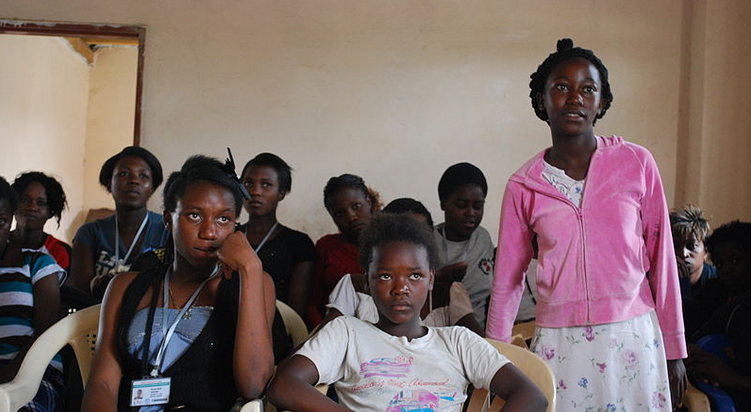
The study was conducted within the six administrative subdistricts of Lusaka District, Zambia, between January and February 2023. Participants were purposively sampled from three stakeholder groups: adolescent girls, parents, and teachers and healthcare workers. With each of the stakeholders' groups (10-13 participants per group), we used the nominal group technique to gain consensus to tailor feasible and acceptable implementation strategies for mitigating the identified contextual barriers. The question was as follows: What strategies can be used to overcome barriers identified in the HPV vaccination programme? Participants were asked to copy the top three barriers and write down as many strategies as possible that could be used to mitigate each one of the three barriers prioritised in the previous steps, separately. They were asked to write down barriers they perceived to be feasible and acceptable.
The identified barriers included low levels of knowledge and awareness about the HPV vaccine, being out of school, poor community sensitisation, lack of parental consent to vaccinate daughters, and myths and misinformation about the HPV vaccine. Both parents and adolescent girls voted for a lack of knowledge about HPV and the HPV vaccine as the most important barriers. Myths and misinformation were among the top three most important barriers for the parents' group and teacher/healthcare group.
Tailored strategies included conducting educational meetings and consensus-building meetings, using mass media, changing service sites to reach out-of-school girls, re-examining implementation, and involving patients/consumers and their relatives.
The suggestion by various stakeholders to implement educational strategies could be partly explained by the recent introduction of the HPV vaccine at the national level (2019), which was accompanied by the sharing of information with key stakeholders once a year during the vaccination campaign, with most information and education materials being available mainly in English. Therefore, considering that educational strategies are not always effective, culturally sensitive educational information should be packaged in ways that are effective, such as videos, comics, and magazines.
Study participants frequently mentioned the implementation strategy of the use of mass media to increase knowledge and awareness, to reach adolescent girls, and to debunk myths and misinformation. One advantage for Zambia to implement such an approach is that mass media platforms use different local languages to deliver information, which can be useful to increase HPV vaccine uptake.
The paper outlines various potential avenues for future research. For example, this NGT research could be repeated with broader groups of stakeholders in this setting (including programme managers and health administrators at facility and higher levels) to gain perspectives from a broader and more comprehensive group of stakeholders and to see if there is consistency in the results with those from adolescents/parents/teachers/health workers in the present study.
In conclusion, this study "contributes to the available evidence on the process of selecting and tailoring implementation strategies to overcome contextual barriers. Policymakers should consider these tailored strategies to mitigate barriers and improve HPV vaccine uptake."
Vaccines 2024, 12, 542. https://doi.org/10.3390/vaccines12050542. Image credit: Emily Travis/DFID via Wikimedia (CC BY 3.0 Deed)
- Log in to post comments