










































Qudwa: an evidence-based and theory grounded SBC communications strategy to encourage the adoption of behaviours promoting the wellbeing, dignity and equality of women, girls and boys in Lebanon
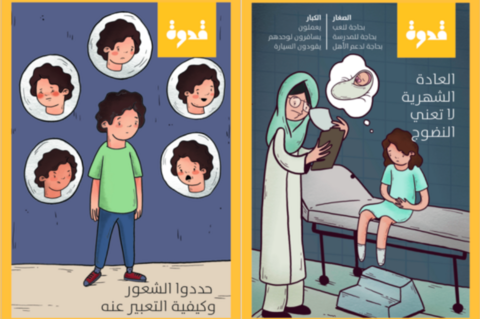
Summary:
Lebanon is resident of 1.5 million Syrian refugees and 240,000 Palestinian refugees, of whom around 50% are children. The protracted displacement and dire economic situation, amongst both the host and refugees' communities had an increasing number of families resorting to negative coping mechanisms especially Child Labour, Child Marriage, Violent Discipline and Domestic Violence. In order to support the most vulnerable communities, UNICEF, Government of Lebanon, and International Community have made considerable investments toward service provision and awareness-raising since 2011. Nevertheless, UNICEF's KAP Survey in 2017, showed knowledge about the negative impact of child marriage, child labour and violence against children and women is significant. However, prevalence of harmful behaviours is still high, highlighting the need to go beyond awareness raising. Hence, MOSA and UNICEF have recognised the need for a social behavioural change and communications strategy to prevent the addressed harmful behaviours. The SBCC Strategy (Qudwa) developed by UNICEF, MOSA and Magenta, is based on (1) Evidence from formative research on drivers of violence (2) Extensive consultation process with stakeholders, (3) Usage of scientific models such as the behaviour drivers' model, Socio-ecological model, Decision Making Process and Key Human Insights.
Background/Objectives:
The SBCC strategy contributes to the overall aspiration that girls, boys and women in Lebanon, especially the most vulnerable, live in dignity and equality in a safe environment and have increased wellbeing. It can be achieved through: Developing a conducive environment for the adoption of protective behaviours Promoting positive individual attitudes towards nurturing caregiving, non-violent behaviours, and empowerment of girls and women Targeted communities are empowered to act and lead the change Increase individual self-efficacy for communal protective behaviours Hence, behaviours that promote the wellbeing, dignity and equality of women, girls and boys will be practiced and become the norm.
Description of Intervention and/or Methods/Design:
Qudwa strategy constitutes of 38 activities focused on edutainment, community engagement, social mobilization, and capacity building to be implemented in 7-year time frame. Activities include: soap opera(s), Super Nanny shows, community theatre, puppet shows, collaboration with and use of Sesame street, female leading aminations, outdoor cinema, radio taxis, memes, community engagement quizzes, positive caregivers toolbox, engagement with private sectors (barber shops and salon), mobile application on parenting, resources websites, TEDx talks etc. In addition, the SBCC strategy created its own brand (Qudwa) which focuses on roles models in communities who were able to adopt positive behaviours. Qudwa-s (roles model) are not only individuals but also institutions, example: a Qudwa school in protecting children from violence inside schools. Moreover, a unified tailored massage has been created and tailored to the targeted communities which focuses on the drivers of harmful behaviours. The target group being decision makers and influencers of harmful behaviours.
Results/Lessons Learned:
SBCC strategy is linked to a wider governmental strategies and plans on the protection of women and children for sustainability.
- Adopting scientific model(s) (Behaviours driver model) into developing Qudwa, a SBCC strategy.
- Evidence based data from formative research unique to lebanon.
- Focus of Qudwa was on the drivers of harmful behaviours, hence providing opportunities to tackle behaviours with multi sectorial approach such as education, health and protection (women and children).
- Importance of coordination with multipIe sectors and stockholders.
- Developing a strong brand (logo and colours, production of materialetc).
- Ensuring a multi-disciplinary approach through using techniques related to marketing, branding, designing (not very common in social work) into developing an SBCC strategy
- Engaging communities and stakeholders including activities, target audience, objectives and key messages.
- Innovative and interactive activities and approaches that are attractive and effective. Validation from communities - pretesting brand, material/ tools, and others.
Discussion/Implications for the Field:
Qudwa strategy is based on sociological, neuroscience and behavioural research unique to Lebanon. The use of key human insights was unique during the development of activities and tools. This allowed to address the drivers and to identify the target audiences who are affected by the harmful behaviour and who would influence such behaviours. Qudwa creates a shift in mentality of stakeholders at central level and field worker. It will change their approaches and intervention with the community. Acceptance of the community was essential through the pre-test of the brand and tools. Communities validated and approved the key insights and messages.
Abstract submitted by:
Zaman Ali Hassan - UNICEF
Clemence Quint - Magenta Consulting
Diala Ktaiche - UNICEF
Approved abstract for the postponed 2020 SBCC Summit in Marrakech, Morocco. Provided by the International Steering Committee for the Summit. Image credit: Magenta Consulting