










































Reading in the Mobile Era: A Study of Mobile Reading in Developing Countries
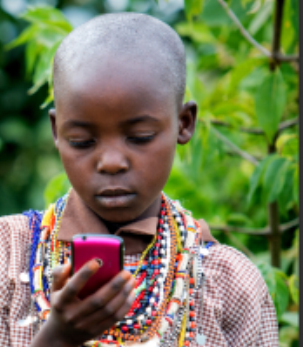
United Nations Educational, Scientific and Cultural Organization (UNESCO)
"[T]he findings clearly indicate that mobile reading is opening up a new pathway to literacy for children."
Drawing on a year-long analysis of over 4,000 surveys collected in 7 developing countries and corresponding qualitative interviews, this report paints a picture of who reads books and stories on mobile devices and why. The findings illuminate the habits, beliefs, and profiles of mobile readers. This information points to strategies to expand mobile reading and, by extension, the educational, social and economic benefits associated with increased reading. The report was created through an ongoing partnership between the United Nations Educational, Scientific and Cultural Organization (UNESCO), Nokia, and Worldreader and is part of a 2-paper series on mobile reading, whose goal is to explain how mobile technology can empower readers and further literacy in developing countries and beyond.
The context: "Why mobile phones? Because people have them. Recent data from the United Nations indicate that of the estimated 7 billion people on Earth, over 6 billion now have access to a working mobile phone. To put this number in perspective, only 4.5 billion people have access to a toilet (United Nations, 2013). Collectively, mobile devices are the most ubiquitous information and communication technology (ICT) in history. More to the point, they are plentiful in places where books are scarce."
The first section of the report presents the recommended demographic groups that mobile reading initiatives should focus on in the future. For instance, United Nations Children's Fund (UNICEF) data (2012) reveal that over 50% of wealthy families in developing countries have 3 or more books in their households for children under the age of 5, but this figure generally drops to just 5% for economically poor families. The second section articulates the key strategies for expanding the "footprint of mobile reading", both in general and in terms of individual intended groups.
Surveys in Ethiopia, Ghana, India, Kenya, Nigeria, Pakistan, and Zimbabwe, as well as qualitative interviews with numerous respondents, led to the conclusion that "people read more when they read on mobile devices, that they enjoy reading more, and that people commonly read books and stories to children from mobile devices....The current study - by breaking down who reads on mobile devices and for what reasons - is a roadmap for governments, organizations and individuals who wish to help people better leverage mobile technology for reading. Knowing, for instance, that younger people are more likely to read on a mobile device than older people is instructive....The study also exposes governments to the idea that digital libraries and mobile reading initiatives may have more impact than traditional, paper-based interventions....It is important to qualify that access to books does not, by any means, assure or necessarily even promote literacy....It is UNESCO's hope that mobile reading will be integrated into broader educational systems that teach people how to use text productively - from access to comprehension, and all the stages in between....A key conclusion from this publication is that mobile devices constitute one tool - in a repertoire of other tools - that can help people develop, sustain and enhance their literacy skills. They can help people find good books and, gradually, cultivate a love of reading along with the myriad advantages that portends - educationally, socially and economically."
Examples of initiatives are provided throughout, such as the MobiLiteracy Uganda (MLit-U) programme, which aims to improve early literacy development in Uganda by providing parents and caregivers with daily reading activities to use at home with their children. The activities are sent to parents' mobile phones via an audio short message service (SMS) so that adults who are illiterate can still help their children learn to read. "MLit-U is unique in that it targets adults, using the mobile phones most parents already own to encourage and empower them to actively participate in their children's education. Parents and teachers using Worldreader Mobile. Parents and teachers using Worldreader Mobile to read aloud to children are playing a similarly active role in helping children develop literacy skills to read aloud to children are playing a similarly active role in helping children develop literacy skills, despite the fact that the app has limited content for children and was not originally intended for this use. It stands to reason that if more child-appropriate content was available and more adults knew how to access it, mobile reading could have a tremendous impact on early childhood education around the world."
Key findings from the study include:
- "Mobile reading opens up new pathways to literacy for marginalized groups, particularly women and girls, and others who may not have access to paper books."
- People use mobile devices to read to children, thereby supporting literacy acquisition and other forms of learning.
- People seem to enjoy reading more and read more often when they use mobile devices to access text.
- People read on mobile devices for identifiable reasons that can be promoted to encourage mobile reading.
- Most mobile readers are young, yet people of various ages are capable of using mobile technology to access long-form reading material. More can be done to encourage older people to use technology as a portal to text.
- Current mobile readers tend to have completed more schooling than is typical.
- There appears to be a demand for mobile reading platforms with text in local languages, level-appropriate text and text written by local authors."
The report outlines and describes in depth 3 broad strategies for extending the benefits of mobile reading to more people: (i) diversify mobile reading content and portals to appeal to specific intended groups; (ii) increase outreach efforts to create opportunities for potential users to experiment with mobile reading and learn about its benefits; and (iii) lower cost and technology barriers to mobile reading. It is noted that "mobile reading platforms are sorely lacking in content appropriate for children and beginning readers. The study found that current mobile readers are actively searching for reading materials that are categorized by reading level, and particularly for beginner-level texts."
In conclusion, a call for further research indicates that a longitudinal study, for instance, might "further illuminate some of the findings described in this report, and field experiments could be used to test the efficacy of specific interventions. It is also important to note that impact evaluations of mobile reading programmes should not be limited to mobile phone owners or users. The benefits of mobile reading tend to ripple out to family and community members: parents, caregivers and teachers, for instance, use their mobile phones to read to children, and young people who read on their mobile phones may share their books with parents and siblings. In addition to the current study, several mobile reading programmes focused on basic literacy development have shown that the interventions had positive effects not just on the participants but on their families and the community at large..."
UNESCO website, accessed January 2 2015. Image credit: © Jon McCormack for Worldreader
- Log in to post comments