










































Open Data and Transparent Value Chains in Agriculture: A Review of the Literature
"In the context of smallholder agriculture, which contains a large and at times complicated number of value chain actors, unequal access to information leads certain actors to be on the losing end of the transactions that take place within the value chain."
Carried out as part of the project Harnessing Open Data to Achieve Development Results in Asia and Africa, this report provides real-world examples of how information and communication technology (ICT) is being used to make agricultural value chains transparent, highlighting initiatives that rely on or make use of open data as a tool for greater transparency. This work was supported by the World Wide Web Foundation as part of the Open Data for Development (OD4D) network and carried out with financial support from the United Kingdom (UK) government's Department for International Development (DfID) and the International Development Research Centre (IDRC).
The report begins by explaining why value chains should be transparent. While the smallholder farmer is often the one who is affected by unequal or insufficient information, consumers, another value chain participant, have an increased interest in knowing the source of the food they consume - leading to a new emphasis on traceability. The convergence of traceability and technology has in turn led to interventions by governments, non-governmental orgnisations (NGOs), the private sector, and any combination of the three to leverage ICT to address the problem of information access in smallholder agriculture. These interventions have targeted their efforts in one of the following three categories: (1) ICT for production systems management; (2) ICT for market access services; and (3) ICT for financial inclusion.
Open data is broadly defined as data that anyone can access, use, and share to address problems that would otherwise be too challenging to resolve using closed data sources. In the context of agriculture, open data is expected to foster collaboration between government, the private sector, NGOs, and other stakeholders to make new discoveries that help sustainably feed growing populations. One way is by making large datasets available, which can stimulate new ventures and initiatives that provide farmers with advisory services that boost their productivity. In addition, open data can enable consumers to demand better standards by promoting transparency around sustainable food production and food safety, which would not only influence consumer behaviour but also incentivise food producers to improve their performance.
The report provides a general snapshot of current (and past) initiatives in the agricultural sector that seek to promote value chain transparency in Africa. The projects broadly cover the three areas of intervention – production, finance, and marketing – where information asymmetry is pervasive. For each, a description is included, along with a concise statement of impact, description of use of open data, and link to the project website for further information. In brief, they include:
- Where Weather
- GeoTraceability
- Dunavant
- DrumNet
- Sustainable Harvest
- Index-Based Livestock Insurance
- AgriManagr
- The Shea Value Chain Reinforcement Initiative
- Level Ground
- SourceMap
- Examining the Capabilities Approach through ICT4Dev Projects: The Fair Tracing Project
- Understanding the Food Supply Chain in Sweden
- Analysis of Agricultural Innovation and Service Delivery with Mobile Phones in Kenya
In addition to project-based initiatives, this report also tried to explore other research datasets. It includes three research abstracts that were selected to illustrate the kind of academic studies found on value chain transparency. In brief:
- One research paper summarised here "argues that the capabilities approach, a philosophical concept of human development conceived by economist Amartya Sen, instructs that technologies should be co-designed with the user so as to expand the freedom of the user to live the life they themselves value. The Fair Tracing Project (October 2006 - September 2009), a partnership between UK researchers and local partners in Chile and India, aimed to illustrate a real-life attempt at applying the capabilities approach to an information and communication technology for development (ICT4D) action research project..."
- Research from Lund University in Sweden seeks to explore the food supply chain from a critical-context point of view in order to highlight existing risks and traceability issues. The paper suggests attitudinal changes towards overall supply chain responsibility, better resource utilisation, and increased knowledge among actors.
- A third, which is a PhD dissertation, examines how current technology trends may impact on m-service delivery to farmers in the future. It presents the case study of M-Farm, a service that offers price information and marketing services to Kenyan farmers.
The report concludes with insights gleaned from the selected case studies and research. For example, the authors note that there is a difference between initiatives that make more data available between selected actors in the value chain (data sharing) and initiatives that attempt to make data on a specific process in the value chain openly available to all (open data). With open data being a relatively new concept, it hasn't thus far been a focal point within most of the initiatives observed. This is partly due to the fact that information needs in the value chain vary according to the role of the participant. With most actors in the value chain – particularly those closest to the farmer, being mere users of information/data rather than aggregators and disseminators of it – opening data is really beyond their mandate, not to mention capacity.
Among the recommendations offered: Engage the government more effectively in value chain transparency projects. "From providing an enabling environment to opening up the trove of data it controls, there is a lot government could do in this regard. Ultimately, engaging government in value chain transparency would not only benefit the projects themselves, but would also go a long way towards ensuring their sustainability."
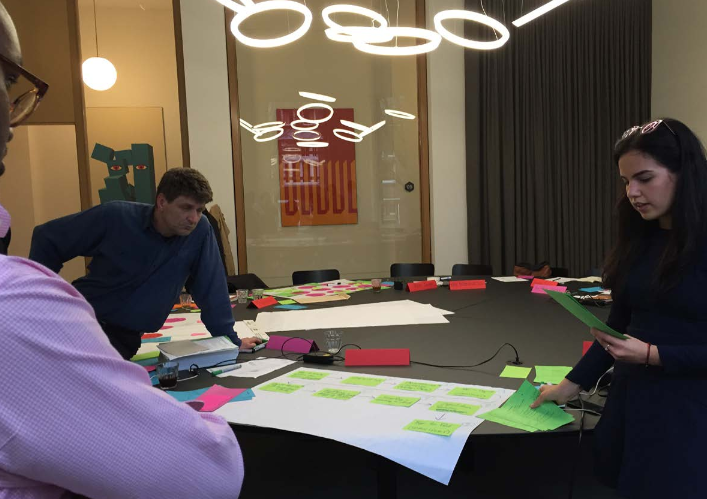
World Wide Web Foundation website, November 2 2017. Image credit: François van Schalkwyk
- Log in to post comments