










































"In my next life I want to be a boy"
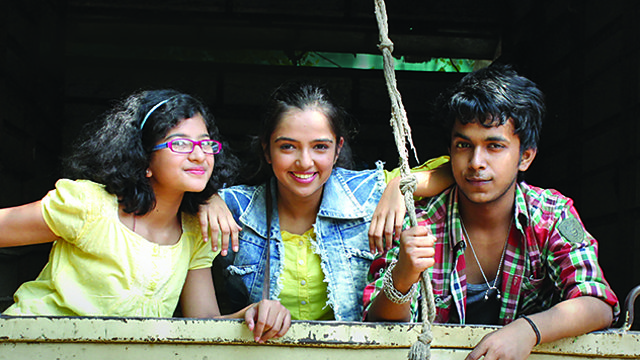
Author: Ragini Pasrichan, October 20 2016 - Why we chose “real people” instead of actors to feature in our Public Service Announcements (PSAs), TV adverts sharing simple solutions to prepare for cyclones, flooding and drought.
“In my next life I want to be a boy because they can do anything they like”, said the 15-year-old girl.
Then, looking at me, she added: “I too want to own a mobile phone, have short hair and wear jeans. Tell me how I can become like you.”
It was a poignant cry for voice and a self-determined identity which opened my eyes to a world full of opportunities for boys, where elder brothers are the disciplinarians of sisters and a girl owning a mobile phone is something to be ashamed of.
I met this teenager, and many others like her, while carrying out research for our new78-episode television show, AdhaFULL (Half Full in Hinglish) and radio show Full on Nikki – a UNICEF-funded multimedia project using drama and discussion to help people break the silence surrounding sensitive issues affecting young people, challenge traditions that perpetuate gender stereotypes and boost the ability of teenagers to take action to improve their lives.
After mining all the existing academic research and policy documents about our key audiences - girls and boys aged 10-19 and their parents – we had the key themes for our programme: child marriage, education, nutrition, gender roles, peer pressure and bullying, body image, violence and abuse.
Connecting with teenagers
But to really understand how we could make storylines resonate with audiences and be truly transformative we wanted to connect with teenagers and their parents to hear, in their own words, about their lives, dreams and the barriers they face.
So the team got into a bus that trundled off to a school in the town of Siwalkhas, a semi-urban settlement three hours away from Delhi.
It was immediately clear that a difference between girls and boys was ingrained early. Although the school was co-educational, the boys’ classrooms were on the left and the girls’ on the right with the teachers seated in the sun at a desk in the middle to ensure that no one crossed the gender divide. The head teacher met us, wooden ruler in hand, saying it was his duty to ensure that “no accidents occur”. By “accidents” he meant romantic liaisons between students that would bring the school into disrepute in the eyes of parents and potentially force its closure.
We came back and wove the experience into our show. Revealing the invisible force-field that surrounds many Indian women and girls, pushing them to live up to the expectations of others - be it family or society - is a major goal of the programme. I hope that it will encourage people to question a culture of quiet compromise that can lead to an acceptance of discrimination.
“We want our daughters to be brave”
We tested the pilot episodes with mothers, fathers, boys and girls. They all sat riveted, cracking up at the jokes, but it was the comments from the mothers in the audience that were the most striking. “Yes, the town in the show is like our town”. “Yes. Girls get married at 15 in our community”. “We want our daughters to be brave like the show’s heroine”, they said.
The programme launches later this month and I’m optimistic it will mark the beginning of a journey of change.
Click here to access this BBC Media Action blog and related links on their work in Asia.
Image credit: BBC Media Action
Contact:
BBC Media Action
BBC Media Centre, MC3A, 201 Wood Lane
London
W12 7TQ
United Kingdom (UK)
Phone: 44 (0) 20 8008 0001
Fax: 44 (0) 20 8008 5970
Media.action@bbc.co.uk
- Log in to post comments