










































Mediating Voices, Communicating Realities: Using Information Crowdsourcing Tools, Open Data Initiatives and Digital Media to Support and Protect the Vulnerable
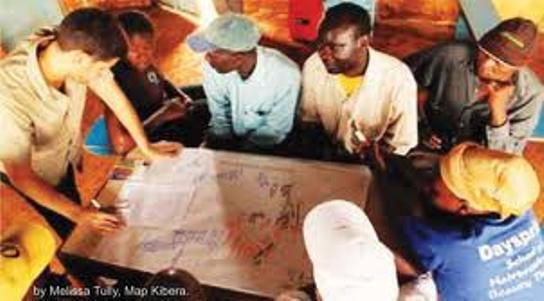
This final project report analyses the Map Kibera project, a citizen mapping and citizen media information and communication technology (ICT) project in Nairobi, Kenya, implemented by Map Kibera and GroundTruth. The research is from the Vulnerability and Poverty Reduction Research Team of the Institute of Development Studies (IDS), with funding from the United Kingdom Department for International Development (DFID).
From the research: "In this study we argue that the new architectures of participation and the resources that new technologies create need to be viewed in relation to the strategies of the actors that deploy them, their agendas and ways of working. This investigation is based on the idea that enthusiasm around the potential of these new tools needs to be weighed against the benefits for their primary beneficiaries, poor and marginalised communities, and the risks of increased visibility. To achieve this we examined the character of partnerships on which the investigated initiatives relied; their governance arrangements and the provisions and capacities required on the part of different stakeholders for participation and for translating information into action."
The research found challenges, tensions, and gaps including the following:
- Challenges were found in motivating participation due to volunteer needs to balance the short-term, individual benefits (need for immediate livelihood stipend and longer term career training) with "the longer-term, substantive contribution to broad social agendas." Also, the concept of "taking ownership" meant different things to leaders and participants in terms of taking over the project locally, particularly around the importance to individuals of securing a position in a leadership hierarchy.
- "For [local] mappers, the ability to ask for and be given information required an authority that they felt they lacked, especially as their work introduced some real risks to the community....The capacity to ask for and publish information about the community is contingent on relations of trust and authority and involves responsibilities on the part of those managing the information commons."
- "...publicity that the project received also exposed participants to repeated requests for collaboration from people interested in using them as entry points to Kibera. For GroundTruth, the inexperience of the youth in handling and negotiating these requests, some of which were deemed exploitative, was a real source of concern and raised questions about their role as guardians and gatekeepers of participants."
- Despite the ability of Map Kibera to create the first digital, multi layered public map of Kibera, enabling access of the wider community to the resources created by the project was a challenge, as was "getting buy-in from residents, CBOs [community-based organisations], NGOs [non-governmental organisations], local authorities and the government." Some maps were printed and publicly displayed. Download on mobile phones was reported to be very slow, as was website access, inhibiting dissemination. YouTube videos, another product of the project, were shown publicly, but the concept of an Internet-based TV channel was not widely understood due to limited internet access. "The greatest challenge, for them [the organisations], lay not in the production of the map but in promoting the use of the map in policy and advocacy."
- Research revealed "the uneasy relationship between the open source model of work" (quick information gathering, organising, and dissemination) and participatory development (more deliberate and inclusive crafting of strategy and implementation).
Among the research findings are the following:
- "For project participants, what was equally important was immediate compensation for their time and effort and assured opportunities for employment and continuing training."
- "In Kibera, being known as an originator of an idea, having the right to ask and receive information, and being in a position to manage the risks of increased visibility, involves much more than adopting the ideals of open source and commons-based production. These claims, rights and responsibilities are contingent on relations of trust, authority and livelihoods that have different configurations in poor and marginalised communities than in affluent societies. As the steward of the project, the Map Kibera Trust lent itself as the space where some of these issues could be discussed, but at the time of the research its future was unclear."
- One social researcher suggested that in order to bring about change, Map Kibera and GroundTruth needed to connect to existing political struggles and agendas. This raised questions for the organisation about neutrality, engagement, and advocacy.
A scoping study of similar projects showed:
- the appeal of crowdsourced data for advocacy, monitoring and evaluation, and the variety of strategies underlying the adoption of open ICTs;
- the complexity of the architectures of participation supported by these new platforms and the need to consider them in relation to the decision processes that they aim to support;
- the role of open source social entrepreneurs as new development actors;
- the significance of the role of intermediary actors, such as non-profit technology companies and open source technology entrepreneurs in supporting activists and organisations to incorporate these tools in their work; and
- the importance of partnerships between local organisations, technologists, and actors with expertise in the use of information technology in a development context.
IDS website on March 16 2012.
- Log in to post comments