










































The Little Jab Book: A Playbook for COVID-19 Vaccination in Nepal
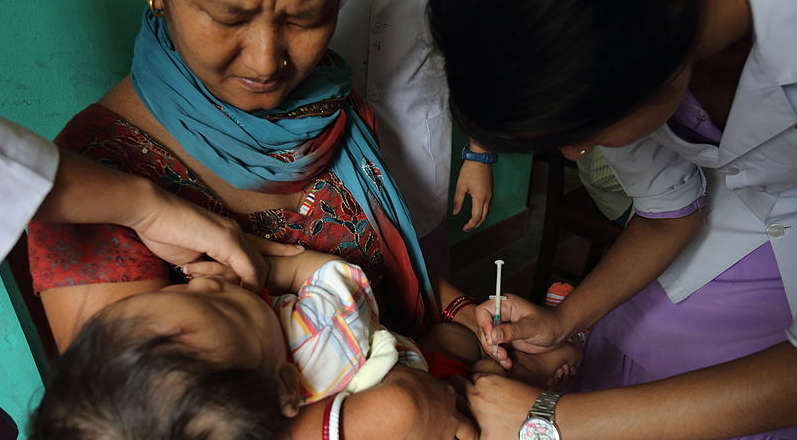
"Our goal is to inspire behaviour change actions as part of the Little Jab Book, which are need-based, driven by evidence, and guided by principles of social norms to address pressing issues and concerns related to vaccine uptake and confidence." - Heather Campbell, country director, Save the Children in Nepal
This guide explores the underlying reasons for vaccine hesitancy among parents and youth in Nepal and identifies localised solutions to inspire uptake of the COVID-19 vaccine. While improving the supply of vaccines is vital, the behavioural interventions in this playbook focus on increasing demand for vaccination, improving the process for following through on intentions, and building confidence in vaccines and their safety and efficacy.
The playbook is designed for stakeholders in Nepal working on a COVID-19 vaccination programme, such as social behaviour change (SBC) practitioners, development agencies, local government officials, health staff, and media. Its insights are informed by research conducted by the Busara Center for Behavioral Economics, Common Thread, and Save the Children, who completed in-depth interviews with 24 adults and a quantitative survey with 500 unvaccinated people in Province 2 (Madhesh) to uncover barriers and enablers to vaccination.
The book begins with a look at the 6 major barriers to vaccine confidence in Nepal and highlights 12 interventions to overcome these problems. Collaborators on the resource received and incorporated feedback on these design concepts from both parents and health workers in Province 2.
- Barrier: People are concerned about side effects, unless they know others who have been vaccinated. Interventions:
- Share up-to-date information about transitional norms (trends) towards vaccination, including in other reference groups.
- Invite health workers to present information about vaccine side effects, comparing the COVID-19 vaccine to others.
- Couple vaccination services and counseling with other health services.
- Barrier: There is limited endorsement of vaccination from religious and cultural leaders. Interventions:
- Leverage local influencers: Promote testimonials from religious and community leaders to encourage vaccination, including at existing religious festivals and events.
- Make vaccination social: Bring vaccines to religious centres, and ask people at temples and other places of worship to make visible commitments to get vaccinated.
- People put off getting vaccinated because they are not able to choose the brand. Intervention: Frame all vaccination as better than no vaccination, and emphasise similarities amongst vaccines.
- People intend to get vaccinated, but there is limited access to timely and convenient vaccination for key populations. Interventions:
- Make vaccination personalised: Tailor vaccination drive timings to match people's availability, and let people in certain groups know that a vaccine has been "reserved for them" at a specific time.
- Bring vaccines to workplaces and universities, and give people "passes" to use to get out of class/work at specific times to get vaccinated.
- People intend to get vaccinated but are uncertain about the process and vaccine availability. Interventions:
- Conduct public service announcements (PSAs) at Haat Bazaars to share up-to-date information of vaccine availability.
- Leverage existing community gatherings to share information about vaccine availability, and enable communities to create their own solutions for generating local awareness.
- People comply with vaccination requirements but lack confidence in vaccination. Interventions:
- Leverage people's positive experiences by asking people who have been vaccinated to reflect on their motivations for vaccination and share with their community ("vaccine heroes").
- Combat health worker hesitancy by building skills for health workers to discuss clients' vaccine concerns with confidence.
While this guidance aims to be prescriptive, it also aims to enable tailoring of recommendations to populations and local contexts. A recommendation implemented in Province 2, for example, can and should be different from the same recommendation implemented in Kathmandu. "For all interventions in this book, consider how they might work in your region, what might need to be changed to make them more contextually appropriate, and how they might be perceived by the community." Section 9 of the book provides implementation tips to help the reader take contextual factors into account, as well as other practical guidance.
English; Nepali
61 (English); 60 (Nepali)
"Save the Children's playbook to strengthen vaccine intake in Nepal", Onlinekhabar, March 24 2022 - accessed on March 29 2022.
- Log in to post comments