










































Key Considerations: Emerging Evidence on Shielding Vulnerable Groups During COVID-19
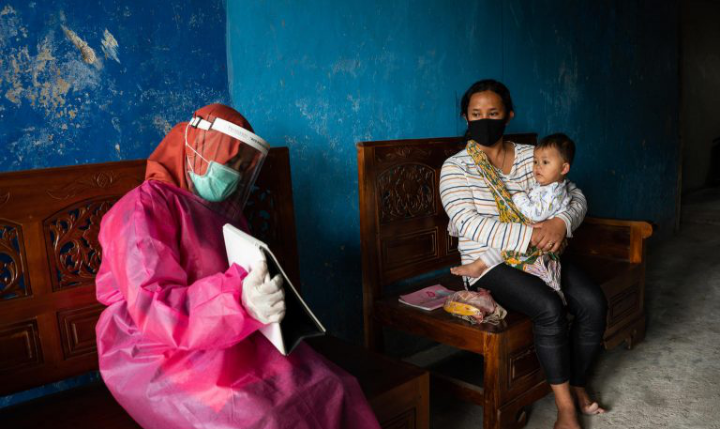
Institute of Development Studies, or IDS (Schmidt-Sane); Anthrologica (Tulloch, Jones)
"Approaches to shielding should be driven by and co-designed with communities rather than imposed from above,...and should recognise local dynamics and practical realities. Community engagement should be in place from the early stages of response planning..."
With a focus on low- and middle-income countries (LMICs), this brief examines emerging evidence relevant to shielding, which entails protecting individuals at high risk of severe COVID-19 illness by separating them from others within a designated "green zone" or room within a household. It complements an initial analysis set forth in a previous Social Science in Humanitarian Action Platform (SSHAP) publication that defines terms and outlines general principles essential to understanding the concept of shielding (see Related Summaries, below).
As SSHAP stresses, there are significant practical obstacles to shielding in LMICs, where material and social support may be lacking or where households include many members but housing space is limited. Cases are presented based on the following acceptability and implementation studies:
- Sudan - Qualitative research reveals that, although there are misconceptions about what shielding entails, the practice is deemed largely acceptable, as it matches a cultural commitment to protecting older adults and the vulnerable. Key recommendations for shielding from the study include:
- Involve the community as much as possible, throughout all stages of shielding.
- Develop strategies to communicate risks associated with COVID-19 that do not impart fear, and include tailored messages for those who deny the existence of the disease.
- Promote concrete and practical ways to shield, making sure the difference between shielding and quarantine is clearly communicated.
- Provide alternative options for shielding when household-level shielding is deemed acceptable but not feasible due to physical space or economic constraints.
- Provide financial and social support to the shielded individuals and their households.
- Establish referral and accountability mechanisms to alert local health systems of COVID-19 systems and link the symptomatic individual to care.
- Democratic Republic of the Congo (DRC) - Two studies published on shielding in DRC reveal, for example, that perceived risk of COVID-19 is low (except among those with an underlying medical condition) and that there is a need for more information on COVID-19 risks and on shielding. Evidence from DRC suggests that:
- Appropriate risk communication messaging can be used to improve public understanding of COVID-19 risk and the specific risks for the clinically vulnerable.
- Shielding is acceptable if kept within the household or family unit; shielding in group-based facilities is less likely to be acceptable.
- Community partners can be engaged to co-design locally appropriate strategies, find acceptable space, and leverage existing informal or formal socioeconomic support systems.
- Northwest Syria - Research on shielding in the context of internally displaced person (IDP) camps - most of which were informal, with a lack of adequate shelter or water, sanitation, and hygiene (WASH) - indicates that community acceptability of shielding is likely to be low. COVID-19 is often perceived as God's will, and some have expressed a lack of control over risk, believing instead that God will protect them from further forms of suffering. Evidence from Syria suggests:
- Different strategies are needed for informal and formal camps; in an informal camp setting, a separate site would need to be established for the shielded, if deemed acceptable by the camp residents.
- Any efforts to implement shielding in IDP populations should be designed with sensitivity to lived experiences (e.g., feelings of marginalisation and lack of agency) and the added impact of isolation to this group.
- Clear communication is needed about the risks of COVID-19, the purpose of shielding, and essential implementation principles.
- Shielding should be co-designed and co-led with the community so they own the approach.
- Kerala and Gujarat, India - As the nationwide lockdown has eased in India, Kerala has continued to strongly advise older adults to isolate within their homes. Among the implemention experiences: The state's Kudumbashree women's empowerment organisation launched an outreach programme for the elderly to improve social connectedness. In Gujarat state, rural Ahmedabad began implementing reverse quarantine in May 2020, advising 200,000 older adults and 17,000 pregnant women to isolate at home. There, local youth councils and healthcare workers have been tasked with carrying out the process and looking after the isolated.
- Yemen - In the north of the country, the ongoing political situation has contributed to "a complete denial of COVID-19 and a refusal to report cases". Shielding has been introduced in 17 districts, focusing on approximately 57,000 people. Grouping high-risk individuals together outside of their homes is deemed socially unacceptable, and there is a strong preference for not mixing with other households due to cultural norms around privacy. Early lessons from shielding in Yemen include:
- Sheikhs, community leaders, and non-governmental organisations (NGOs) are trusted sources of information on COVID-19 and have been involved in risk communication and community engagement (RCCE) activities, which have helped people understand who is at high risk of COVID-19.
- Systematic community consultation has been effective to manage, plan, and implement shielding when paired with trusted and locally known humanitarian staff.
- Household shielding is preferred; sending family members away would represent a socially unacceptable abandonment of vulnerable family members.
- Community representatives, leaders, and authorities are encouraged to support others to access food and other forms of assistance.
- Infection prevention and control (IPC) messages and training for community focal points relating to shielding were adapted to this context; messaging also provided guidance on behaviour change for high-risk individuals and protection of well-being.
- It is recommended that households who are shielding be provided with disinfection kits (with an IPC brochure) to increase community buy-in and limit infection spread.
- Daily follow-up with shielding families is helpful to provide information, understand barriers, and discuss issues for follow-up. WASH, camp management, and protection actors with regular presence in implementation areas and preexisting knowledge and relationships with the community can be helpful in gaining an accurate understanding of the support and information needed to shield effectively.
- Ethiopia - Early evidence of informal shielding has been shaped by this country's cultural emphasis on placing community over individual needs. Shielding has built on existing local concepts of protection for the elderly and other vulnerable groups. However, this approach poses a particular challenge for low-income households.
The brief concludes with a list of practical considerations for shielding gleaned from the aforementioned evidence, including:
- Trust: For vulnerable people to be willing to shield, high-risk individuals and their communities must trust in the public health response and the measures that are expected of them. SSHAP recommends identifying, supporting, and engaging trusted community and institutional actors in decision-making processes and in implementation.
- RCCE: Communication should be tailored to the local context in order to correct misconceptions about COVID-19, and it should be delivered via preferred media (e.g., radio, posters).
- Community-driven shielding: Community involvement in the design and implementation of shielding would entail planning shielding locations, designing shielding arrangements, and enabling support for the shielded.
- Local concepts of protection and caregiving: In LMICs that have tested shielding, including those highlighted here, support for the vulnerable remains primarily a family and household responsibility, supplemented by informal mechanisms such as extended kinship networks and mutual aid societies.
- Protection of mental health and well-being: The potential psychosocial impact of shielding should be considered from the early stages of shielding in order to identify locally the barriers to access, the risks, and specific needs of shielding individuals and their families.
Click here for the 16-page report in English in PDF format.
Click here for the 19-page report in French in PDF format.
Click here for the 16-page report in Spanish in PDF format.
SSHAP website, November 19 2020. Image credit: © UNICEF/Fauzan
- Log in to post comments