










































Inclusive Education Environments from the Teachers’ Perspective: An Inquiry in a Turkish Primary School
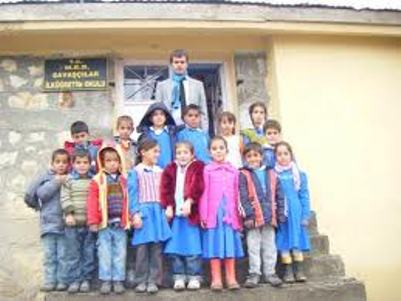
Uludag University (Durak), Middle East Technical University (Erkiliç)
"These field notes present the results of interviews in an inclusive primary school in Turkey to evaluate how physical features of the school environment can contribute to the implementation of inclusive education."
This article describes a spatial analysis of architecture and inclusive education in a Turkish primary school. Inclusive education is described as the practice of integrating students with disabilities and special educational needs into general education to the maximum extent appropriate to these students' unique needs. "Using a qualitative inquiry in an inclusive Turkish primary school, this paper investigates teachers' views and ideas about how education environments accommodate inclusive education."
Table 1 in the article sets out the criteria for meeting standards of inclusive education in Turkish schools. These 9 principles include:
- Individualised education programme for students with SEN (special educational needs)
- Cooperative teaching methods
- Participation of families
- Educational adaptations
- Additional supportive services
- Provision of multiple means for achieving knowledge in an effective education environment
- School facilities, learning resources, curriculum, and professionals centred around students' capabilities and needs
- School-centred supportive services and facilities
- Additional community facilities and community involvement
"This school has two wings, one for special education classrooms and resource rooms, the other for general education classrooms. This spatial organization separates students in special education from their peers who receive education in general education classrooms, unintentionally leading to stigmatization and identification as general education students or special education students according to their classrooms."
According to a qualitative inquiry with four teachers, the following social and programmatic factors were of note: well-prepared educational programmes for children with special needs; cooperative teaching methods; coordination between the school and institutions that provide additional supportive services; the increased responsibility of general education teachers; the importance of non-stigmatising attitudes; developmental benefits for students; the equitable use of all spaces in the school; and the provision of supportive environments such as resource rooms.
The teachers cited a need for a separated space for the instruction of attention deficit children and for teaching hygiene at a sink in a private space. They also expressed needs for adjacent resource rooms for individual instruction by another teacher. All classrooms were spatially insufficient for the 3 wheelchairs of the current students. The inability to change the height of boards where writing is done during instruction was noted, as well as provision of desks for wheelchair-bound students. For students with social, emotional, and behavioural disorders, outdoor plant growing, animal feeding, and hands-on art and games were recommended, each carrying special spatial requirements.
The authors concluded that teachers wanted to share their experiences of special needs education with architects during school design, building, or renovation in order to close the gap between the Turkish legislation and practice of inclusive education.
[Editor's note: This article is available to those who subscribe. Those wishing to request a specific article who reside in a low-income country may make a request by email.]
Children, Youth and Environments, 22(1): 304-313, accessed August 16 2012. Image credit: ikicihan
- Log in to post comments