











































Improving Childhood Immunization Service Delivery in Cameroon: A Synthesis of Caregiver Experiences and Recommendations
Clinton Health Access Initiative Inc. (Saidu, Gu, Ngenge); University of Siena (Saidu) - plus see below for full authors' affiliations
"A better understanding of the immunization experience from the client's perspective is key to guiding the design of policies and interventions aimed at improving immunization delivery and coverage."
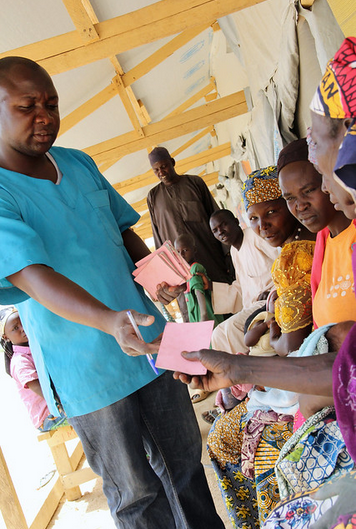
A positive experience at points of service builds trust in immunisation services and encourages utilisation of the health system as a whole. In contrast, patients and caregivers may refrain from using immunisation services if they do not feel treated with value and respect, even when these services are accessible. To that end, one of the core principles of the Immunization Agenda 2030 is a people-centred approach, which emphasises the need for services to be organised around the needs and expectations of individuals and the community. This study provides a synthesis of the immunisation experiences of children's caregivers in Cameroon, where immunisation coverage has been declining, and it highlights potential barriers for timely and complete immunisation.
For the descriptive cross-sectional study, 1,230 caregivers who brought their children for immunisation were interviewed in 265 health facilities in all 10 regions of Cameroon. Select findings:
- The median waiting time for vaccination was 1 hour and 48 minutes, with great regional variations.
- 24% of surveyed caregivers reported presenting to a health facility for immunisation services and being turned away without achieving the purpose for which they came at least once. This practice, which may be linked to health workforce deficits, vaccine stockouts, and the fact that many health facilities do not offer immunisation daily, could contribute to missed opportunities for vaccination.
- 4% of caregivers reported to have shown up for an outreach activity that was canceled, and up to 48% of respondents had never heard about planned vaccination outreach by health facilities in their respective communities. This finding highlights the need to strengthen community engagement in vaccination service delivery in Cameroon, as this is key for building trust in the healthcare system and narrowing inequities in immunisation coverage.
- 87% of the study participants reported to be satisfied with immunisation service delivery, with 92% of caregivers stating that healthcare workers were friendly to them during vaccination sessions.
Some caregivers gave suggestions for improvement of the quality of immunisation services, such as:
- Improve the style of delivering health talks: Caregivers indicated the need for facility staff to deliver health talks in simple and non-technical terms.
- Address human resource constraints at the health facility level: Caregivers voiced the need to increase the number of healthcare workers to decrease the waiting time.
- Improve health facilities' infrastructure to accommodate more caregivers.
- Increase the number of immunisation outreach sessions to limit long-distance travel to the health facility.
- Improve stock availability and adequacy at the facility level.
In conclusion, while most caregivers appeared to be satisfied with immunisation service delivery in Cameroon, the study highlights some notable caregiver concerns (long waiting times, unproductive immunisation visits, and inadequate information about outreach activities), "which, if addressed, may go a long way to enhance the immunization experience of caregivers in Cameroon, build trust in immunization services and thus improve vaccination uptake." The authors advance a call to action, recommending that various immunisation stakeholders consider addressing the perspectives shared by study participants in the projects they (governments and funders) fund and the projects they (implementing partners) implement.
Full list of authors, with institutional affiliations: Yauba Saidu, Clinton Health Access Initiative Inc. and University of Siena; Jessica Gu, Clinton Health Access Initiative Inc.; Budzi Michael Ngenge, Clinton Health Access Initiative Inc.; Sangwe Clovis Nchinjoh, Clinton Health Access Initiative Inc.; Amani Adidja, University of Yaoundé; Nadege Edwidge, Clinton Health Access Initiative Inc.; Nkwain Muteh, Gavi, The Vaccine Alliance; Clarence Mbanga, Clinton Health Access Initiative Inc.; Diaby Ousmane, Ministry of Public Health, Yaounde, Cameroon; Andreas Njoh, Cameroon Ministry of Public Health; Junie Flegere, Gavi, the Vaccine Alliance; Demba Diack, Gavi, the Vaccine Alliance; Emanuele Montomoli, University of Siena; Sue Ann Costa Clemens, University of Siena and University of Oxford
Vaccines 2024, 12, 1430. https://doi.org/10.3390/vaccines12121430; and email from Yauba Saidu to The Communication Initiative on January 14 2025. Image credit: OCHA/Ivo Brandau via Flickr (CC BY-NC-ND 2.0)
- Log in to post comments