










































ICT-Enhanced Advocacy: Mobilising Communities Around Children’s Rights
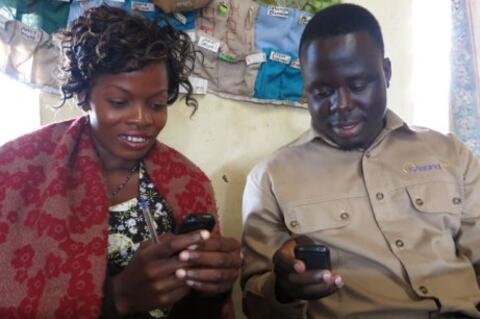
The initiative is using information and communication technology (ICT) to provide parents, teachers, and children with informational messages about child abuse. The initiative is designed to help better understand the local situation of children (particularly in schools and with a focus on girls), to raise community awareness of various aspects of child abuse, and to advocate for children's rights.
Parents, teachers, and other community members are encouraged to enroll in a mobile platform that both provides information and surveys participants on various children's rights topics via SMS. After opting-in by sending 'FAWEMA' to short code 55111, the participants are surveyed about different types of child abuse, followed by awareness raising and sensitisation messages on the topic, concluded by another round of survey questions. In this way, information and awareness is spread, while the impact of the programme can be grasped. The messages focus on child abuse in many forms, including but not limited to child marriage, child labour, sexual harassment, and severe punishments by teachers.
In addition to SMS-based information, radio is being used to promote awareness of the tool and share information. The short code is promoted via radio and excerpts from community members conversations during focus group discussions about child abuse are aired.
In future, it is planned that a toll-free line will be set up that allows people to report incidents of child abuse, and reported cases are then followed up by linking to the appropriate authorities, such as the Victim Support Unit and the Ministry of Gender, Children and Social Welfare. FAWEMA is collecting information about the cases to use insights gathered to advocate with the Ministry.
According to IICD, their experience "shows that inclusion of all community stakeholders from the beginning is crucial in advocacy work. Furthermore, the diversity of issues addressed by this campaign requires the engagement of all community stakeholders to support and hold each other accountable to their shared goals. For these reasons, IICD worked to include not only local authorities but also school management committees, teachers, parent-teacher associations, teacher training colleges and primary education advisors in the workflow."
Children, Rights, ICTs
IICD believes that keeping issues such as child abuse on political and community agendas is a central component of bringing about sustainable social changes. By advocating for children's rights via an ICT platform, parents and educators in the community become better equipped to deal with these concerns and offer their children a safer environment for learning and living.
International Institute for Communication and Development (IICD), Connect4Change, TCC, Forum for African Women Educationalists
TTC Mobile Solutions for Social Change website and IICD website on September 26 2014.
- Log in to post comments