











































Gender against Men [Documentary]
Image
SummaryText
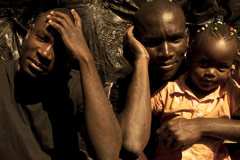
Produced by the Refugee Law Project (RLP), University of Makerere, Kampala, Uganda, this documentary explores "the hidden world of sexual and gender-based violence against men in the conflicts of the Great Lakes region." According to the producers, it is a film about men, violence, and the inability of society to recognise or address male vulnerability in times of conflict. The film is intended to raise as many questions as it answers in its quest for an honest examination of the gender stereotypes underlying mainstream approaches to sexual and gender-based violence (SGBV).
The film considers sex-selective massacres, which target all the men in a particular town for extermination. It looks at policies, which - intentionally or otherwise - undermine men’s traditional role as protectors and providers without allowing them alternative ways of expressing their masculinity. It considers one of the biggest taboos of all: the rape of men and boys. The producers say that the documentary was created to show how a one-sided approach to gender works to the detriment of all, including individuals seeking healthcare, their families, and their communities.
Since it was launched in Kampala in June 2009, the film has been screened at a wide range of locations including at the World Bank in Washington, DC, United States, the United Nations High Commissioner for Refugees (UNHCR) in Geneva, Switzerland, the Refugee Summer School at Oxford University, United Kingdom (UK), and at various conferences. It has been introduced into the curriculum of several Masters degree courses, including at City University and the School of Oriental and African Studies in London, UK, and at the University of Johannesburg in South Africa (SA), and used for internal discussion purposes by non-governmental organisations (NGOs) such as Christian Aid and donors such as the Norwegian Agency for Development Cooperation. In December 2009, Gender against Men was screened at the Human Sciences Research Council in Pretoria, SA. The RLP, which provides counselling to victims of sexual and political violence, found that the documentary helped to open up a wide range of conversations on what were previously regarded as taboo topics. It is using the film to inform training initiatives, as well as direct interventions with male survivors of sexual violence.
Gender against Men was judged 'Best Documentary' at the Kenya International Film Festival in October 2009.
To obtain a copy of the DVD, please contact Ms. Angella Nabwowe Kasule at a.nabwowe@refugeelawproject.org
The film considers sex-selective massacres, which target all the men in a particular town for extermination. It looks at policies, which - intentionally or otherwise - undermine men’s traditional role as protectors and providers without allowing them alternative ways of expressing their masculinity. It considers one of the biggest taboos of all: the rape of men and boys. The producers say that the documentary was created to show how a one-sided approach to gender works to the detriment of all, including individuals seeking healthcare, their families, and their communities.
Since it was launched in Kampala in June 2009, the film has been screened at a wide range of locations including at the World Bank in Washington, DC, United States, the United Nations High Commissioner for Refugees (UNHCR) in Geneva, Switzerland, the Refugee Summer School at Oxford University, United Kingdom (UK), and at various conferences. It has been introduced into the curriculum of several Masters degree courses, including at City University and the School of Oriental and African Studies in London, UK, and at the University of Johannesburg in South Africa (SA), and used for internal discussion purposes by non-governmental organisations (NGOs) such as Christian Aid and donors such as the Norwegian Agency for Development Cooperation. In December 2009, Gender against Men was screened at the Human Sciences Research Council in Pretoria, SA. The RLP, which provides counselling to victims of sexual and political violence, found that the documentary helped to open up a wide range of conversations on what were previously regarded as taboo topics. It is using the film to inform training initiatives, as well as direct interventions with male survivors of sexual violence.
Gender against Men was judged 'Best Documentary' at the Kenya International Film Festival in October 2009.
To obtain a copy of the DVD, please contact Ms. Angella Nabwowe Kasule at a.nabwowe@refugeelawproject.org
Publishers
Publication Date
Languages
English
Source
Refugee Law Project press release [PDF] on June 19 2009, and the Forced Migration Online (FMO) website, May 10 2010.

Comments

interesting
the source is not that very usefull but it gives me an idea of of what the film is all about. It amkes me tp be very keen to go and watch it. Gendre against men is a very big issiue but it is not taken seriously as men are potrait to be strong and powerful. Many do not report cases of gender against men because they are ashamed and embbarast.
- Log in to post comments