










































1 minute
Finding the Balance Between Scale and Localisation: DMI's Experience of Delivering a Family Planning Mass Media Campaign Across Seven Countries and 29 Languages
Abstract for Preformed Panel Presentation from the 2022 International SBCC Summit in Morocco:
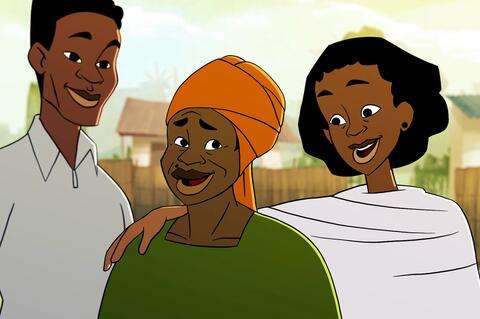
"Development Media International (DMI) delivered the mass media component of the WISH2ACTION campaign, using relatable characters and storylines to increase audience receptivity to what can be challenging messages on a sensitive subject. However, using characters and storylines that could resonate with audiences in seven countries and 29 languages, whilst maintaining fidelity to the core family planning themes, was a significant challenge. This presentation describes how DMI, with the help of local consortium partners, struck the balance between working at the scale demanded by WISH yet developed outputs that were attractive to and resonant with local audiences. The final campaign consisted of 1,214 radio spots, broadcast 560,000 times, dubbed into 29 languages, on 134 radio stations and heard by 70 million listeners, in addition to 344 audio-visual episodes broadcast 8,000 times and seen by 74 million on TV and watched for over 1 minute by 2.5 million on Facebook. A subset of the audiovisual outputs targeting youth, called Temzu Town, was also distributed to youth groups via 15,000 memory devices that could be used to view the episodes on phones. Finally, 3,550 audio and 830 video talking cards were distributed to people living with disabilities and those living in severe poverty across Uganda and Zambia. All radio outputs were written by African script-writers, trans-created by project teams in each country, and pre-tested directly with target audiences in over 250 rural focus groups. All media outputs were further presented to and approved by Ministries of Health in all countries."
Approved abstract for the 2022 SBCC Summit in Marrakech, Morocco. From SBCC Summit documentation. Image credit: DMI