










































Final Report: Qualitative Research on Perceptions of Polio Vaccination in the Context of COVID-19 Vaccination (COVAX) Rollout
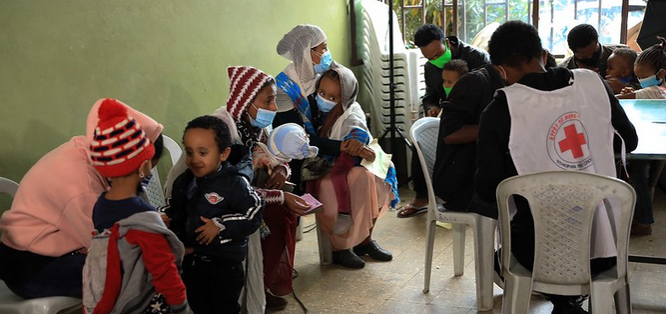
"Nowadays, people go to vaccinate against polio, but rumors say that it is COVID that they are bringing. The State should try and find ways to build back the confidence in people...who are traumatized by COVID." (Cameroonian caregiver)
The COVID-19 pandemic introduced new challenges into the vaccination landscape for polio and other routine immunisations (RIs), with an estimated 23 million children not receiving RIs in 2020 around the world. Vaccination campaigns, including for oral polio vaccine (OPV), have since restarted - which is important to combat continuing threats, such as the emergence of circulating vaccine-derived type 2 poliovirus (cVDPV2), principally in sub-Saharan Africa. Yet there are concerns that the persistent mis- and dis-information related to COVID-19 and associated vaccines will spill over to perceptions of other vaccines, including OPV. In response, Family Health International (FHI 360) conducted a cross-sectional, qualitative study for the United Nations Children's Fund (UNICEF) exploring how the experience of COVID-19 restrictions (e.g., social distancing) and perceptions of the newly developed COVID-19 vaccines influenced perceptions of OPV and polio vaccination campaigns in Cameroon and Ethiopia. The main goal is to inform recommendations for communication and social mobilisation strategies.
The study was conducted in Addis Ababa and Adama, Ethiopia, and Yaoundé and Bafia, Cameroon. These sites were purposively selected to represent countries with active cVDPV2 outbreaks that had recent OPV campaigns delivered concurrent with the roll-out of COVID-19 vaccine. FHI selected urban and semi-urban sites in each country to capture populations with different access to the internet and social media. They conducted focus group discussions (FGs) and individual interviews (IDIs) in Ethiopia in late February and early March 2022 and in Cameroon between April and May 2022.
Among the study's findings are themes related to:
- How COVID-19 precautions affected community-based vaccination campaigns: Frontline workers (FLWs) found it challenging to meaningfully engage with caregivers given the limitations on physical space and inability to have face-to-face conversations that might otherwise address reluctance among caregivers. In Addis Ababa, in particular, one of the notable shifts was away from centralised vaccination events to door-to-door campaigns, which stakeholders argued had both advantages and disadvantages. Overall, however, stakeholders in Cameroon felt COVID-19 precautions had a greater effect on vaccination events than stakeholders in Ethiopia.
- Observations of and experiences with community-based vaccination campaigns during the COVID-19 pandemic: Most participants, but not all, were exposed to vaccination campaigns since the beginning of the COVID-19 pandemic. However, some caregivers in Cameroon reported a sense of confusion and resistance to vaccination campaigns, largely stemming from concerns that the campaign was related to COVID-19 vaccination instead of OPV. FLWs in Bafia and Yaoundé described an uptick in vaccine refusals based on rumors and misinformation, including that all vaccines are a form of population control or that the polio vaccine might contain the COVID vaccine or the disease itself.
- Reasons for vaccine hesitancy: Word of mouth/peers and social media were prominent sources of information that caregivers felt directly contributed to vaccine hesitancy. Social media's influence, particularly through Facebook, was slightly stronger in urban areas. Respondents did not identify government agencies as sources of mis- or dis-information, which presents an opportunity to increase reliable information from government-sponsored sources, including social media accounts. Ultimately, participants in Ethiopia identified with very few hesitancy concerns related to OPV. In Cameroon, however, participants reported personally identifying with or knowing others in their community who held OPV-related hesitancy concerns, primarily related to concerns over side effects, the potential for the vaccine to be a mechanism for population control, vaccinators not being qualified/trusted, religious leaders opposing vaccines, and the concern that OPV could actually be a COVID-19 vaccine. By contrast to OPV, participants in both Cameroon and Ethiopia reported various hesitancy concerns linked to COVID-19 vaccines, with the primary concerns across countries being concerns related to side effects, fear that the vaccine could be a mechanism for population control, concern that Westerners were testing vaccines on Africans, and conflicting information on the benefits/dangers of vaccines. More FGs reported hesitancy concerns related to COVID-19 vaccines in Cameroon than in Ethiopia.
- Community reactions to future OPV campaigns: Stakeholders across both countries felt the biggest hurdle for future OPV campaigns would be to rebuild caregiver confidence and convince them that the polio vaccine being administered was not a COVID-19 vaccine in disguise. Authorities would also need to help address the trust eroded between caregivers and FLWs. Community members in both countries reported that time and effort will be required before OPV acceptance numbers return to pre-pandemic levels.
- How to maximise community support for OPV vaccination in the COVID-19 context: One consideration for improving caregiver confidence in OPV campaigns included ensuring clear, consistent messaging is reaching caregivers through different, reputable sources. Written pamphlets, television, radio, and social media were also mentioned, along with promotion cars and providing mobilisation teams with megaphones to ensure a broader reach. More than any one form of communication, stakeholders felt government authorities should use all possible avenues to reach caregivers with appropriate information. They also reported it was important to enlist existing community influencers, including local authorities, as well as prominent community groups, such as peasant organisations or women's groups, in the community mobilisation and vaccination process. Community leaders and groups are both known and trusted and could, therefore, help assuage concerns community members feel toward vaccination. They can also support FLWs in identifying unvaccinated households and children. Some of the other specific recommendations include:
- In the context of polio outbreak response, consider delivering OPV and COVID-19 vaccination campaigns separately to avoid confusion and mitigate concerns, and effectively manage caregiver concerns about COVID-19 vaccines being surreptitiously delivered in place of OPV.
- Ensure that caregivers have clear, consistent messaging about the advantages and disadvantages of vaccination against polio at least one week in advance of any vaccination events.
- Deliver messaging through different mediums, including written materials that contain images of polio's effects, television, radio, and government-support social media accounts, in order to reach a broad audience.
- Enlist or increase support for mobilisation events from local community influencers, including kebele authorities in Ethiopia and other community groups, as these trusted groups are regularly relied upon by caregivers and may be able to address hesitancy concerns. It may be important to include these groups in community action planning efforts.
- Provide FLWs with additional support in the form of increased remuneration, where possible, as well as resources to increase their visibility and credibility in the communities and other materials to support long days in the field, such as appropriate clothing and bottled water.
- Galvanise the participation of local health authorities in vaccination campaigns to improve FLW credibility while also promoting FLW feelings of being supported and appreciated for their hard work.
- Provide FLWs with training to effectively address caregiver concerns, including interpersonal communications skills for immunisation and specific talking points to counter some of the more common reasons for hesitancy presented here.
PolioKit, November 23 2022. Image credit: UNICEFEthiopi/2020/NahomTesfaye via Flickr (CC BY-NC-ND 2.0)
- Log in to post comments