










































Faking It: Fake News and How It Impacts on the Charity Sector
"NGOs have become accustomed to addressing the criticisms and misrepresentations of some parts of the mainstream media, but the speed, reach and toxicity of the methods used to spread false information on social media are in another league. Importantly, they are also, unlike the mainstream media, largely unregulated."
This International Broadcasting Trust (IBT) report examines the phenomenon of fake news and looks at specific examples that have had a direct impact on charities (non-governmental organisations, or NGOs), particularly those involved with international development. It explains how misinformation is incentivised and spread by social media platforms, gathering together a number of examples of fake news from across the sector, which range from malicious fabrications about individuals to attempts to sway public attitudes against the rescuing of refugees. Finally, it offers recommendations on how to manage online communications effectively so as to negotiate the increasingly complex media landscape and rebuild trust amongst NGOs' supporters, the media, and the general public.
IBT indicates that misinformation spread through fake news can affect NGOs at home, where their aims may be at odds with certain sectors of society. It can also affect them in the frequently highly politically charged areas where they operate, undermining trust in their activities and adding to the confusion and insecurity in conflict and disaster situations.
The report draws on some of the numerous reports and articles that have been written on trust and fake news in recent months and 15 telephone interviews, one face-to-face interview, and one email interview conducted from September to December 2017 with NGOs, journalists, and social media analysts. Excerpts from these interviews are included in the report.
It begins by presenting various definitions of fake news, noting that, however the term is defined, the phenomenal growth of social media in recent years has created the possibility for misinformation to be produced and disseminated on a hitherto unimagined scale. The 2017 Edelman Trust Barometer Report surveyed more than 33,000 respondents across 28 countries and found that trust in all four institutions - business, government, NGOs, and media - declined in 2017, a first since Edelman began tracking trust. The Edelman Trust report sees a direct correlation between a decline in trust and the growing power of social media platforms like Facebook, Google, and Twitter.
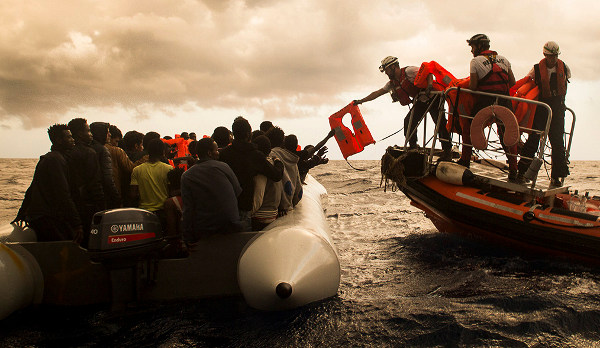
The report looks at how fake news works, indicating that "[c]ritics argue that platforms like Facebook and Twitter are designed to provide users with information that they already agree with, strengthening existing biases and political prejudices, and polarising the political discourse." It examines the impact of such fake news on NGOs, sharing several examples of fake news and online abuse of NGOs. "Immigration provokes polarised views in both mainstream and social media. It is therefore unsurprising that NGOs working in search and rescue operations in the Mediterranean have been subject to press and online criticism and sometimes fake news stories deliberately aimed to undermine their activities." As IBT explains, NGOs operating in conflict zones are particularly vulnerable to fake news stories on social media.
IBT cautions that an even bigger reputational risk can be posed by misinformation spread by NGOs themselves, whether intentionally in a bid to increase support or unintentionally through a failure to check sources and data. Without rigorous attention to detail, campaign headlines can mislead the public. This is illustrated by a tendency to exaggerate or conflate numbers, for example, of refugees and internally displaced persons, in order to create a greater sense of crisis. Another form of misinformation sometimes disseminated by NGOs is defined by First Draft News as "false contexts" - the incorrect pairing of image and event. During the Rohingya crisis in Myanmar, misleading images were widely circulated during the outbreak of violence, and accusations of fake news on both sides of the conflict made it difficult to gather accurate information. The use of social media platforms has once again amplified this problem.
Fighting fake news can involve:
- Regulation of social media platforms;
- Fact checking (independent fact-checkers have emerged in more than 50 countries spanning every continent);
- Verification, such as by conducting reverse image searches;
- Rumour tracking - e.g., during humanitarian crises and natural disasters; and
- Media literacy, with a focus on educating young people about what's news, what's opinion, and what's bias.
Recommendations for NGOs going forward include:
- At a time when public confidence in many institutions has declined, rebuilding and maintaining trust should be key pillars of NGOs' communication strategies.
- Poor data control and misleading information undermine trust. There should be a stronger focus on accuracy and transparency now that NGOs are subject to higher levels of scrutiny - and a public commitment to correct errors when they occur.
- Fake news and misinformation about NGOs and their work should be monitored and challenged when appropriate.
- Key staff should be offered training in verification methods to ensure all information sources are authenticated.
- Consideration could be given to the establishment of an international aid fact checking organisation that serves the whole sector.
- Strong branding allows NGOs to differentiate themselves from other less reliable information sources.
- Original, creative storytelling using all the techniques and formats that digital technology offers should appeal to a sense of hope rather than pity.
- Guidelines should be provided to communications and field officers on the risks of social media. Staff should be protected against online abuse and supported when things go wrong.
- Digital advertising agencies should be briefed to exclude certain sites, and the appearance of adverts on inappropriate sites should be monitored.
- Investment in relationships with trusted media outlets will help to reinforce and amplify messaging.
In conclusion: "As concerns about fake news grow, NGOs must endeavour to maintain the trust of those donors and beneficiaries they aim to serve and build relationships with others who share these principles in the media and elsewhere in order to amplify their messages and raise their voices above the clamour of competing voices online."
e-CIVICUS 858, February 15 2018; and IBT website, February 20 2018.
- Log in to post comments