










































Exploring Governance in Kenya
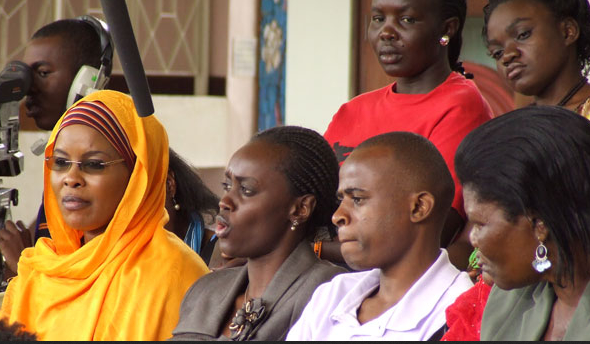
This 2-page research summary shares findings from research conducted by BBC Media Action about pressing issues affecting Kenyans to inform the multimedia debate programme Sema Kenya. Sema Kenya (Speak Kenya) is a BBC Media Action programme funded by a Global Grant through the United Kingdom (UK) Department for International Development, designed to provide a constructive platform for Kenyans to voice their concerns about issues that affect them and directly address politicians and public officials. Some of the most current pressing issues identified by the research as affecting Kenyans were unemployment, the high cost of living, negative ethnicity (loyalty to one's ethnic group above loyalty to the state), poverty, and corruption. The inaccessibility of Kenyan politicians and the threat of retaliation were viewed as the principle barriers to Kenyans being able to question and receive answers from their leaders.
Sema Kenya is designed to provide opportunities (on radio, television and via social media and mobile phones) for Kenyans to engage in dialogue with their public leaders by directly questioning them on important issues. Produced in the lead-up to the 2013 Kenyan national elections, the programme hopes to help deter a repetition of widespread violence that followed national elections in 2007 and to encourage media to play a positive role by promoting dialogue and allaying ethnic tensions. In April and May 2012, 22 focus groups with members of the public were conducted across all eight provinces of Kenya in an effort to better understand issues that affect Kenyans in daily life and gauge public opinion on the new constitution, election-related violence, and the role of the media in governance and accountability. "Temperature maps" (visual representations of the data) were created to show the most important issues affecting each region of Kenya. These were complemented by eight focus group discussions to test the debate concept.
Unemployment and poverty were mentioned in almost all of the provinces. Overall, the high cost of living and poverty were felt to be the most pressing issues affecting Kenyans. Participants described how Kenyans must take responsibility for their own development. However, many reported facing barriers in terms of holding their leaders to account due to the threat of retaliation and the inaccessibility of their leaders. There was enthusiasm about the new constitution, but knowledge of its implications is limited. Many participants had high expectations of the new constitution, viewing its implementation as a solution to all problems. There was a feeling among participants that they did not want to witness violence again. The majority were optimistic that, with the full implementation of the constitution and the resolution of long-standing issues, there would be a reduced likelihood of violence.
Early audience concept testing of the question and answer programme format for Sema Kenya revealed that there was a desire among audiences for programming that focuses on issues as opposed to party politics. This format was preferred and deemed necessary in the Kenyan context. Some skepticism was expressed as to whether Kenyan politicians were "mature enough" to participate in such a programme. People wanted to see a wide variety of panellists - not only politicians but also members of civil society, religious leaders, and experts. They suggested that the programme travel across the country to give a variety of people access to leaders.
The research summary concludes that media has an important role to play in managing expectations around the new constitution and encouraging people to fully participate in governance issues. It also states that there is a demand for a programme that enables ordinary citizens to engage directly with their leaders. A programme like Sema Kenya can inform voters about governance issues like the new constitution in the lead up to the national elections. The question and answer format of Sema Kenya provides a safe platform. It can encourage constructive dialogue between public officials and citizens and the sharing of diverse views without inciting violence.
BBC Media Action website on December 14 2012.
- Log in to post comments