










































Crowdsourcing Interventions to Promote Uptake of COVID-19 Booster Vaccines
University of Vienna (Böhm); University of Copenhagen (Böhm); University of Erfurt (Betsch, Sprengholz); Bernhard Nocht Institute for Tropical Medicine, or BNITM (Betsch, Sprengholz); University of Innsbruck (Litovsky, Kirchler); University of North Carolina at Chapel Hill (Brewer); Carnegie Mellon University (Chapman, Loewenstein); The University of Sydney (Leask); Consultant, WHO Regional Office for Europe (Scherzer); Harvard Law School (Sunstein)
"In times where governments grapple with strategies to increase booster vaccine uptake in pandemic-fatigued populations, but large-scale comparative evidence on the effectiveness and acceptability of such strategies is still missing, intervention ideas and subjective evaluations by a large number of experts and respondents from the general population may well provide useful insights..."
COVID-19 booster vaccine uptake rates lag behind the rate of primary vaccination in many countries around the world, despite a range of interventions that have been implemented to increase booster uptake. The aim of this research is to provide insights into which interventions are perceived to be most effective and acceptable (among other criteria) to increase uptake of COVID-19 boosters. Instead of relying on the advice of only a few experts, the researchers employ a large-scale crowdsourcing approach - the process of aggregating individual opinions to solve a problem - to generate insights about which interventions are most promising.
In the first phase (December 2021), international experts working on vaccination behaviour or social and behavioural scientists more generally (n = 78 from 17 countries) were invited to propose interventions that could potentially increase uptake rates of COVID-19 booster vaccines. They suggested 46 unique interventions, which were organised into the following categories:
- Education: Increasing understanding of the disease, the vaccine, or how to get vaccinated
- Persuasion: Using communication to change what people think or feel
- Modeling: Providing an example for people to aspire to or imitate
- Psychological enablement: Increasing the likelihood of people turning positive intentions intro behaviour (e.g., nudging)
- Environmental restructuring: Changing the physical context where vaccinations take place
- Incentivisation: Providing positive reward for vaccination
- Restriction: Limiting the opportunity to engage in other desirable behaviours if unvaccinated
- Sanction: Creating expectation of punishment or financial cost if unvaccinated
To reduce potential bias, the second phase (January 2022) incorporated crowdsourcing: Experts (n = 307 from 34 countries) and representative general population samples from the United Kingdom, or UK (n = 299) and the United States, or US (n = 300) rated the proposed interventions on several evaluation criteria, including effectiveness and acceptability, on a 5-point Likert-type scale.
The most prevalent intervention classes among all proposed interventions in the first phase were education (50% of all interventions), persuasion (33%), modeling (30%), and psychological enablement (30%).
Evaluations by expert and general population samples tended to align, though there were areas of divergence - e.g., interventions relying on environmental restructuring were expected to increase the acceptability to the general population and decrease health inequalities but were considered relatively ineffective by the experts. On the other hand, sanctions were evaluated as potentially most effective by experts and UK/US citizens alike but were deemed least likely to be accepted.
Taken together, 5 out of all 46 interventions were rated positively by both experts and the general population regarding effectiveness and acceptability: (i) a day off work after getting vaccinated, (ii) financial incentives (either lottery or fixed payment), (iii) tax benefits (e.g., reduction of health insurance rate), (iv) promotional campaigns (e.g., stressing who else can indirectly benefit from their own booster vaccination, such as vulnerable persons or healthcare personnel), and (v) mobile vaccination teams (e.g., allowing people to get vaccinated at their private and work places).
Thus, the results indicate that "there is no single best intervention or intervention class to promote COVID-19 booster vaccine uptake, especially when expert and general population evaluations are both taken into account. In particular, some interventions that are deemed effective are deemed less acceptable (e.g., mandates) and may elicit counter behaviors such as active opposition."
In conclusion, this overview of established and novel interventions, along with their evaluations by more than 300 experts and 600 or so people from the UK and US general population, could possibly serve as a resource for governmental and non-governmental institutions that seek to select and implement interventions for increasing COVID-19 booster vaccine uptake, now and in the near future. In addition, the researchers assert that, "in the absence of any large-scale comparative evidence on the usefulness of behavioral interventions, the proposed multi-phase crowdsourcing approach could serve as a blueprint for similar situations."
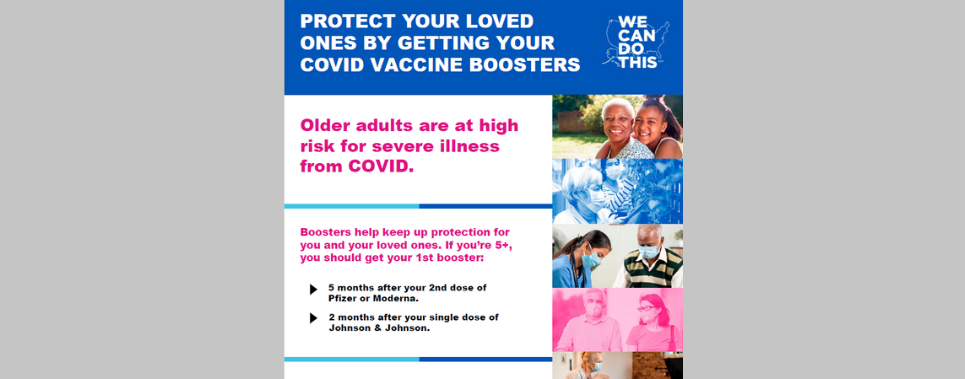
eClinicalMedicine 2022;53: 101632. https://doi.org/10.1016/j.eclinm.2022.101632. Image credit: U.S. Department of Health and Human Services
- Log in to post comments