










































Community Action Groups (CAGs) for Augmenting Community Engagement in Vaccination: A Legacy Document for the CORE Group Partners Project (CGPP)
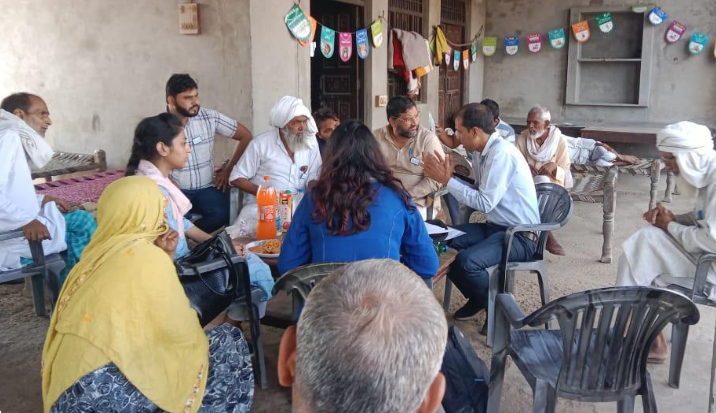
"Health initiatives that encourage community involvement possess the ability to adjust to local requirements, bridge the divide between community needs and program goals, alleviate community scepticism toward the public healthcare system, address hesitancy or resistance by working alongside community influencers, leaders, and gatekeepers, establish credibility through community trust and endorsement of community influencers, and confront issues arising from vacancies within the healthcare system."
In India, the journey to eradicate polio began with the National Immunization Days in 1995. However, the initial successes in vaccine uptake soon saw a downward trend due to fears, misconceptions, myths, and misinformation alongside service-related barriers. Addressing these challenges to improve demand generation required a multifaceted approach, and the CORE Group Partners Project (CGPP), initially known as the CORE Group Polio Project, was formed to develop and implement such an approach. This report provides insights from the community action groups (CAGs) formed by the CGPP across the Indian states of Uttar Pradesh, Assam, and Haryana to address misinformation, stigma, and vaccine hesitancy during the COVID-19 pandemic. The study explored CAG members' motivations, stakeholder perspectives, and potential for scaling up CAG initiatives.
CGPP's approach to improve the uptake of vaccination was rooted in the identification, training, and engagement of community leaders, known as 'community influencers' (CIs), who harnessed behavioral interventions to counter misinformation and misconceptions associated with vaccination. (See Related Summaries, below.) The motivation, commitment, and consistency displayed by the local cadre and development partners supported the government in India's attainment of polio-free status in March 2014. Since then, the focus of CGPP has been on maintaining population immunity against polio, improving demand generation for child immunisation, and responding to disease outbreaks.
With the onset of the COVID-19 pandemic, issues such as fear, stigma, misinformation, myths, and misconceptions resurfaced. Recognising the urgency of these challenges, CGPP organised existing and new CIs into 450 CAGs of 6-8 members formed across Uttar Pradesh, Assam, and Haryana. The CAGs were premised on multiple factors, such as group ownership, shared responsibility and accountability toward the community's needs, and linkages with diverse government departments. During the pandemic, CAGs helped address vaccine hesitancy, distributed essentials to COVID-19-infected families, and provided support in the routine immunisation (RI) programme. Since then, CAGs have continued to play a significant role in mobilising for COVID-19 vaccination, measles rounds, and RI.
Despite the recognised success of the CAG approach, insights from the intervention have not been comprehensively documented or shared with relevant stakeholders. To address this gap, Project Concern International (PCC) conducted a study to document the profile of CAG members and their motivations for such volunteer work, capture stakeholders' perspectives about the CAG intervention and their functioning, and explore the scalability and replicability of the CAG intervention in other geographic locations and contexts.
The study employed a cross-sectional, mixed-methods approach, incorporating rapid literature review, secondary data analysis, and qualitative data collection through focus group discussions (FGDs), post-FGD surveys, in-depth interviews, and key informant interviews. The findings and recommendations were also shared with the study participants in a one-day co-learning workshop to incorporate participants' reflections on the findings and to add contextual nuances into the study report. The study was conducted during August - October 2023 in the three states where CGPP is supporting the CAG intervention.
Findings reveal that CAGs emerged from a community-driven demand for trustworthy information and social support. These groups comprised local influencers with diverse skill sets and traits (e.g., effective communication skills, selflessness, a profound understanding of and commitment to the community) who tended to be male, 30-49 years old. Members were motivated by social responsibility and the desire for recognition.
Study participants explained that the support extended to CAGs centred on capacity building, focused on health-related issues driven by the health system's needs. The orientation process, conducted digitally and telephonically during the COVID-19 pandemic, evolved through monthly meetings. CAG members expressed the need for expanded training scope beyond health, covering issues like domestic violence, education, and child marriage.
The study found varying levels of awareness about CAGs among the interviewed stakeholders. Before the CAG formation, frontline workers (FLWs) sought support from CIs. The collaboration between CAGs and community stakeholders proved mutually beneficial. The stakeholders highlighted that composition and group structure, influential positions of the members and their knowledge about the community, and departmental linkages as key strengths, leading to quicker and more effective results, often in comparison to FLWs. Despite community members' limited awareness about CAGs, the community's trust in them was rooted in their socially relevant profiles, perceived dedication to community welfare, and timely support provision during COVID-19.
As reported here: "The CAGs proved to be a pivotal asset, distinguished by their deep community roots and knowledge, influence over their communities, diverse skills, and extensive departmental connections. With robust communication and mobilization abilities, the study found that CAG members were trusted influencers, playing a crucial role in bridging gaps between the community and the health system. Recognizing their effectiveness in reaching the last mile, the health department reported viewing CAGs as invaluable assets to leverage in future health programs and campaigns."
However, sustainability concerns regarding member motivation following CGPP's withdrawal were raised, underscoring the necessity for ongoing support. To that end, the study recommends strengthening ties between CAGs and health departments, expanding training on broader social issues, and providing clear guidelines for CAG formation. Integrating CAGs across various departments could enhance long-term health initiatives and community outreach.
The study provides takeaways and implications for sustainability and scalability. Here are four examples:
- Leverage the CAG model as a community-based support group that can work beyond health-specific issues, carrying out advocacy so that multiple government departments can tap the potential of such groups to bridge the gap between government programmes and the community.
- Develop clear guidelines for the set up of CAGs, with scope for contextualisation at the district level, and share them with district/block-level programme implementers and government officials. Advocacy is required with relevant departments to release government orders to streamline the set-up and implementation of the CAG model as a supplementary support group.
- Conduct advocacy with relevant departments to encourage recognition of CAG members, which can boost their motivation in engaging in various community-level activities. The acknowledgement of CAGs can take the form of invitations to the monthly meetings at the community health centre or primary health centre, appreciation of CAGs on special days, or recognition of the best working CAGs in meetings that CAG members would already be a part of due to their portfolios.
- Provide identity cards to CAG members for easy access and inroads into government departments to address administrative barriers in problem solving. Such cards can also provide recognition to CAG members and serve as a mechanism for prioritising their needs.
In conclusion: "The model established on its legacy work in polio eradication and more recently COVID-19, guided by a community-based approach of identifying and orienting community influencers, has all potential to be replicated in other low- and middle-income countries to support the frontline community health workers in mobilizing and converting vaccine resistors into acceptors. Further, it is undoubtedly a window of opportunity to leverage the model as a community-based support platform that can work beyond health-specific issues."
Full list of authors: Avishek Hazra, Cheshta Gula, Raj Kumar Verma, Shruthi S, Ananya Saha, Amna Meraj, Goutam Kumar Burman, Arup Kumar Das, Manoj Kumar Choudhary, Roma Solomon, Jitendra Awale, Vivekananda Biswas, Himangshu Bailung, Shilpi Das, and Imran Majid
CGPP website, December 9 2024. Image credit: CGPP
- Log in to post comments