










































Commission of the Status of Women 2014: Access for all?
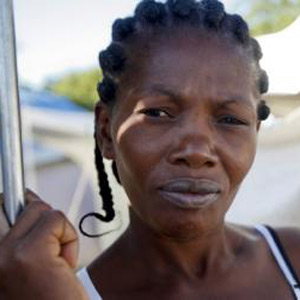
Progressio's Policy Assistant, Fatima Haase, recently arrived in New York at the UN Commission on the Status of Women (CSW58 - the 58th session) to lobby for greater political participation for women living in fragile states. She describes her first impressions and hopes that the conference will create an inclusive environment where the voices of women living in fragile states, such as Haiti, Yemen, Zimbabwe and Somaliland can be heard.
"I didn't expect it to be so easy to get lost in the UN buildings. I did not know that my UN ground pass would allow me to find myself next to rooms where influential leaders make proposals and decisions, for example, special advisors' offices.
What does this opportunity of physical access mean for those of us attempting to bring the voices of grassroots communities to the post-Millennium Development Goals discussions at the Commission on the Status of Women (CSW)?
My impression is that governments are generally interested in hearing the opinions and knowledge of experts from civil society as well as from other governments. They are here to negotiate, but also to consult.
In the next two weeks, the Progressio delegation will lobby alongside other NGOs for a stand-alone goal on gender as well as gender mainstreaming. We also want to bring the voices of women in fragile states because they have told us that their life is very hard without functioning government structures. For example, when a nation is rebuilt after a disaster, like the earthquake in Haiti, women often find it even harder than men to gain access to public services.
Equally, we want to see increased participation of women in decision-making at all levels. That means, that Progressio will continue to support grassroots women's movements in gaining access to decision-making bodies, like local councils, whilst lobbying at the UN for special attention to their needs.
Empowerment doesn't happen overnight. But I am glad about the consensus amongst NGOs and, in fact many governments, that they need to create an enabling environment in which everyone can exercise their rights.
I believe that the CSW58 and the discussions around post-2015 have the potential to create this enabling environment legally. It is up to governments to implement these laws and civil societies can play an important role in monitoring that process. Let's hope that the CSW58 is another milestone in the path of achieving gender equality. Let's hope, the governments don't lose sight of the voices of the most marginalised communities. Let's hope, we can have true access for all."
Photo: Marie-Ange Marcelin is a single mother of five daughters. Her husband died before the 2010 earthquake in Haiti (photo © Natasha Fillion/Progressio)
- Log in to post comments