










































Child Immunization Cards: Essential Yet Underutilized in National Immunization Programmes
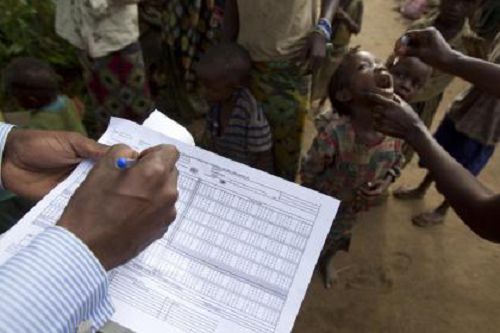
United Nations Children's Fund (UNICEF)
"The child immunization card is an inexpensive yet effective instrument for systematically recording the vaccines received by a child. Moreover, the card can enhance health professionals' ability to make clinical decisions, empower parents/caregivers in the health care of their children, and support public health monitoring."
This is one conclusion articulated in this commentary, published in volume 5 of The Open Vaccine Journal. Unfortunately, according to the author, David W. Brown, the child immunisation card is too often underutilised or inappropriately used by parents and health care workers and therefore does not always fulfil its intended purpose. His argument is that national immunisation programmes should be encouraged to procure cards and more actively promote the issuance and appropriate use of this communication tool.
Brown provides concrete recommendations, such as the issuance to parents/caregivers of child immunisation cards by national immunisation programmes at the birth of the child or at the first contact with a vaccinator/health care worker. If it is communicated that this card be retained and brought to each encounter the child has with the health care system, "information would be collected at all health consultations including sick- and well-visits conducted at a health clinic/post as well as any supplementary immunization activity (e.g., a measles campaign in a village), although presentation of cards at the latter is rarely practiced. Finally, the successful use of the card requires that all health care workers, who come into contact with the child, reference the card and accurately and legibly update the card so that the information on the card is correctly interpreted and translated into appropriate medical advice and action."
Brown notes that there are also more comprehensive cards that allow the addition of essential health information, including: a record of birth data such as the birth date and birth weight, a visual record of the child's growth, factors that may affect the child's ability to develop normally or adapt to a new environment, and a continuous and permanent record of the child's development by recording the medical and social history. He cites research showing that these more comprehensive child health cards can be advantageous because they emphasise the place of immunisation within the context of the child's overall health and development rather than making immunisation an end in itself.
He argues that immunisation cards (footnote numbers have been removed) "also have an important role in improving parental awareness and involvement in their child's health care....[o]pportunities remain to redesign immunization or health cards in such a way to improve communication....Recent research in Pakistan has demonstrated the potential benefit on increased follow-up immunization visits (e.g., reduced drop-out) of redesigned, more mother-friendly immunization cards that incorporate a larger card size with bright colour and the strategic placement of reminder information in large text. In addition, more needs to be done through training and mentoring of health care workers to improve caregivers' understanding of the card and the benefits of retaining and bringing the immunization card to all child health care encounters."
"Finally, immunization cards support the collection of data for uses other than direct clinical care or delivery of vaccines such as for quality management and public health monitoring. Periodic coverage surveys, through which information is collected directly from a sample of households, are one way in which immunization coverage of young children is monitored." Along those lines, Table 1 shows the prevalence (%) of immunisation or health cardholders at the time of survey by select background characteristics in 87 countries, 2000-2010. Brown concludes with a call for further research on the use of immunisation cards. He also suggests that "the global immunization community should begin to engage with the growing momentum of technology innovation and integration in public health to improve child immunization recording and monitoring of immunization status in the 21st century."
Email from Mike Favin to The Communication Initiative on February 23 2015. Image credit: UNICEF Canada
- Log in to post comments