










































Changing Gender Norms Among Women and Men in Uganda

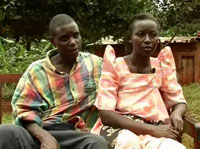
This 42-page report documents the findings of a study that evaluated the effects of participation in the African Transformation (AT) programme in Uganda. The programme is designed to promote gender equity, participatory development, and community action, and comprises a kit containing a series of video profiles of women and men who overcame gender barriers and challenges in their own lives and became role models to others. Participants view and discuss the profiles during interactive community-based workshops led by trained facilitators. Modules in the programme include gender, equity, social roles, and reproductive health. According to the report, the programme is grounded in Paolo Freire's formulation of empowerment education and Albert Bandura's social learning theory, and is successful in positively changing gender norms. It is modeled on the Arab Women Speak Out (AWSO) project designed by the Johns Hopkins University/Center for Communication Programs (JHUCCP) in collaboration with The Centre of Arab Women for Training and Research.
Analysis of the programme assessed the extent to which AT participation correlated with key outcomes, including communication about topics covered in the modules, efficacy to take action, changes in perceptions of gender norms, and actions taken. The study found that the programme had a positive impact on participants' views and perceptions around gender. In particular, it found that:
- participants expressed significantly higher levels of confidence in their ability to take action, particularly with regard to community activities to reduce harmful traditional practices;
- participants expressed a significantly more equitable view of men's and women's roles than non-participants;
- AT had a positive effect on men's perceptions of men who assumed non-traditional roles;
- more than half of the men involved came to recognise that women can play a greater role in decision-making in the home;
- nearly half of male and female participants came to believe that women can do almost anything if they are taught to do so;
- respondents reported many changes with respect to women's abilities and came away with an enhanced appreciation of the benefits of women and men working together;
- both men and women reported that participation in the workshops changed their attitudes about men's roles and appropriate behaviours; and
- nearly 7 out of 10 male respondents reported that they had come to recognise the importance of shared decision-making and joint action.
The report notes that while gender norms are influenced positively by participation in the workshops, transforming deep-seated norms takes time. The authors found that those who participated in more sessions registered greater change, suggesting that participation over a series of sessions is needed to allow for the penetration and exploration of ideas.
The study includes key recommendations based on the findings, such as expanding the programme further in Uganda as well as other countries and ensuring that people participate in five or more sessions (though it is not clear if it makes any difference which combination of five will have the greatest impact, or if it matters). The authors recommend more research on this, as well as on the effects of participation a year after the workshop, in order to assess the sustainability and long-term impacts of the changes found in the short term.
Note: this publication is no longer available online. Please use the contact details below to request a copy.
JHUCCP website on March 25 2009; and Media/Materials Clearinghouse, October 1 2009.
- Log in to post comments