










































Changing Children's Lives: Experiences from Memory Work in Africa
Healthlink Worldwide
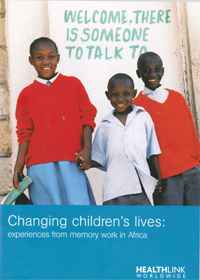
This 32-page report, published by Healthlink Worldwide, shares learning from the memory work in which Healthlink and 6 other non-governmental organisations (NGOs) across sub-Saharan Africa were involved. The authors argue that memory work provides an adaptable and sustainable approach to combat the spread of HIV and to deal with its impact on people's lives. The focus of the publication is on learning and analysis in the theory and practice of memory work, as well as demonstrating its effectiveness as an HIV response. The document also contains key challenges and how to deal with them, as well as recommendations for policy and practice.
According to the authors, memory work is a participatory approach that encourages families to communicate openly about HIV, in order to strengthen children's resilience to the pandemic. It focuses on creating a safe environment in which disclosing one's HIV status and open communication are possible. It involves a variety of activities including training, counseling, and peer support for parents, guardians, and children. The most tangible tool that comes out of memory work is the memory book, which contains a family history, information about the parent or guardian's health, children's aspirations, and childhood memories. Documented through illustration and writing, it provides a starting point for communication in the household.
The report identifies four key challenges or tensions that may arise when memory work is used. The ease of replication of the approach means that organisations need to be prepared for increased demand and plan ahead for expansion. Implementing organisations have found that the process can create unexpected changes in family dynamics, particularly around orphaned children opting to stay together and retain the family unit rather than live with relatives. The subsequent increase in child-headed households creates increased demand on health and social welfare services. There are also signs that it could lead to increased uptake of voluntary counselling and testing (VCT) services, as well as HIV treatment. According to the report, there is also growing evidence that memory work is leading to cultural change at the community level, especially around will-writing. This raises challenges when dealing with legal systems that are not easy for people with HIV to negotiate, and points to a need for increased advocacy and lobbying for policy change.
The report contains key recommendations, both for memory work practitioners and for policy makers. When implementing memory work, the authors recommend practitioners consider the following:
- Memory work benefits from strong referral systems and alliances with other organisations. Developing referral systems and alliances helps create a more holistic approach, brings in different skills, and ensures sustainable social change.
- Children's participation is central to the success of memory work, as it helps them develop their own coping strategies, and helps family and community members understand and respond to children's needs.
- Memory work is adaptable to a range of contexts and situations because it is relatively simple. Community participation at every stage of planning and implementation helps guide and shape what is most appropriate for each particular context.
- Responsiveness to unexpected change and outcomes is vital to ensure that the work remains relevant. Memory work is dependent on reflection, analysis, and learning within an organisation, and at the community level.
For policy makers, recommendations include implementing child-centred approaches, supporting well-resourced health and social welfare systems, and investing in community-based organisations.
Authors conclude that memory work provides the tool to break through the barriers of discrimination and stigma caused by HIV/AIDS by building strong communication among children, family members, and the wider community.
Healthlink Worldwide website on March 18 2009.
- Log in to post comments