










































Best Practices in Youth Policies and Programmes in Latin America and the Caribbean
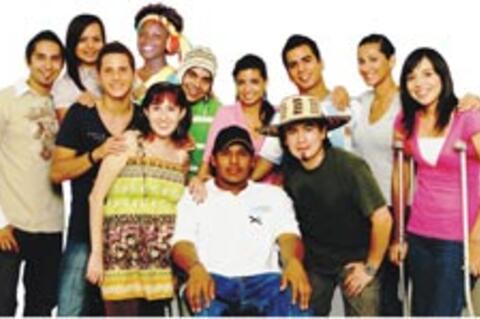
By extending a call for online submission of proposals (with a deadline of May 26 2009) organisers hoped to identify youth-focused practices - a policy, a programme, or a project - developed or implemented by governmental organisations, NGOs, or civil society organisations at the national, state, municipal, or local level. The strategy involves identifying "the best" amongst them, to the end of:
- increasing the visibility of the youth policies and programmes successfully implemented in Latin America and the Caribbean;
- reinforcing the interaction, the dialogue, and the exchange of experiences between crucial actors working in the field of youth;
- consolidating and reinforcing the work and the alliances between the participants;
- identifying and issuing recommendations on the basic conditions for the development and the reinforcement of youth policies and programmes in Latin America and the Caribbean.
Organisers explain that the study of best practices looks to derive models of general application from the analysis of specific interventions. In this case, the study analyses practices on two levels: (i) the success of the youth policy, programme, or project - success is determined in terms of its impact, its financial and technological efficiency, and its relevance from the point of view of, for, and with young people (receptivity to their contribution, sensitivity to their concerns, and response to their needs); and (ii) its replicability - established in terms of its structural viability (economic, political, and historical factors, among others) and its adaptability to different geographic and social contexts.
An evaluation committee made up of groups of specialists will identify "best" practices in the following fields: education, employment, sexual and reproductive health, prevention of youth violence, poverty reduction, volunteer work, youth participation and leadership, and integral youth development (intersectoral approach). Selection will be based on the following criteria: responds to a concrete need of the social context; delivers tangible results and has a positive impact on young people and their communities; involves young people in its design, implementation, and/ or evaluation; works through partnerships and alliances; is sustainable; has the potential to be transferred or replicated; and is executed by a body that is formally constituted (has been in operation for at least 2 years).
The representatives of the selected practices will be invited to an international meeting (all expenses paid), which will take place in Mexico, in September 2009. The meeting will provide a space for exchange with decision makers from different sectors. In addition, during the event, organisations presenting selected practices will be officially recognised, and receive a prize designed to reinforce the practice. The purpose of the meeting will be to: recognise successful experiences and practices; analyse the trends and the challenges in the field of youth policies and programmes in the region; and foster the exchange of inter-organisational, inter-sectoral, and inter-regional knowledge and experiences. In addition to giving visibility to the projects and developing a regional exchange within an analytical framework, the meeting will promote the inclusion of young people in the socioeconomic development of their respective countries. The organisers also expect that the identification of the most relevant regional activity will provide a solid base for a comparative analysis of the initiatives and the changes in the field, and in this way will serve to follow up on the Ibero-American Year of Youth (see Key Points, below, for details).
To spread the word, the practices chosen after the first stage of selection will be published on the project's website. They will also be widely disseminated among the institutions that make up the evaluation committee. Among those, a smaller number of practices will also be published in a book, based on the extent to which the youth policy or programme has established stronger links between the basic elements of policy-development and the technical support of programme implementation.
Youth.
In recent years, organisers claim, there has been an expressed political desire to strengthen the work engaging the youth sector of the countries in the American continent. Young people represent over 30% of its population. In recognition of this, the United Nations' World Youth Report 2007 emphasises that it is essential that policymakers ensure the participation of young people in policy design and in decision-making in general. 2008 was designated the Ibero-American Year of Youth by the XVII Ibero-American Summit of Heads of State and Government. It was also the principal theme at the XVIII Summit and at the XXXVIII General Assembly of the Organization of American States (OAS).
"It is therefore a key moment to build upon the willingness of decision-makers to work with and for the youth sector, and to develop the policies and programmes which have resulted from the political desire to engage young people." According to organisers, there are a number of international development bodies and civil society organisations working, in terms of their perspective and mission, to facilitate the participation of young people as key actors in development. "These efforts could be strengthened by strategic and methodological cooperation and through exchanges of information, of practice, of projects and of programmes. Similarly, the learning processes could be more effective if results and evaluations were disseminated between organizations. The impact and the reach of these programmes could also be much wider if regular opportunities for collaboration in the field of youth development were fostered."
It is in this context that the call for proposals to launch this process was initially extended. The deadline for the call for proposals is May 26 2009. Click here to complete the registration form online in English or Spanish.
The organising committee is made up of: IMJ (Mexican Institute of Youth); SEP (Ministry of Public Education); SEJUV (Government of the State of Colima through its Ministry for Youth); UCOL (University of Colima); CONALMEX (Mexican National Commission for UNESCO); OIJ (Ibero-American Youth Organization); IDB-IDB Youth (Inter-American Development Bank); CYP (Commonwealth Youth Programme - Caribbean Centre); OECD (Organization of Economic Cooperation and Development); OAS-Trust for the Americas; OAS (Organization of American States); YABT (Young Americas Business Trust); IPPF (International Planned Parenthood Federation) EVAC (Espacio Vinculación AC); FLACSO (Facultad Latinoamericana de Ciencias Sociales); ILO (International Labour Organization); PAHO (Pan-American Health Organization); UNESCO (United Nations Educational, Scientific and Cultural Organization); UNECLAC (United Nations Economic Commission for Latin America and the Caribbean); UNFPA (United Nations Population Fund); UNICEF (United Nations International Children’s Emergency Fund); and UNV (United Nations Volunteers).
UNESCO Social and Human Sciences (SHS) e-Flash, April 30 2009 - forwarded by Michael Tran to The Communication Initiative on May 12 2009; and email from Isabel Álvarez-Rodríguez to The Communication Initiative on June 5 2009.
- Log in to post comments