











































Behavioral Interventions for Vaccination Uptake: A Systematic Review and Meta-analysis
Yale Institute for Global Health (A.A. Malik, Shafiq, Elharake, James, Paintsil, Yale Behavioral Interventions Team); Analysis Group, Inc (A.A. Malik); UT Southwestern Peter O'Donnell Jr. School of Public Health (Ahmed, Elharake, Melchinger, F.A. Malik, Omer); Columbia University School of Public Health (Shafiq); Columbia University Institute of Human Nutrition (Paintsil); The Ohio State University College of Medicine (Elharake); Yale University (Nyhan)
"...results show that behavioral interventions can be used to increase vaccine uptake in most settings, particularly provider recommendations and on-site vaccination."
Behavioural science, which uses an interdisciplinary approach to systematically study human behaviour, offers promise in designing interventions that use the behavioural and social determinants of vaccination to increase vaccine uptake. The objective of this systematic review and meta-analysis of the literature on behavioural-insights-based interventions to increase vaccine uptake is to inform interventions across all stages of the vaccine delivery process. By doing so, the researchers hope to enhance vaccine coverage equitably within low-and-middle income countries (LMICs).
As described in the methods and material section, the researchers assessed all relevant articles published between 1990 and 2020, ultimately including 613 studies from the Medline database. These studies represent 64 countries globally, with 37 countries being classified as higher-income Countries (HICs) and 27 as LMICs.
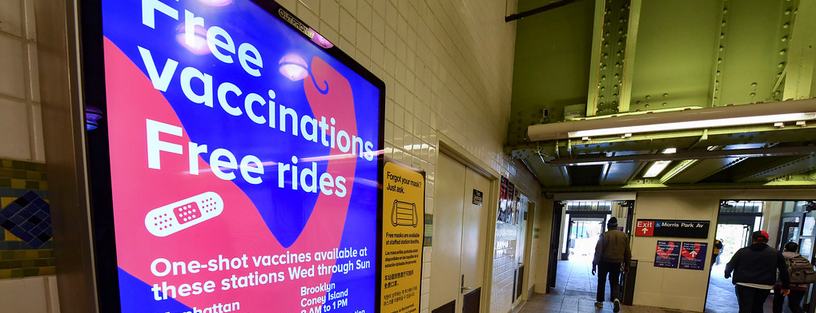
The researchers categorised the different behavioural interventions described in the 613 studies in 9 domains: education campaigns (providing education on vaccination, disease, and how vaccines work), on-site vaccination (providing vaccines at workplace or places of worship), incentives (offering financial incentives for vaccination), free vaccination (providing vaccination free of cost), institutional recommendation (recommendation made by the institution that person works at especially for healthcare providers), provider recommendation (recommendation by doctor/nurse), reminder and recall (reminders for vaccination), message framing (persuasion messaging, gain vs loss framing of the vaccine), and vaccine champion (institutional or self-appointed champion who encouraged vaccination). These domains map onto the World Health Organization's Behavioral and Social Drivers of Vaccination (BeSD) model, as follows: what people think and feel (educational campaigns), social processes (provider recommendation), motivation (vaccine champion), and practical issues (on-site vaccination, free vaccination).
The paper describes the domains in detail and highlights some studies across different countries as examples of how different techniques have been used to increase vaccine uptake.
The results showed that behavioural interventions can considerably improve vaccine uptake in most settings. All domains they examined improved vaccine uptake, with the highest effect size associated with provider recommendation (odds ratio (OR): 3.4 (95% confidence interval (CI): 2.5-4.6); BeSD domain: motivation) and on-site vaccination (OR: 2.9 (95% CI: 2.3-3.7); BeSD domain: practical issues). With regard to the former: Healthcare workers are the most trusted source of information for health-related knowledge, including vaccination, as shown in multiple studies. Hence, if a healthcare provider recommends an action such as vaccination, individuals are more likely to adopt it. With regard to on-site vaccination, studies indicate that it is important to determine the appropriate timings for vaccination spots and establish rapport with local community leaders to promote vaccination sites.
With regard to interventions with limited evidence of effectiveness, the review shows that incentives need to be valued by participants for them to be effective. In affluent areas or HICs, incentives did not show a significant increase in vaccine uptake amongst healthcare workers. Also, decisional aids and self-assessments within the domain of educational campaigns were shown to be less effective in improving vaccine uptake. Educational messages need to be paired with self-efficacy or response-efficacy messages, as, on their own, educational messages did not improve vaccine uptake.
The researchers also found that educational interventions specifically designed to cater to specific populations were more effective in improving vaccine knowledge associated with improved vaccine uptake. This finding indicates a need for specifically designed campaigns for selected populations after identifying their needs to improve vaccine uptake.
Reminder and recall interventions combined with other interventions such as incentives and education are more likely to increase vaccine uptake and should be offered as a package of interventions.
Few of the included studies focused on message framing, institutional recommendation, and vaccine champions from LMICs that look at vaccine uptake as an outcome. The evidence from HICs for these domains is strong for vaccine uptake, but further studies need to be conducted from LMICs to evaluate these interventions in that context. The quality of studies from HICs and LMICs was generally similar. However, the overall number of studies from HICs (n=523) was almost 6 times higher, and many LMICs were not represented. This differential points to a need to conduct and publish more studies in LMIC settings, as context may influence both behavioural interventions and their association with vaccine uptake.
"Overall, provider recommendations and on-site vaccination should be employed along with other interventions to increase vaccination rates globally."
Editor's note: Click here in order to download the iVaccinate Booklet, which is meant to translate the findings of the review for policymakers and other stakeholders.
Health Policy, Volume 137, November 2023, 104894. https://doi.org/10.1016/j.healthpol.2023.104894 - and email from Dr. Amyn Malik to The Communication Initiative on October 23 2023. Image credit: Metropolitan Transportation Authority of the State of New York via Flickr (CC BY 2.0 Deed)
- Log in to post comments