










































Be a Man, Change the Rules: Findings and Lessons from Seven Years of CARE International Balkans' Young Men Initiative
International Center for Research on Women (ICRW)
"Understanding the gender norms and notions of masculinity that contribute to violent behaviors - and engaging young men to critically reflect on and address these social constructs - can help foster more gender-equitable attitudes and reduce violence."
This report explores lessons learned from the Young Men Initiative (YMI), a 7-year programme that has been promoting positive masculine identities among youth across the Western Balkans. Coordinated in this post-conflict region by CARE International Balkans, implemented by collaborating institutions in 4 countries (Bosnia-Herzegovina, Croatia, Kosovo, and Serbia), and evaluated by the International Center for Research on Women (ICRW), YMI seeks to promote a lifestyle prioritising good health, nonviolence, and gender equality through a school-based curriculum - adapted from Promundo's Program H – plus community and social media campaigns. This synthesis report provides an overview of the programme's rationale, design, and evaluation results from YMI's second-phase implementation in vocational high schools.
As noted here, the programme focuses on boys aged 14-18, as this life stage represents a pivotal moment in the socialisation process when attitudes and behaviours are still developing. This is particularly important for youth living in communities emerging from conflict, like the YMI participants who were born during or immediately after the Yugoslav wars and grew up during a tumultuous post-war recovery. Not surprisingly, interpersonal violence is common among this population, as are views of masculinity that encourage partner violence, homophobia, and peer aggression. Data also point to significant gaps among adolescent boys in basic sexual and reproductive health (SRH) knowledge, as well as frequent alcohol use.
YMI's guiding philosophy is that boys should be understood not as obstacles to peace and gender equality, but rather as critical allies in promoting nonviolent, healthy relationships and communities. YMI holds that if students learn about violence as well as how to question dominant gender norms and if they have a chance to practice these new ideas and skills in safe spaces, then they will have a greater likelihood of internalising this information. Moreover, as group norms begin to change, the programme helps foster a more tolerant, accepting environment at the school level.
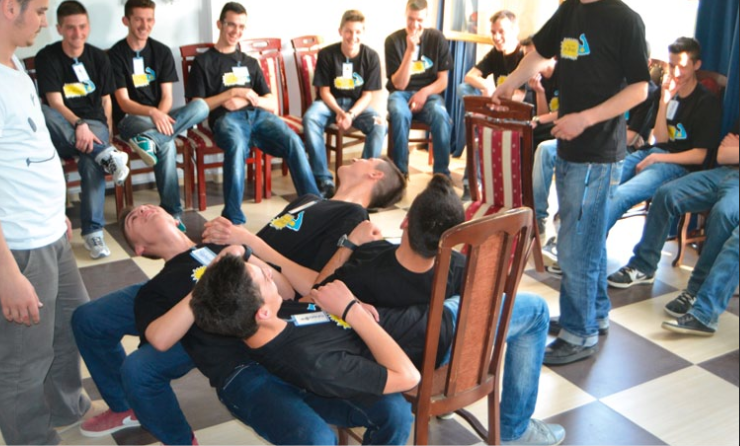
ICRW's engagement with YMI started in 2007 with participatory research to understand prevailing attitudes about what it means to be an "ideal man" in project communities. These findings informed the design of a voluntary, after-school intervention for adolescent boys, the YMI Pilot (2007-2010), which was implemented in 5 cities across Bosnia and Herzegovina, Croatia, and Serbia. Boys who attended this first, after-school phase of the programme showed promising changes, but ICRW's (2009-2010) evaluation also concluded that the voluntary nature of the programme significantly limited participation rates. During Phase II (2011-2013), CARE adjusted the programme based on results from the pilot: (i) basic YMI sessions became a compulsory part of the curricula in participating schools; and (ii) voluntary offsite retreats were added. This new YMI version was rolled out and evaluated in 4 vocational schools located in Sarajevo (Bosnia and Herzegovina), Zagreb (Croatia), Belgrade (Serbia), and Prishtina (Kosovo). In participating schools, 8- to 10-hour-long YMI sessions, led by trained facilitators, are integrated into the regular class schedule over the academic year. There is also an optional residential retreat where the facilitators lead additional sessions and team-building activities in a more immersive setting. In addition, the programme includes a "Be A Man" lifestyle campaign, which is intended to reinforce key YMI messages and foster change at the school level and beyond. The campaign is supported by a variety of educational materials, social media, and "actions" organised and carried out by student members of "Be a Man" clubs.
ICRW evaluated this expanded version of YMI. Findings draw on data from quantitative surveys (administered before and after the 8-month study period with all participating students), in-depth interviews and focus group discussions (with student participants, teachers, and YMI facilitators), and monitoring records. The overall evaluation approach involved an iterative process; after each academic year, all of the partner organisations met to discuss the evaluation results and determine how to improve both the design and evaluation of the programme.
"In terms of implementation, the vocational high schools proved to be opportune locations to deliver a gender-transformative program to adolescent boys. School officials, teachers, and - most importantly - students, were receptive to YMI activities and welcomed the opportunity to be a part of the programme. Participating students also clearly valued the program and viewed it as relevant to their lives; many boys expressed strong admiration for the facilitators, whom they described as positive role models."
Survey results show that many students expressed more flexible views about masculinity, as well as about gender roles and sexual diversity, after the 8-month programme. Attitudes around women's primary role in the family and homophobia improved across all but one site. In Pristina, more than half of participants (58%) disagreed that physical strength was the most important quality for a man after participating in YMI, whereas less than a third (31%) held this view before the programme. Many participants were less likely to support men's use of violence against women who were unfaithful. The number of participants who thought women should not have to tolerate violence also increased. In addition, the programme boosted participants' knowledge about sexual health, which is significant given that the average age of first sex among sexually active boys in the study was between 14 and 15.
The findings about violence were mixed. Overall, YMI had no measurable effect in reducing participants' violent behaviours against peers or intimate partners. In Pristina, however, there was some evidence that the intervention stemmed an increase in peer violence over time, which occurred in the other sites. For instance, 76% of Pristina retreat participants indicated they had intervened to stop a fight by the end of the programme, compared to 41% at the start of the academic year. These positive findings may reflect the addition to the Pristina programme of extra school sessions on violence and that about half of Pristina participants attended a residential retreat, a higher percentage than in the other 3 sites. The residential retreats offered a more immersive environment than the classroom, allowing the facilitators to lead longer, more in-depth discussions. These retreats were especially effective at helping participants question dominant gender norms and internalise new ideas, especially related to sensitive topics such as homophobia and violence.
A behaviour that proved resistant to change was alcohol use, which, with the exception of Pristina, is ubiquitous in the study communities.
Some lessons learned:
- Interactive techniques and off-site retreats are particularly effective in challenging deeply embedded social norms.
- Fostering a genuine connection between facilitators and students is critical, particularly when addressing the most sensitive subjects (e.g., gender and homophobia).
- A greater programme focus on violence can potentially lead to better outcomes.
- A longer timeline is critical to detect changes, as boys may not have yet had an opportunity to put new ideas and non-violent intentions into practice, for example.
- YMI's sexual health sessions fill an important need, but some students require extra attention to fully understand all the information.
- When it comes to imparting SRH knowledge, classroom sessions are equally effective as the off-site retreats.
- Social media can be an important strategy in promoting healthful behaviours. In Prishtina, the majority of Be a Man Club members (59%) made public pledges to stop smoking on the club Facebook site, and several interviewees described a reduction in the frequency of smoking among their friends.
"Taken as a whole, these findings make a compelling case for the relevance of YMI in helping male youth in the region overcome a culture of violence and align themselves to a more peaceful, equitable, and healthy masculinity."
Email from ICRW to The Communication Initiative on July 10 2014; "Redefining Masculinity in the Balkans", by Ibadet Dervishaj, June 16 2014 and ICRW website, June 9 2014 - both accessed on May 12 2016.
- Log in to post comments